Glucose Syrup on Food Labels: What It Really Means for Blood Sugar
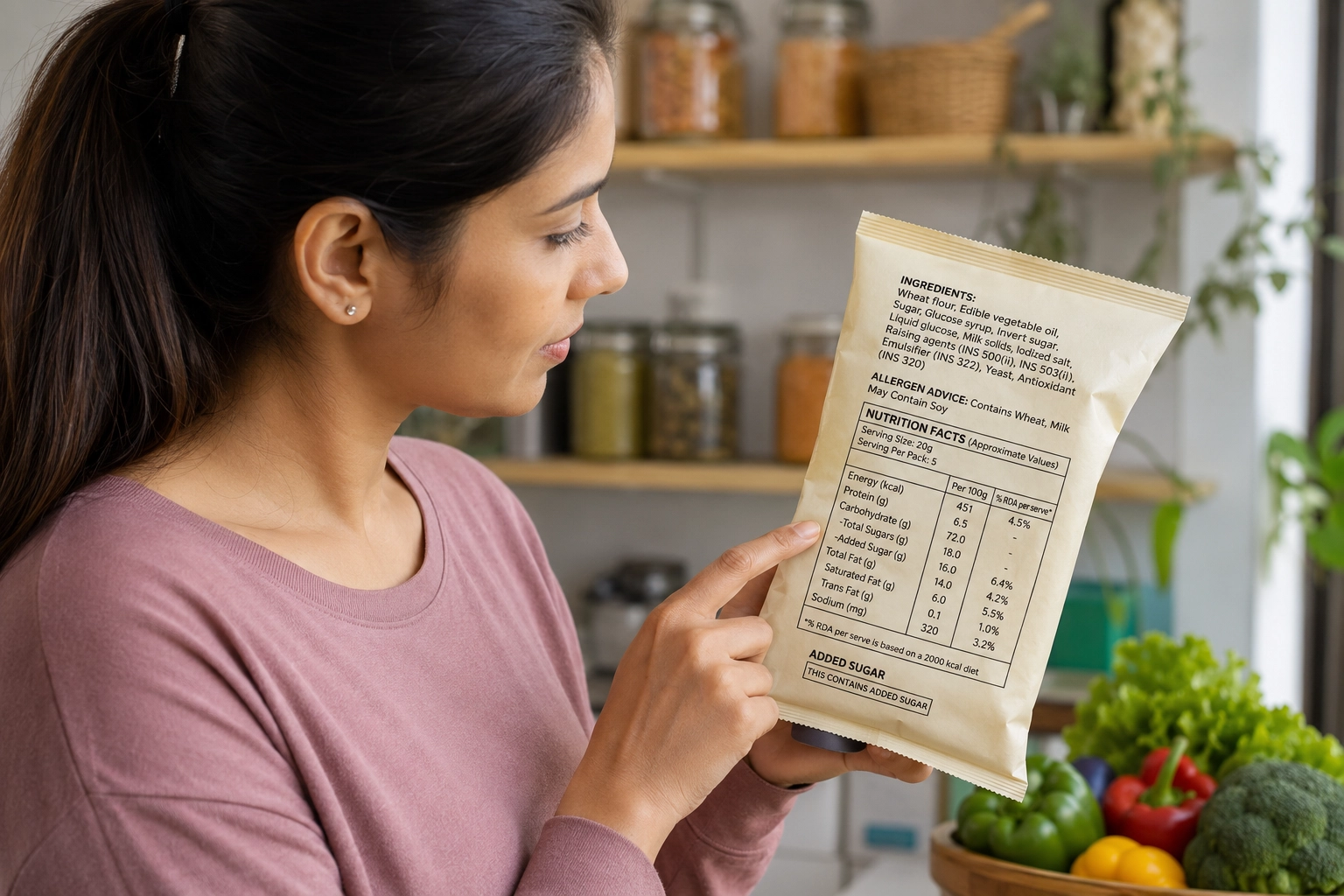
Have you ever seen packaging that boasts "whole grain," "low fat," "natural energy," or "made from real fruit"—only to flip it over and find glucose syrup high on the ingredient list?
You might wonder: Is this just another name for sugar? Is it worse than regular table sugar? And, most importantly, how will it affect your blood sugar if you are managing diabetes or insulin resistance?
Glucose syrup is one of the most common added sugars in processed foods. How it affects your body depends heavily on its Glycemic Index, the amount you consume, and what you eat it with. Here is exactly what glucose syrup means for your blood sugar and how to outsmart tricky food labels.
What Is Glucose Syrup?
Glucose syrup is a thick, sweet liquid produced by breaking down starches—usually from corn, wheat, potatoes, or rice—into smaller, simple sugar molecules.
Food manufacturers love glucose syrup not just for its sweetness, but for its functional properties. It gives gummy candies their chewiness, keeps baked goods moist, prevents crystallization in ice cream, and adds a glossy shine to glazes.
While it serves a culinary purpose, from a health perspective, glucose syrup is an added sugar. When you see it on a label, it is a clear indicator that the product contains rapidly digestible carbohydrates.
The Glycemic Index (GI): Glucose Syrup vs. Other Sugars
To understand why glucose syrup matters for blood sugar management, we have to look at the Glycemic Index (GI)—a scale from 0 to 100 that measures how quickly a carbohydrate raises blood glucose levels.
Here is how glucose syrup compares to other common sweeteners:
| Sweetener Type | Estimated Glycemic Index (GI) | Blood Sugar Impact |
| Glucose Syrup | 90 – 100+ | Extremely High / Very Fast |
| High Fructose Corn Syrup (HFCS) | ~73 | High / Fast |
| Table Sugar (Sucrose) | ~65 | Moderate-High / Fast |
| Honey | ~58 - 60 | Moderate |
Because glucose syrup is essentially pure glucose (the exact type of sugar your bloodstream carries), it requires almost no breakdown in the digestive tract. It enters your bloodstream rapidly, which can lead to sudden blood sugar spikes and subsequent energy crashes.
Where Is Glucose Syrup Hiding?
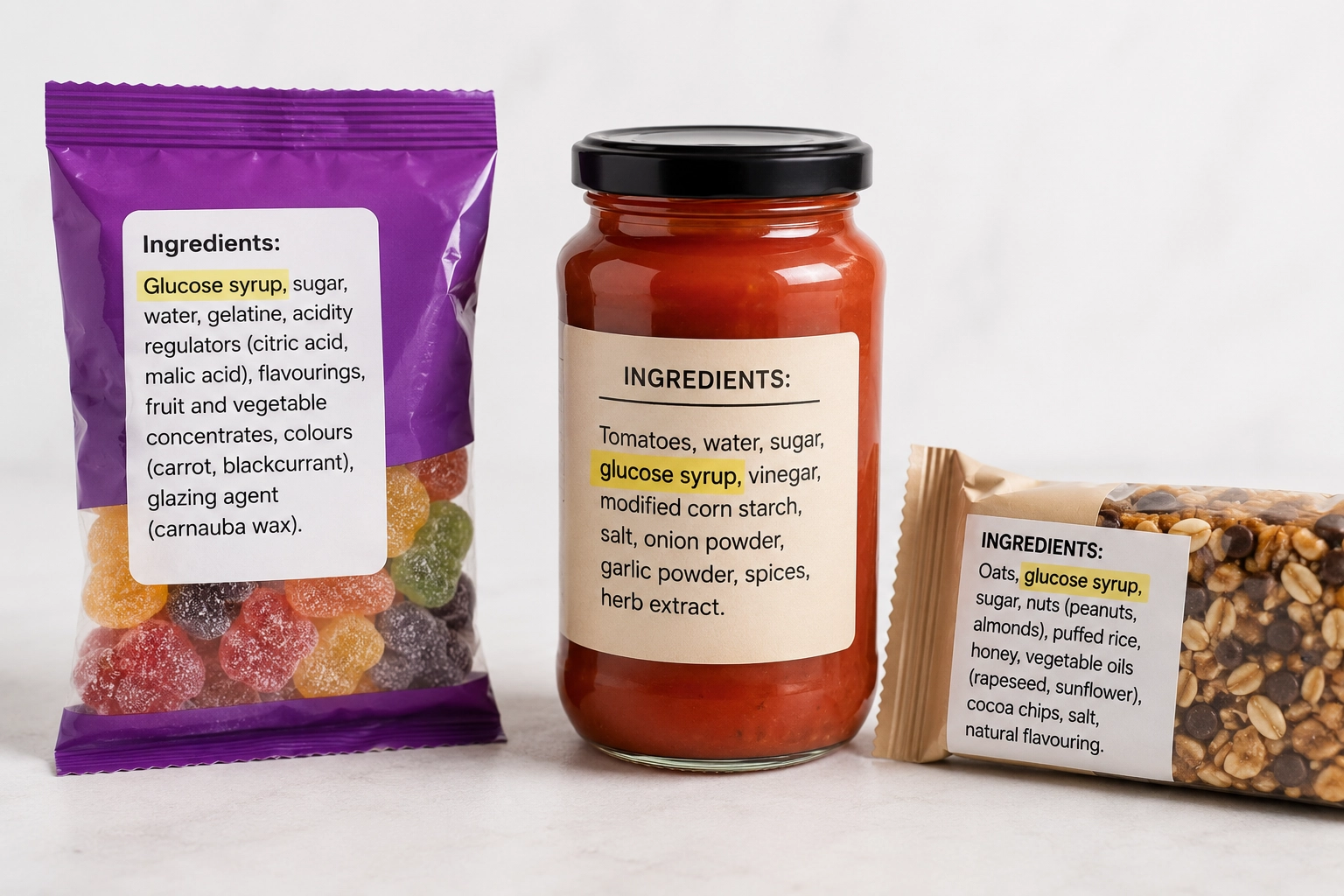
You expect to find glucose syrup in marshmallows and gummy bears. However, the "health halo" effect often masks its presence in seemingly nutritious foods. Always check the back label on:
"Healthy" Snacks: Granola bars, high-protein bars, and energy bites.
Breakfast Items: Boxed cereals, instant oatmeal packets, and sweetened yogurts.
Condiments: Barbecue sauces, stir-fry glazes, ketchup, and salad dressings.
Beverages: Sports drinks and pre-packaged smoothies.
Desserts: Ice creams, frozen yogurts, and baked pastries.
Do not let front-label claims like "made with oats" or "plant-based" fool you. A food can be vegan, gluten-free, and organic, yet still pack a significant amount of glucose syrup.
How to Read Food Labels for Glucose Syrup
Food labels can feel overwhelming. If you are tracking your carbs or following a diabetes meal plan, use this practical 3-step checklist when you spot glucose syrup on a package:
1. Check the Order of Ingredients
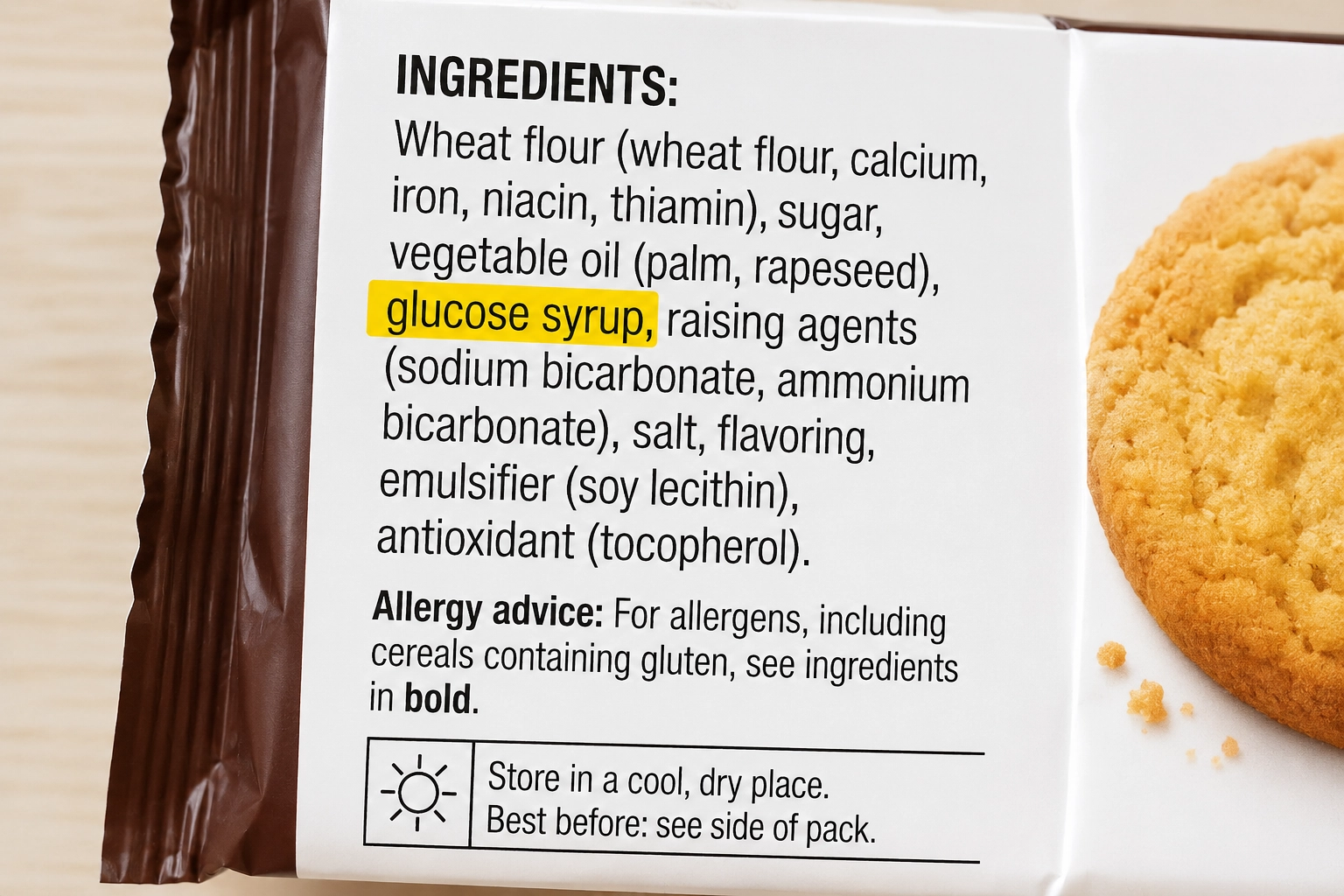
Ingredients are listed by weight, from most to least. If glucose syrup is the first, second, or third ingredient (like in many gummy candies or snack bars), the product is primarily made of fast-acting sugar. If it is the very last ingredient in a savory marinade, its overall impact will be much smaller.
2. Analyze "Total Carbohydrates" and "Added Sugars"
The ingredient list tells you what is in the food; the Nutrition Facts panel tells you how much.
Look for the "Includes Xg Added Sugars" line under Total Carbohydrates. The American Heart Association recommends limiting added sugars to about 25g per day for women and 36g for men. If a single snack bar contains 15g of added sugar (mostly from glucose syrup), it is taking up a massive portion of your daily allowance. If you are unsure of your targets, understanding the normal blood sugar ranges can help you gauge how these added sugars affect your daily goals.
3. Identify the "Buffers": Protein, Fat, and Fiber
Carbohydrates eaten alone spike blood sugar rapidly. However, when glucose syrup is consumed as part of a food that also contains fiber, protein, or healthy fats, digestion slows down.
Bad Context: A gummy candy (Glucose syrup + Artificial colors + Zero fiber) = Rapid blood sugar spike.
Better Context: A nut-based bar (Glucose syrup + 8g Protein + 5g Fiber) = Slower, more controlled blood sugar curve.
Real-Life Examples: Context Is Everything
To put this into perspective, let's look at how the same ingredient behaves differently depending on the food context:
Example 1: The Daily Breakfast Cereal. You eat a bowl of "honey nut" cereal where glucose syrup is the second ingredient. Because the serving size is small, you pour double. Served with skim milk (which also has natural sugars), this meal lacks protein and healthy fats, likely resulting in a mid-morning blood sugar crash. Consider building a more balanced breakfast with whole oats and eggs.
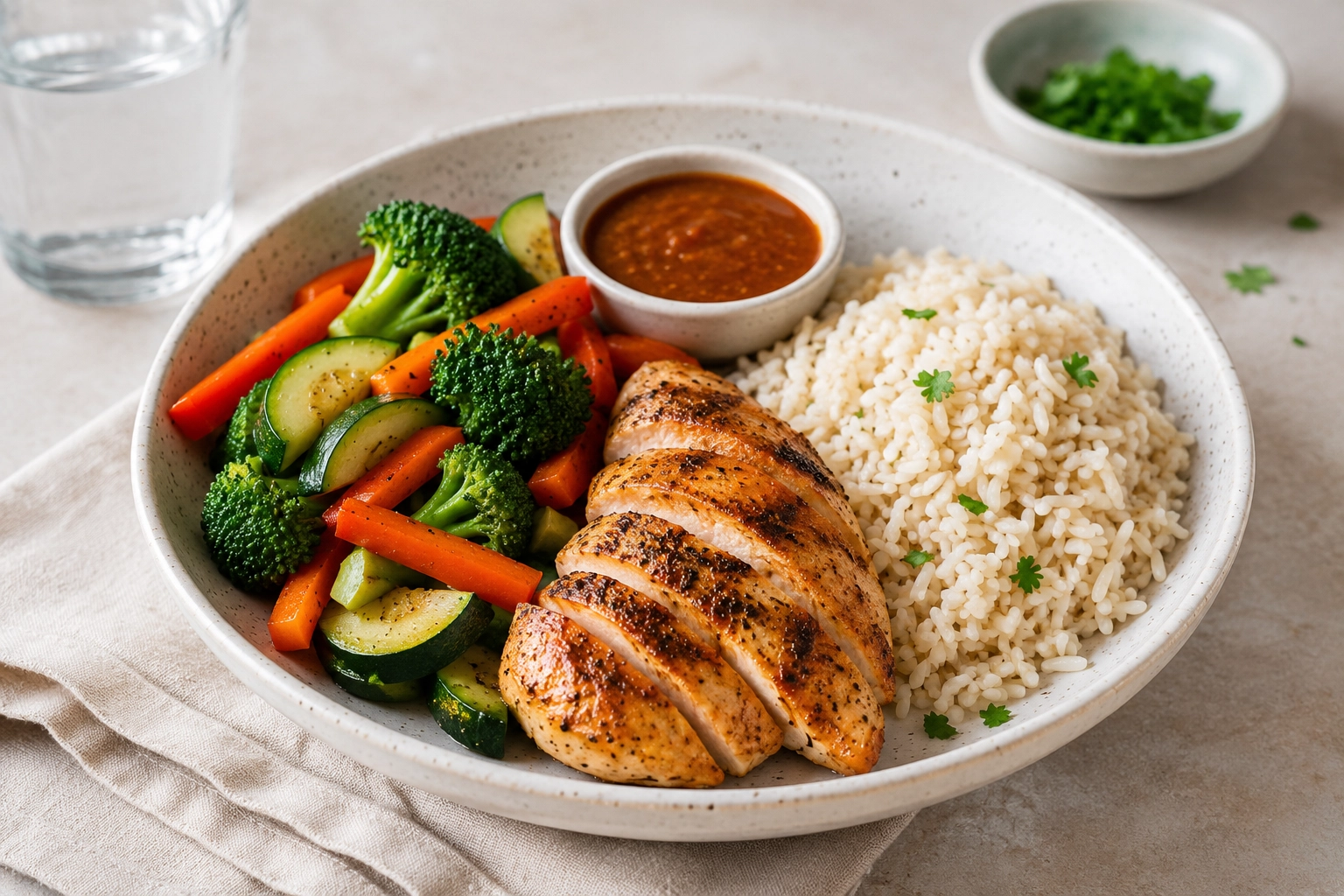
Example 2: The Stir-Fry Sauce. You use one tablespoon of teriyaki sauce (which contains a small amount of glucose syrup) over a large portion of chicken breast, broccoli, and brown rice. The fiber from the broccoli and the protein from the chicken slow down the digestion of the sauce's sugars. The blood sugar impact here is likely minimal.
Is Glucose Syrup Bad for People with Diabetes?
There is no simple "yes" or "no" answer. While no one needs added sugars for health, you do not have to banish every single item that contains a drop of glucose syrup.
For people with diabetes, prediabetes, or insulin resistance, the most practical approach is:
Limit frequency: Keep glucose-syrup-heavy foods (where it ranks in the top 3 ingredients) as occasional treats rather than daily staples.
Monitor serving sizes: Pay close attention to what constitutes a single serving.
Track your body's response: Use a Use a blood sugar log or a Continuous Glucose Monitor (CGM) to see exactly how specific snacks affect you. Everyone's insulin sensitivity is different.
Practical Takeaway: The 5-Question Rule
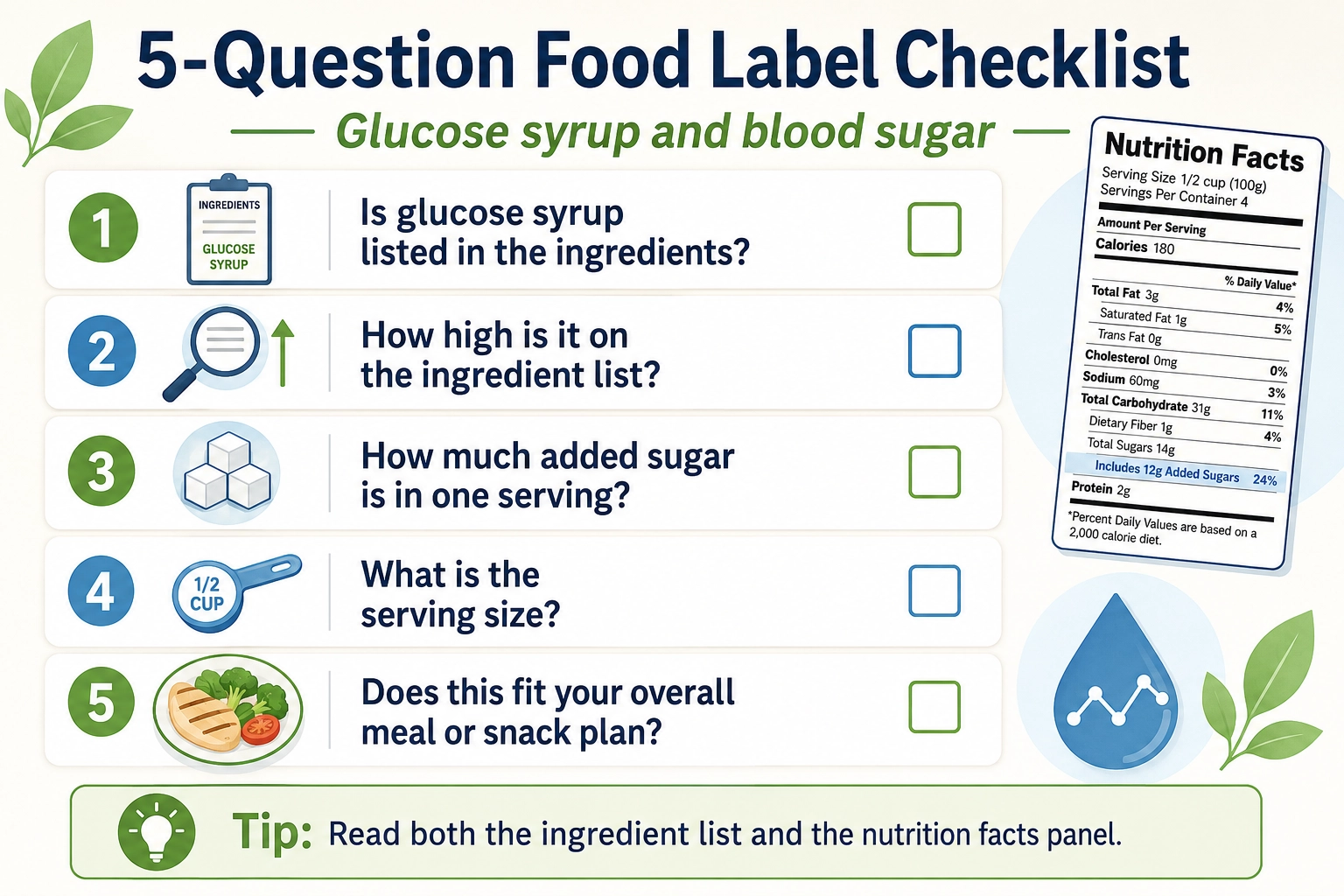
The next time you turn over a package and see "glucose syrup," don't panic. Instead, ask yourself these 5 questions:
- Is glucose syrup listed in the ingredients? (Always check the back label, not just front-package claims).
- How high is it on the ingredient list? (Ingredients are listed by weight. Top = High impact; Bottom = Low impact).
- How much added sugar is in one serving? (Look at the Nutrition Facts panel under Total Carbohydrates).
- What is the serving size? (Ask yourself if the listed serving size matches what you actually eat).
- Does this fit your overall meal or snack plan? (Consider if this food balances well with your daily carbohydrate goals).
By moving away from fear-based food rules and toward informed label reading, you can take control of your blood sugar while still enjoying the foods you love. If you are struggling to find good options, check out our guide on choosing snacks for diabetics that are easier to fit into your routine.
Disclaimer: This article is for informational and educational purposes only and does not constitute medical advice. If you have diabetes, prediabetes, or use glucose-lowering medications (like insulin), always consult with your healthcare provider or a Registered Dietitian before making significant dietary changes.
References & Scientific Sources
American Diabetes Association (ADA). Reading and Understanding Food Labels. Retrieved from [ADA Website].
Harvard T.H. Chan School of Public Health. Carbohydrates and Blood Sugar: The Glycemic Index.
World Health Organization (WHO). (2015). Guideline: Sugars intake for adults and children.
You should also read:

Blood Sugar Support in Real Life: What Actually Helps Day to Day?
If you have ever felt tired after a meal, craved something sweet in the afternoon, or felt confused by blood sugar numbers, the phrase “blood sugar support” can sound both helpful and vague. Some people use it to talk about food choices. Others use it…
Continue reading...
Can Banana Be Eaten in Diabetes? A Practical Guide to Portion, Ripeness, and Blood Sugar
Bananas are one of those everyday foods that can feel confusing if you are watching your blood sugar. On one hand, a banana is a whole fruit. It is simple, affordable, portable, and naturally sweet. On the other hand, you may have heard that bananas…
Continue reading...
Can You Eat Watermelon with Diabetes? A Practical Guide Without Food Fear
Watermelon is one of those foods that can feel confusing if you are watching your blood sugar. It is fresh, light, and mostly water. At the same time, it tastes very sweet. So it is natural to wonder: can diabetics eat watermelon, or is it…
Continue reading...