Normal Blood Sugar Range Chart: Fasting, After Meals, and A1C Explained
Table of Contents
- Normal Blood Sugar Range Chart: A Simple Starting Point
- Why Blood Sugar Numbers Depend on Timing
- Normal, Prediabetes, and Diabetes Ranges: What the Categories Mean
- Why One Blood Sugar Reading Does Not Tell the Whole Story
- How to Read a Blood Sugar Chart Without Panicking
- Real-Life Examples: What Different Numbers Might Mean
- What Can Affect Blood Sugar Readings?
- How to Track Blood Sugar in a Useful Way
- Practical Habits That May Support Steadier Blood Sugar
- When to Talk to a Healthcare Professional
- Practical Takeaway
- FAQ
- What is a normal blood sugar range before eating?
- What is a normal blood sugar range after eating?
- Is fasting blood sugar of 100 mg/dL normal?
- What blood sugar level is considered prediabetes?
- What blood sugar level is considered diabetes?
- Can one high blood sugar reading mean diabetes?
- What is the difference between fasting glucose and A1C?
- Why is my fasting blood sugar high in the morning?
- Can stress or poor sleep affect blood sugar?
- Should I check blood sugar at home if I do not have diabetes?
- Are blood sugar targets different for people with diabetes?
- When should I worry about a blood sugar number?
Checking a blood sugar number can feel simple at first. You see a reading, compare it with a chart, and expect a clear answer.
But real life is not always that neat.
A fasting blood sugar of 103 mg/dL may make one person anxious. A reading of 160 mg/dL after a large dinner may make another person wonder if something is wrong. Someone else may have a normal fasting result but an A1C that comes back higher than expected.
This is why a normal blood sugar range chart is useful, but only as a starting point. A number becomes more meaningful when you know when it was taken, what kind of test it was, whether it is part of a pattern, and what else was happening in your day.
This guide explains common blood sugar ranges in plain English, with practical examples to help you understand what the numbers may mean in daily life.
Important note: This article is for general educational purposes only. It is not medical advice, diagnosis, or treatment. Blood sugar targets can vary depending on your health status, medications, pregnancy, age, and medical history. If you have repeated high or low readings, symptoms, diabetes, prediabetes, or concerns about your results, talk with a qualified healthcare professional.
Normal Blood Sugar Range Chart: A Simple Starting Point
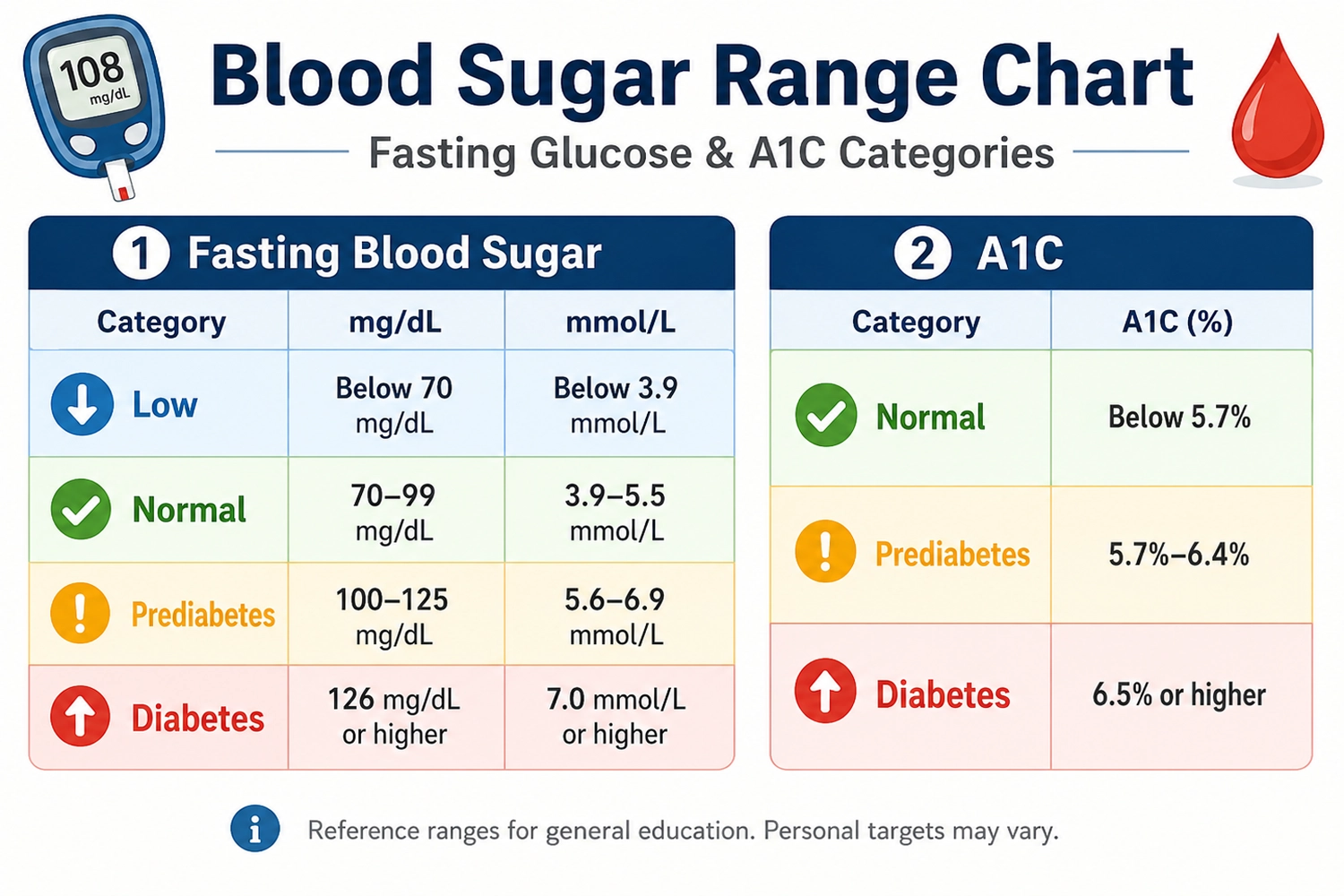
The chart below summarizes common U.S. laboratory screening and diagnostic ranges from the CDC for nonpregnant adults. It is a starting point for understanding results, not a tool for diagnosing yourself from one home reading.
Type of blood sugar test | General normal range | Prediabetes range | Diabetes range |
Fasting blood sugar | 99 mg/dL or below | 100–125 mg/dL | 126 mg/dL or above |
A1C | Below 5.7% | 5.7%–6.4% | 6.5% or above |
Random blood sugar | Varies by timing and context | Not usually interpreted alone | 200 mg/dL or above may suggest diabetes, especially with symptoms |
Two-hour oral glucose tolerance test | Below 140 mg/dL | 140–199 mg/dL | 200 mg/dL or above |
Medical note: These cutoffs apply to laboratory tests in nonpregnant adults. A random plasma glucose of 200 mg/dL or above is used diagnostically when classic symptoms of hyperglycemia are present. Except when hyperglycemia is unequivocal, a second test is generally used to confirm diagnosis. Home meter results are not suitable for diagnosis. The two-hour oral glucose tolerance test uses a standardized 75-gram glucose drink and is not the same as checking two hours after an ordinary meal.
For people already diagnosed with diabetes, treatment targets are different from diagnostic cutoffs. For most nonpregnant adults with diabetes, the American Diabetes Association (ADA) suggests an A1C goal below 7%, 80-130 mg/dL before meals, and below 180 mg/dL 1-2 hours after the beginning of a meal. These are general targets and may be individualized by the healthcare team.
The key point: do not read every number the same way. A fasting blood sugar number, a two-hour after-meal number, a random meter reading, and an A1C result are not measuring the exact same thing.
Why Blood Sugar Numbers Depend on Timing
A blood sugar number without timing is like looking at a speedometer without knowing whether the car is parked, climbing a hill, or driving on the highway. The context changes the meaning.
Fasting blood sugar
Fasting blood sugar is usually measured after not eating overnight. Many lab tests use fasting glucose because it gives a clearer baseline reading without the immediate effect of a recent meal.
For example, if your fasting blood sugar is 103 mg/dL once, that may fall into a range often associated with prediabetes screening. But one result does not automatically mean you have prediabetes. Poor sleep, stress, illness, dehydration, or testing variation can affect a reading. Repeated results and lab confirmation matter.
Before-meal blood sugar
Before-meal readings are often used by people who monitor blood sugar regularly, especially those with diabetes. These readings can show where blood sugar sits before food enters the picture.
For someone without diabetes, before-meal readings are not always necessary unless recommended by a healthcare professional. If you do check them, it helps to record the time, your last meal, and any unusual factors such as poor sleep or stress.
After-meal blood sugar
Blood sugar usually rises after eating, especially after meals that contain carbohydrates. This is normal. The more useful question is: how high does it rise, and how long does it stay elevated?
A reading one hour after eating may be higher than a reading two hours after eating. So if you check too soon after a meal, you may scare yourself with a number that does not mean the same thing as a two-hour reading.
Meal composition also matters. A bowl of white rice alone may affect blood sugar differently than rice eaten with fish, vegetables, and healthy fats. Some people may find that pairing carbohydrates with protein and fiber supports steadier readings.
Random blood sugar
A random blood sugar reading can be harder to interpret because it depends heavily on timing. Did you eat 30 minutes ago? Three hours ago? Did you drink a sweet coffee? Did you just exercise? Were you stressed?
Random readings can still be useful, especially if they are very high or linked with symptoms. But for everyday tracking, they are more helpful when paired with notes.
A1C
A1C is different from a finger-prick glucose reading. It reflects average blood sugar over roughly the past two to three months.
This is why someone may have a glucose reading in range on one day but an A1C that suggests a higher average. A1C does not show individual spikes or lows. It may also be less reliable during pregnancy or in people with certain types of anemia or hemoglobin variants; when A1C and glucose results do not match, a healthcare professional may use another test.
Normal, Prediabetes, and Diabetes Ranges: What the Categories Mean
Blood sugar categories are useful because they help identify possible risk. But they should be interpreted carefully.
A result in the normal range is below the diagnostic threshold for that test. A result in the prediabetes range indicates higher-than-normal glucose and increased risk for type 2 diabetes. A result in the diabetes range may meet a diagnostic threshold, but diagnosis usually requires appropriate laboratory testing and often repeat confirmation.
This matters because many readers search for a chart after seeing one number at home. A home glucose meter can be useful for monitoring patterns, but laboratory testing—not meter results—is used for diagnosis.
A better way to think about the chart is:
- One reading gives you information.
- Repeated readings show a pattern.
- Lab tests provide stronger evidence.
- A healthcare professional can interpret your results based on your full situation.
Why One Blood Sugar Reading Does Not Tell the Whole Story
A single high reading can happen for many reasons. It may be related to food, sleep, stress, illness, medication, or even testing technique.
For example, imagine someone checks their blood sugar one hour after eating pizza, drinking soda, and sitting for the rest of the evening. A higher reading would not be surprising. That number may still be useful, but it should not be treated the same way as a fasting lab test.
On the other hand, if someone sees fasting readings around 105–115 mg/dL many mornings in a row, that pattern may be worth discussing with a healthcare professional.
Patterns are usually more meaningful than isolated numbers.
How to Read a Blood Sugar Chart Without Panicking
When you see a blood sugar number, use this simple four-part framework.
1. Identify the type of reading
Was it fasting, before a meal, after a meal, random, or A1C?
This is the first question because each type of reading has a different meaning. A fasting number and an after-meal number should not be judged by the same expectations.
2. Check the timing
If it was after a meal, how long after the first bite did you test?
A 45-minute reading, a one-hour reading, and a two-hour reading can look very different. Without timing, the number is easy to misread.
3. Look for a pattern
Has this happened once, or is it happening often?
One unusual reading may simply be a clue. Repeated high fasting numbers, repeated large after-meal rises, or a rising A1C trend deserve more attention.
4. Connect it to real life
Ask what was happening around the reading:
- What did you eat?
- How much did you eat?
- Did the meal include protein and fiber?
- Did you sleep poorly?
- Were you stressed?
- Were you sick?
- Did you walk or stay inactive after eating?
- Are you taking medications that affect blood sugar?
This context turns a confusing number into useful information.
Real-Life Examples: What Different Numbers Might Mean
Example 1: Fasting blood sugar of 103 mg/dL
A fasting reading of 103 mg/dL may fall slightly above the general normal range. That does not mean you should panic or diagnose yourself.
A more practical response would be to ask: Was this a lab test or a home meter reading? Did it happen once or repeatedly? Were you sick, stressed, dehydrated, or short on sleep?
If similar readings happen often, it may be worth asking a healthcare professional whether you should repeat fasting glucose testing or check A1C.
Example 2: Blood sugar of 160 mg/dL one hour after a big meal
A reading of 160 mg/dL one hour after a large carbohydrate-heavy meal does not mean the same thing as a fasting reading of 160 mg/dL.
The timing matters. Blood sugar commonly rises after eating. A useful next step may be to compare meals. For example, you might notice that a large bowl of noodles alone gives a bigger rise than a smaller portion of noodles with chicken, vegetables, and a short walk afterward.
This does not mean you need to fear all carbohydrates. It means your body may respond differently depending on portion size, food pairing, and activity.
Example 3: A1C of 5.8%
An A1C of 5.8% falls within the prediabetes range. If you do not have symptoms, a healthcare professional may repeat the A1C or use another laboratory test before making a diagnosis.
The result can still be useful because A1C gives a longer-term picture. It may help you and your healthcare professional discuss risk factors and next steps, such as repeat testing, food choices, physical activity, sleep, and weight-related goals when relevant.
The goal is not panic. The goal is informed action.
Example 4: Normal fasting blood sugar but higher after-meal readings
Some people may see fasting numbers that look normal but notice larger rises after certain meals.
This can happen because fasting glucose and after-meal glucose reflect different parts of blood sugar regulation. If this pattern appears repeatedly, it may be useful to bring it up with a healthcare professional.
It can also help you learn from your own meals. For example, you may find that breakfast cereal alone causes a larger rise than eggs with whole-grain toast and fruit. That kind of observation can support better daily choices without turning food into fear.
What Can Affect Blood Sugar Readings?
Blood sugar is not only about sugar. Many daily factors can influence readings.
Food is one obvious factor. Meals high in refined carbohydrates or sugary drinks may lead to larger rises for some people. But protein, fiber, fat, and portion size also matter.
Sleep can also play a role. Poor sleep is often associated with worse glucose regulation and stronger cravings the next day. Stress may affect hormones that influence blood sugar. Illness or infection can raise readings as the body responds to physical stress.
Movement matters too. Some people may find that walking after meals supports steadier blood sugar. This does not need to be intense exercise. Even a gentle walk may help some people feel better after eating.

Other factors include hydration, alcohol, medications, menstrual cycle changes, testing technique, expired strips, or meter variation.
This is why a blood sugar log can be more useful than a number alone.
How to Track Blood Sugar in a Useful Way
If you track blood sugar, try not to record only the number. Record the story around the number.
A useful log might include:
- Date and time
- Type of reading: fasting, before meal, after meal, random
- Time since last meal
- What you ate
- Portion size notes
- Sleep quality
- Stress level
- Movement or exercise
- Symptoms, if any
- Medication notes, if relevant
For example, “158 mg/dL” is not very informative by itself.
But “158 mg/dL, one hour after large rice bowl and sweet drink, poor sleep, no walk” gives you a much clearer picture.
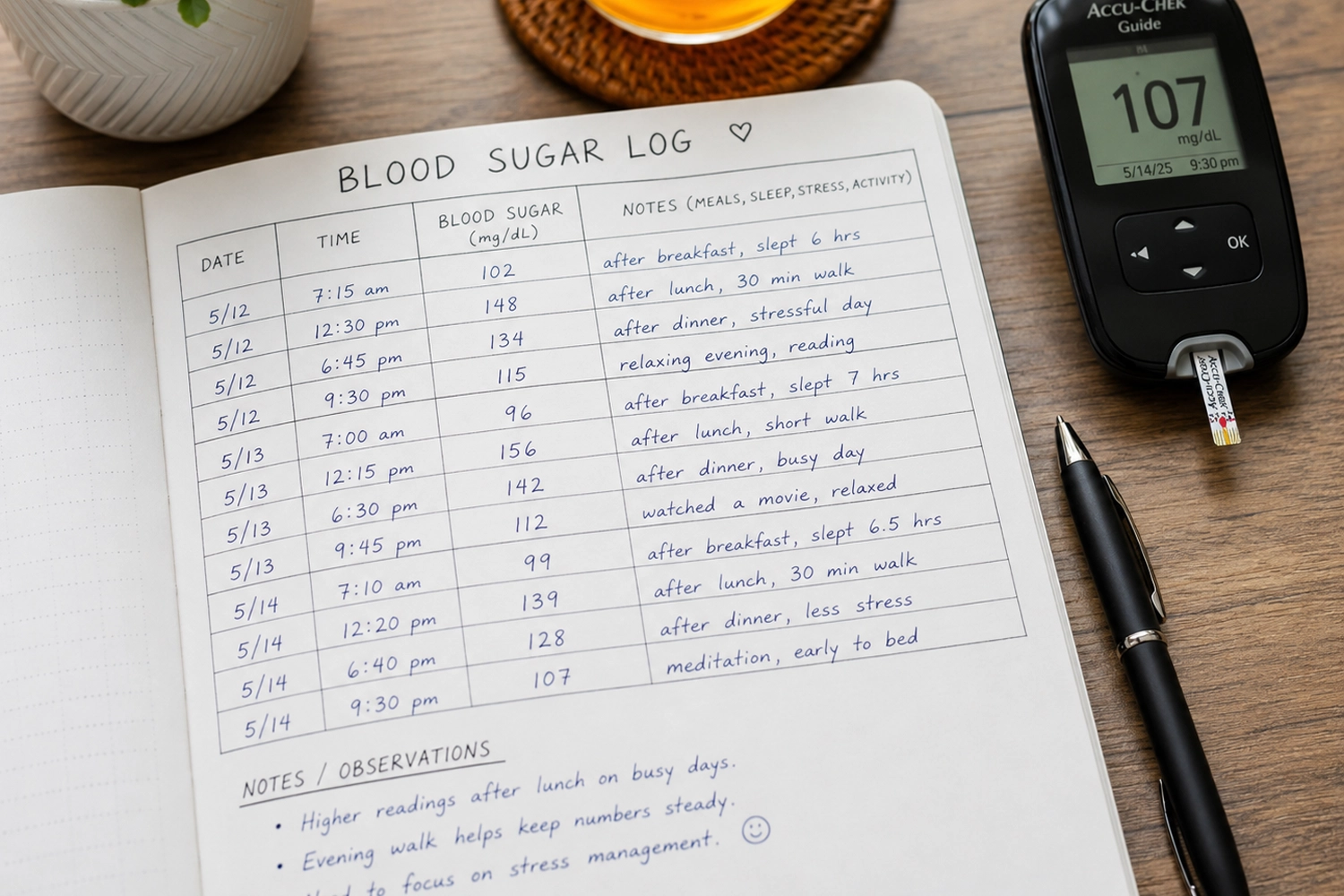
Tracking should reduce confusion, not create obsession. If checking too often makes you anxious, ask whether you need a clearer testing plan. People with diabetes, pregnancy-related concerns, or medications that can cause low blood sugar should follow professional guidance on when to test, what targets to use, and how to respond.
Practical Habits That May Support Steadier Blood Sugar
General lifestyle habits may help support healthier blood sugar patterns over time. These are not cures or instant fixes, but they can be useful foundations.
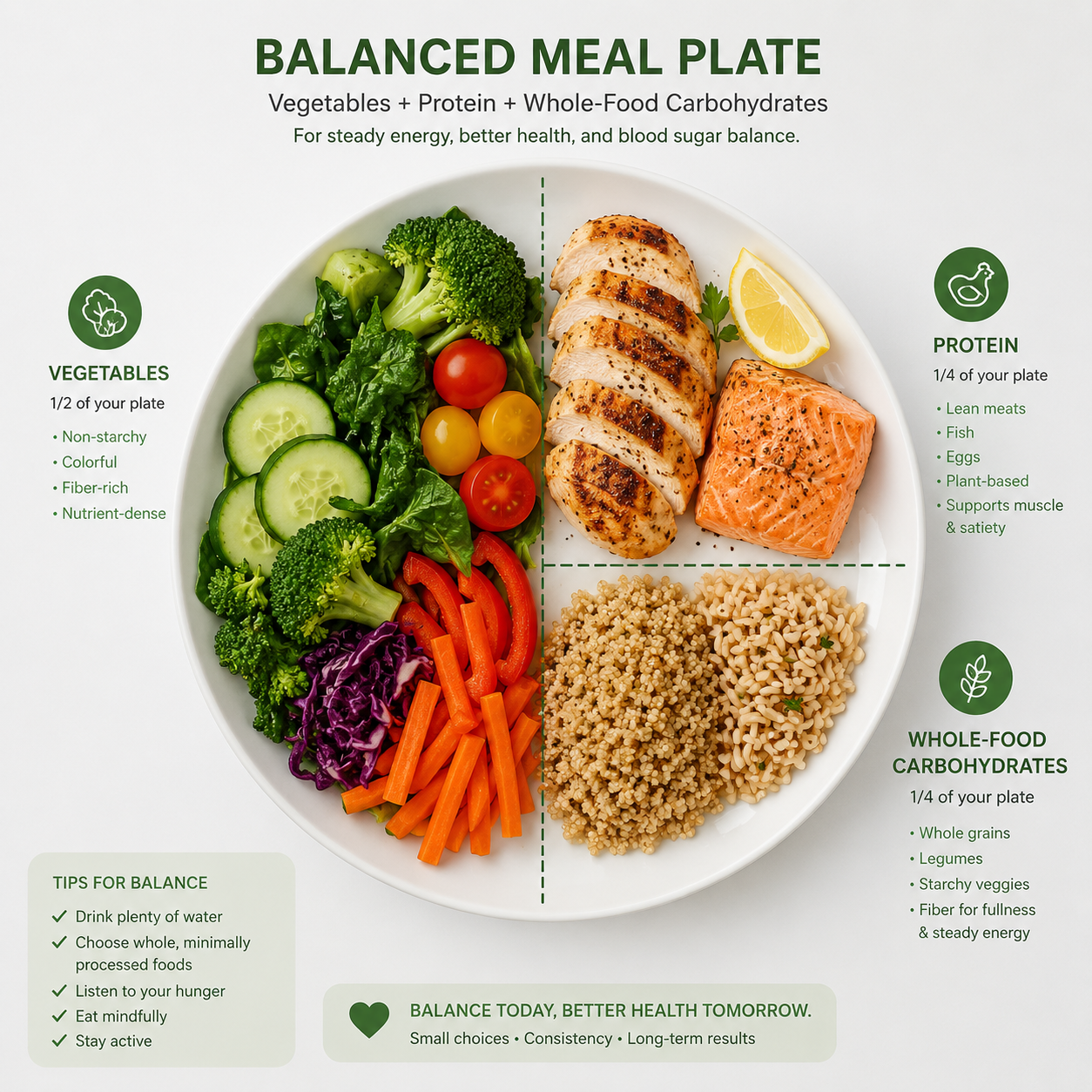
A simple starting point is the ADA Diabetes Plate: on a 9-inch plate, fill half with non-starchy vegetables, one quarter with lean protein, and one quarter with quality carbohydrates. This is a flexible portion guide, not a required diet, and individual nutrition needs may differ.
Reducing sugary drinks can also make a meaningful difference for some people. Liquid sugar is easy to consume quickly and may raise blood sugar faster than a balanced meal.
A short walk after meals may help some people reduce an after-meal rise and can support regular physical activity. If you use insulin or medication that can cause low blood sugar, follow your care plan because activity can change your glucose needs.
Sleep is another practical area. Poor sleep can make cravings stronger and may affect how the body handles glucose. A consistent sleep routine may support better metabolic habits.
Stress management matters too, although it is often easier said than done. Simple practices such as breathing breaks, light movement, time outdoors, or reducing late-night screen time may help some people build steadier routines.
The goal is not perfection. The goal is to build repeatable habits that support better patterns.
When to Talk to a Healthcare Professional
A blood sugar chart can help you understand general ranges, but it cannot replace medical advice.
Consider speaking with a healthcare professional if:
- Your fasting blood sugar is repeatedly above the normal range
- Your A1C is in the prediabetes or diabetes range
- You have repeated readings above your personal target or a laboratory result in the prediabetes or diabetes range
- A reading is below 70 mg/dL, especially if you use insulin or medication that can cause low blood sugar
- You have symptoms such as excessive thirst, frequent urination, unexplained weight loss, blurry vision, nausea or vomiting, abdominal pain, fruity-smelling breath, fast or deep breathing, dizziness, confusion, or fainting
- You are pregnant or planning pregnancy
- You take insulin or medications that can cause low blood sugar
- You are unsure how often you should test
- You feel anxious or confused about your readings
This is especially important because blood sugar goals may be different for different people. Age, medical history, medications, pregnancy, and existing diabetes can all change what is considered appropriate.
Practical Takeaway
A normal blood sugar range chart is helpful, but the number is only one part of the picture.
Before reacting to a reading, ask four questions:
- What type of reading is this?
- When was it taken?
- Is it a one-time result or a pattern?
- What was happening around it?
This simple approach can help you avoid panic and make better sense of your numbers.
If your readings are repeatedly outside the expected range, a laboratory result is abnormal, or you have symptoms, contact a qualified healthcare professional. Severe symptoms, loss of consciousness, seizures, breathing difficulty, or signs of diabetic ketoacidosis require urgent help.
FAQ
What is a normal blood sugar range before eating?
For many people without diabetes, fasting blood sugar is generally considered normal at 99 mg/dL or below. Before-meal targets may be different for people with diabetes, so individual guidance is important.
What is a normal blood sugar range after eating?
Blood sugar usually rises after eating. In people without diabetes, two-hour after-meal readings are often expected to return closer to baseline. For people with diabetes, common targets may allow higher after-meal numbers, but goals should be individualized by a healthcare professional.
Is fasting blood sugar of 100 mg/dL normal?
A fasting blood sugar of 100 mg/dL is often considered just above the general normal range and within the range used for prediabetes screening. One reading does not diagnose anything by itself. Repeated readings or lab testing may be needed.
What blood sugar level is considered prediabetes?
Prediabetes is commonly associated with fasting blood sugar of 100–125 mg/dL or A1C of 5.7%–6.4%. These results should be discussed with a healthcare professional.
What blood sugar level is considered diabetes?
Diabetes is commonly associated with fasting blood sugar of 126 mg/dL or above, A1C of 6.5% or above, or other diagnostic criteria. Diagnosis usually requires proper medical testing and sometimes confirmatory testing.
Can one high blood sugar reading mean diabetes?
One high reading does not always mean diabetes. Timing, food, stress, illness, sleep, and testing method can all affect blood sugar. Repeated abnormal readings or lab results are more meaningful.
What is the difference between fasting glucose and A1C?
Fasting glucose measures blood sugar at one point in time after not eating overnight. A1C reflects average blood sugar over roughly the past two to three months.
Why is my fasting blood sugar high in the morning?
Morning blood sugar can be affected by hormones, sleep, stress, late meals, alcohol, illness, or existing glucose regulation issues. If it happens repeatedly, it may be worth discussing with a healthcare professional.
Can stress or poor sleep affect blood sugar?
Yes, stress and poor sleep may affect hormones, appetite, cravings, and glucose regulation. They are not the only factors, but they can be part of the bigger picture.
Should I check blood sugar at home if I do not have diabetes?
Some people use home testing to understand patterns, but it is not necessary for everyone. If you are concerned about diabetes or prediabetes risk, laboratory testing and professional guidance are more reliable. Home glucose meter results are not suitable for diagnosing diabetes.
Are blood sugar targets different for people with diabetes?
Yes. People with diabetes may have individualized targets based on age, medications, risk of low blood sugar, pregnancy, other health conditions, and treatment plan. Always follow professional guidance.
When should I worry about a blood sugar number?
Take repeated abnormal readings, laboratory results in the prediabetes or diabetes range, or readings below 70 mg/dL seriously. Seek urgent help for loss of consciousness, seizures, inability to swallow, trouble breathing, persistent vomiting, or signs of diabetic ketoacidosis. Otherwise, record the context and ask a healthcare professional how the result applies to you.
You should also read:
Blood Sugar Conversion Chart: How to Understand Your Glucose Numbers in Different Units
Blood sugar numbers can be confusing enough on their own. They become even more confusing when one website shows a reading in mg/dL, your glucose meter uses mmol/L, or a lab report lists a number that looks completely unfamiliar. For example, you may see 100…
Continue reading...
Blood Sugar Support in Real Life: What Actually Helps Day to Day?
If you have ever felt tired after a meal, craved something sweet in the afternoon, or felt confused by blood sugar numbers, the phrase “blood sugar support” can sound both helpful and vague. Some people use it to talk about food choices. Others use it…
Continue reading...
Glucose to A1C Calculator: How to Estimate A1C from Average Blood Sugar
If you track your blood sugar at home, you may already know numbers like 98, 126, 154, or 180 mg/dL. Then you go to a healthcare appointment and hear a different kind of number: your A1C. At first, it can feel like glucose readings and…
Continue reading...