How to Use a Blood Sugar Log Without Feeling Overwhelmed
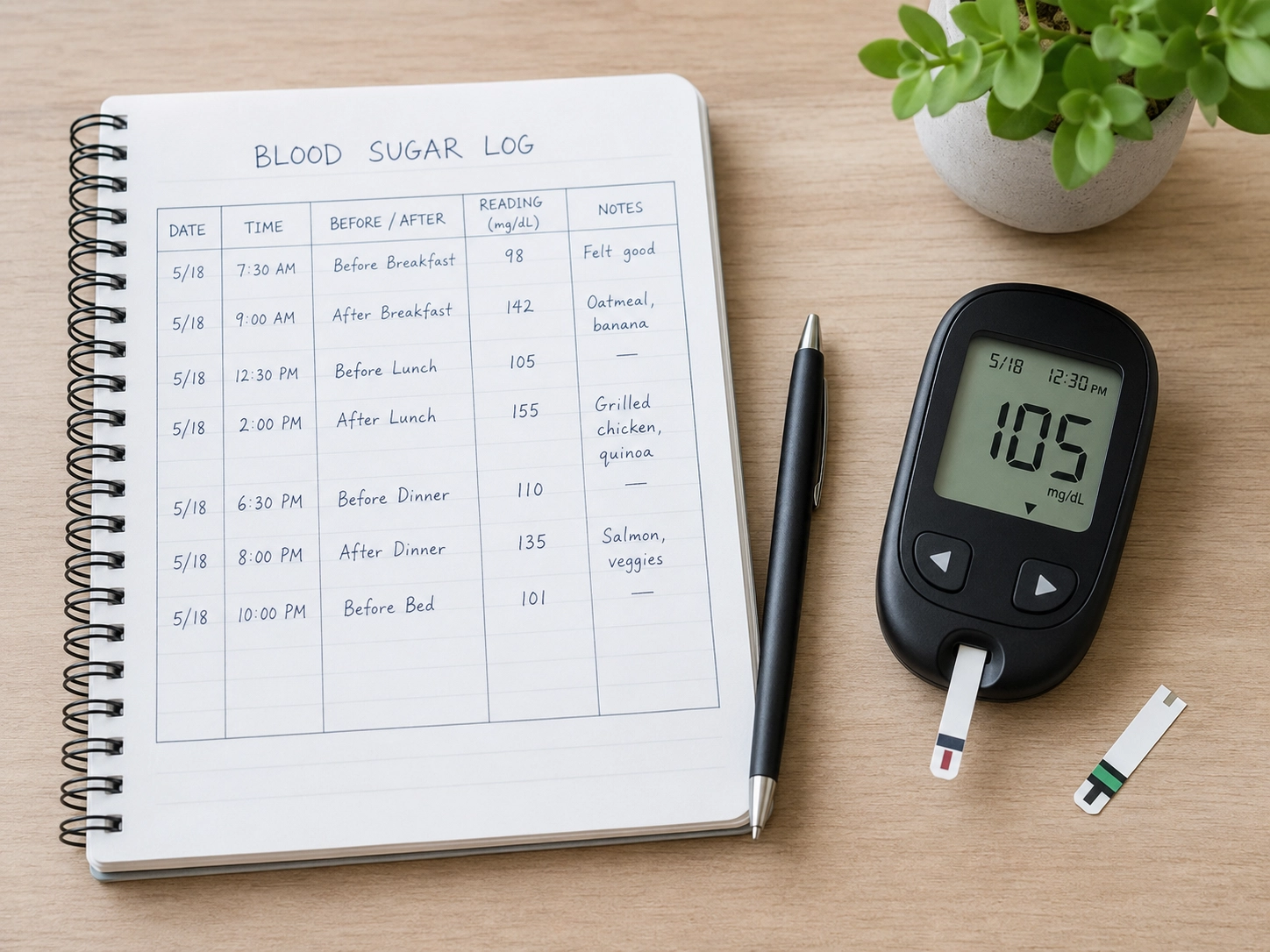
Table of Contents
- What Is a Blood Sugar Log?
- Why the Notes Matter as Much as the Numbers
- Who May Benefit from Keeping a Blood Sugar Log?
- What Should You Include in a Blood Sugar Log?
- When Do People Usually Record Blood Sugar Readings?
- The 3-Part Blood Sugar Log Method: Number, Context, Pattern
- A Real-Life Example: The Workday Pattern
- Another Example: The “Healthy Breakfast” Surprise
- Paper Log, Spreadsheet, App, or Glucose Monitor Report?
- A Simple Blood Sugar Log Template
- How to Review Your Log Without Overthinking It
- Common Mistakes When Keeping a Blood Sugar Log
- How to Make Blood Sugar Logging Easier
- What Small Adjustments Can a Log Help You Notice?
- When to Talk to a Healthcare Professional
- Practical Takeaway
- FAQ
- What is a blood sugar log?
- What should I write in a blood sugar log?
- How often should I record my blood sugar?
- Should I use a paper log or an app?
- Can a blood sugar log help with prediabetes?
- Should I track food with my readings?
- Why are my blood sugar readings different every day?
- Should I bring my blood sugar log to my doctor?
- Do I need to keep a blood sugar log forever?
- What should I do if my readings are often high or low?
Checking your blood sugar can feel simple at first: test, see a number, write it down. But after a few days, many people realize the hard part is not getting the number. The hard part is understanding what the number means.
Why was your morning reading higher today? Did breakfast affect you more than expected? Was it the rice, the portion size, the poor sleep, the stressful meeting, or the fact that you skipped your usual walk?
This is where a blood sugar log can be useful.
A good log is not just a notebook full of numbers. It is a pattern-finding tool. It can help you connect your readings with meals, sleep, stress, activity, and daily routines. Over time, this may support better decisions and more helpful conversations with your healthcare professional.
The goal is not perfect tracking. The goal is to notice what keeps showing up.
Health Disclaimer: This article is for general educational purposes only and is not medical advice. Blood sugar targets, testing schedules, and treatment decisions vary from person to person. If you have diabetes, prediabetes, symptoms of high or low blood sugar, or questions about your readings, speak with a qualified healthcare professional.
What Is a Blood Sugar Log?
A blood sugar log is a simple record of your glucose readings. It may be a paper notebook, printable template, spreadsheet, app, or report from a glucose monitor.
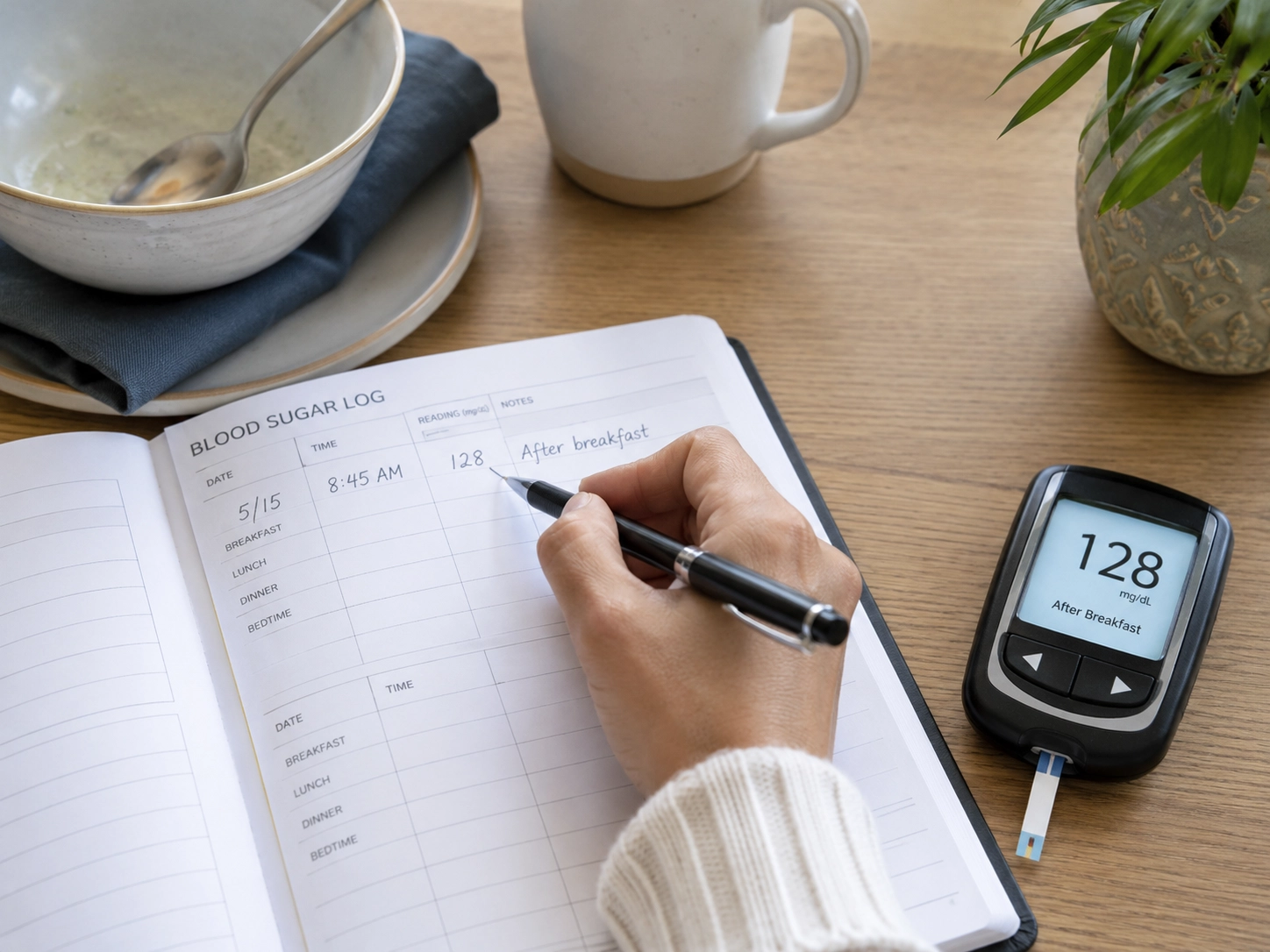
At its most basic, it includes:
| The date | The time | Your blood sugar reading | When the reading was taken, such as fasting, before a meal, after a meal, or before bed |
But the most useful logs usually include a little more context.
For example, instead of writing only:
“142 after lunch”
you might write:
“142 two hours after lunch — rice bowl, chicken, vegetables, stressful work call, no walk.”
That second version tells a clearer story. It does not diagnose anything by itself, but it gives you and your healthcare professional more useful information.
Why the Notes Matter as Much as the Numbers
A number without context can be confusing.
The same reading may mean different things depending on what happened around it. A higher-than-usual reading after a large pasta dinner is different from a higher-than-usual fasting reading after a night of poor sleep. A lower-than-usual reading after exercise may tell a different story from a lower reading after skipping a meal.
Blood sugar can be influenced by many everyday factors, including:
- Meal size
- Type and amount of carbohydrate
- Food combinations
- Physical activity
- Sleep quality
- Stress
- Illness
- Medication timing
- Alcohol
- Meal timing
- Hormonal changes
This is why the best blood sugar log is not only about “good” or “bad” numbers. It helps you ask better questions.
Who May Benefit from Keeping a Blood Sugar Log?
Some people may find a log helpful if they are trying to understand how their daily habits affect their blood sugar patterns.
This may include:
- People with diabetes
- People with prediabetes
- People who have been told they may have insulin resistance
- People who notice energy crashes or strong cravings
- People changing their diet or exercise routine
- People using a glucose meter or continuous glucose monitor
- People whose healthcare professional has asked them to track readings
A log can also be useful before medical appointments. Instead of trying to remember scattered readings, you can show patterns from real life.
However, not everyone needs to track blood sugar in the same way. How often you check, when you check, and what numbers matter most should depend on your personal health situation and guidance from your healthcare team.
What Should You Include in a Blood Sugar Log?
A simple log is often better than a complicated one. If the format is too detailed, many people stop using it after a few days.
Start with the basics, then add details only if they are useful.
Basic information to record
A beginner-friendly blood sugar log can include:
- Date
- Time
- Reading
- Timing of the reading: fasting, before meal, after meal, bedtime, or other
- Recent meal or snack
- Activity or exercise
- Sleep or stress notes
- Symptoms or unusual events
- Short pattern note
You do not need to write a full diary entry. Short notes are enough.
Examples:
- “Late dinner”
- “Poor sleep”
- “Walked 20 minutes”
- “Skipped lunch”
- “Very stressful day”
- “Large dessert”
- “Felt shaky”
- “Ate more rice than usual”
These small notes can become very useful when you review several days together.
Optional details for more insight
Some people may want to track extra details, such as:
- Approximate carbohydrate amount
- Portion size
- Protein and fiber in the meal
- Hydration
- Illness
- Travel
- Menstrual cycle notes, if relevant
- Medication timing, if advised by a clinician
The key is not to track everything forever. The key is to track enough to understand patterns.
When Do People Usually Record Blood Sugar Readings?
Testing schedules can vary a lot. Someone using insulin may need a different routine from someone with prediabetes who is only checking occasionally. This is why it is important to follow your healthcare professional’s advice.
That said, common times people may be asked to track include the following.
Fasting readings
A fasting reading is usually taken after waking, before eating or drinking anything with calories. Some people use this to understand their overnight and early morning blood sugar patterns.
Before-meal readings
A before-meal reading can show where your blood sugar is before food. This may be helpful when comparing what happens before and after meals.
After-meal readings
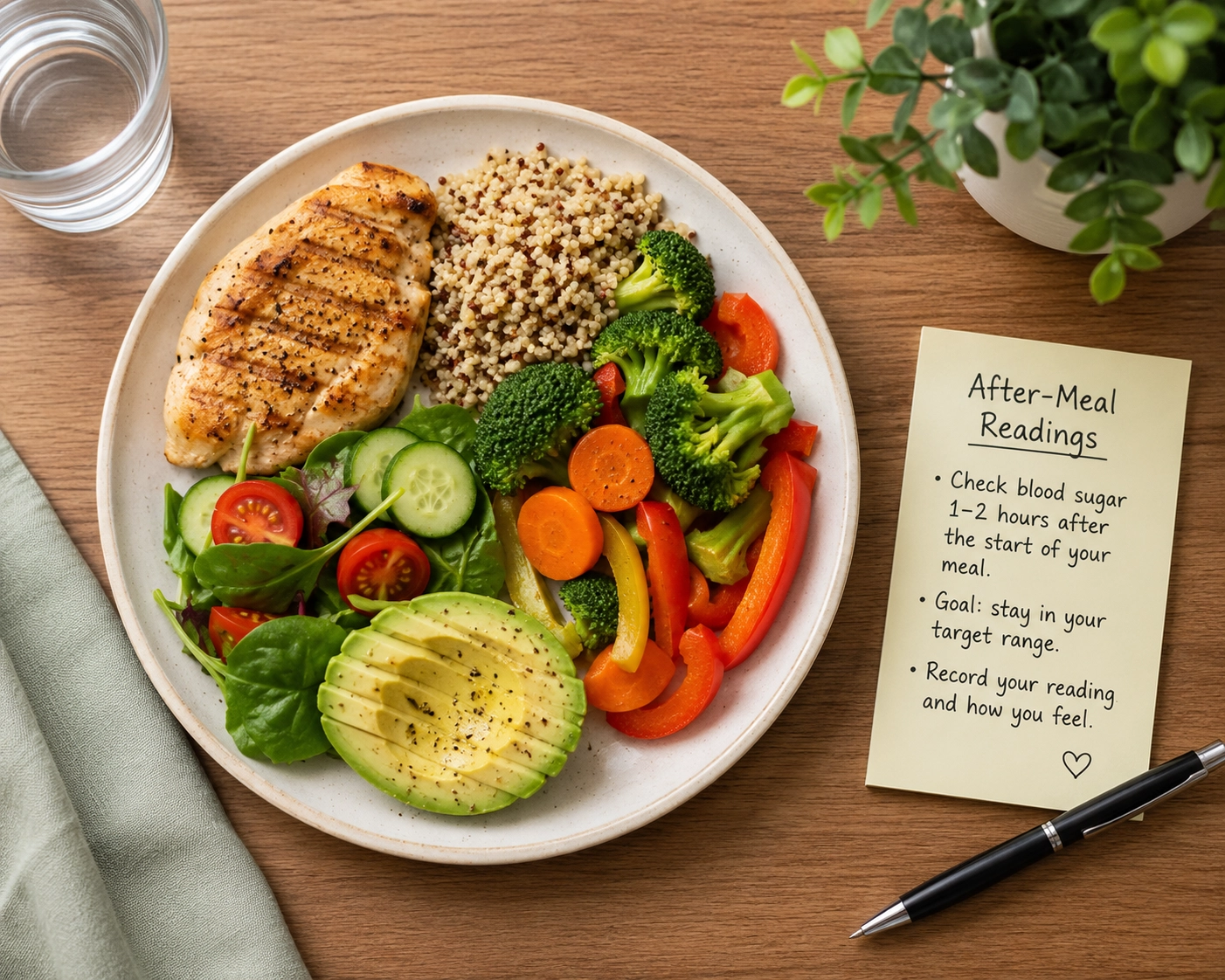
After-meal readings may help some people understand how different meals affect them. For example, you may notice that a meal with refined carbohydrates affects you differently from a meal that includes protein, vegetables, and healthy fats.
Bedtime readings
Some people may be asked to check before bed, especially if they use certain medications or have concerns about overnight blood sugar changes.
Again, this article is not giving you a personal testing schedule. Your own timing should come from your healthcare team, especially if you take insulin or medications that can affect blood sugar.
The 3-Part Blood Sugar Log Method: Number, Context, Pattern
To make tracking more useful, try thinking in three parts:
Number. Context. Pattern.
This keeps the log simple while making it more meaningful.
1. Record the number
Write down the reading clearly. Include the time and whether it was fasting, before meal, after meal, or another situation.
Example:
“8:00 AM — fasting — 118”
2. Add context
Add a short note about what may have influenced the reading.
Example:
“Late dinner, poor sleep”
Or:
“After lunch — rice, chicken, vegetables, no walk”
The goal is not to blame yourself. The goal is to collect clues.
3. Look for patterns
One reading does not tell the whole story. A pattern over several days or weeks is usually more helpful.
For example, if your morning reading is higher one time, it may be due to many possible reasons. But if your morning readings are often higher after late dinners or poor sleep, that pattern may be worth discussing or experimenting with.
A Real-Life Example: The Workday Pattern
Imagine someone named Maya.
Maya checks her blood sugar after lunch and notices that her readings are often higher on workdays than on weekends. At first, she thinks the problem must be lunch.
But after keeping a simple log for two weeks, she notices a bigger pattern:
- On workdays, she often skips breakfast.
- She drinks sweetened coffee mid-morning.
- Lunch is rushed and usually heavy in refined carbohydrates.
- She sits for several hours after eating.
- Stress is higher on meeting days.
- On weekends, she eats more slowly and walks after meals.
The log shows that the issue may not be one single food. It may be a combination of meal timing, stress, sitting, and food choices.
This is the kind of insight a good log can provide. It helps you see your real life more clearly.
Another Example: The “Healthy Breakfast” Surprise
A common misunderstanding is that a food labeled “healthy” will always be gentle on blood sugar.
For example, someone may eat a breakfast of oatmeal, banana, honey, and orange juice. These foods may seem wholesome, but the meal is mostly carbohydrate and may affect blood sugar more than expected for some people.
A log may help the person notice that their reading is different when breakfast includes:
- Oatmeal with nuts and Greek yogurt
- Eggs with vegetables and a small portion of fruit
- Whole-grain toast with avocado and protein
- A smaller portion of oats without juice
This does not mean oatmeal or fruit is “bad.” It means portion size and food combinations can matter.
Paper Log, Spreadsheet, App, or Glucose Monitor Report?
There is no perfect format. The best format is the one you will actually use.
Paper blood sugar log
A paper log is simple and beginner-friendly. You can keep it near your glucose meter and bring it to appointments.
It works well for people who dislike apps or do not want to manage another digital tool.
The downside is that it can be harder to analyze long-term trends unless you review it regularly.
Spreadsheet
A spreadsheet is flexible. You can add columns, sort readings, and look for patterns over time.
It may work well if you like seeing data clearly. But it can feel too technical for some people.
Tracking app
Apps can be convenient because your phone is usually nearby. Some apps offer reminders and charts.
However, some people find apps overwhelming. Privacy, subscriptions, and too many features can also be concerns.
Continuous glucose monitor reports
A continuous glucose monitor, or CGM, can show more detailed glucose patterns throughout the day and night. For some people, this information can be helpful.
But not everyone needs a CGM, and the amount of data can feel overwhelming without guidance. If you use one, it is still helpful to add real-life notes about meals, stress, sleep, and movement.
A Simple Blood Sugar Log Template
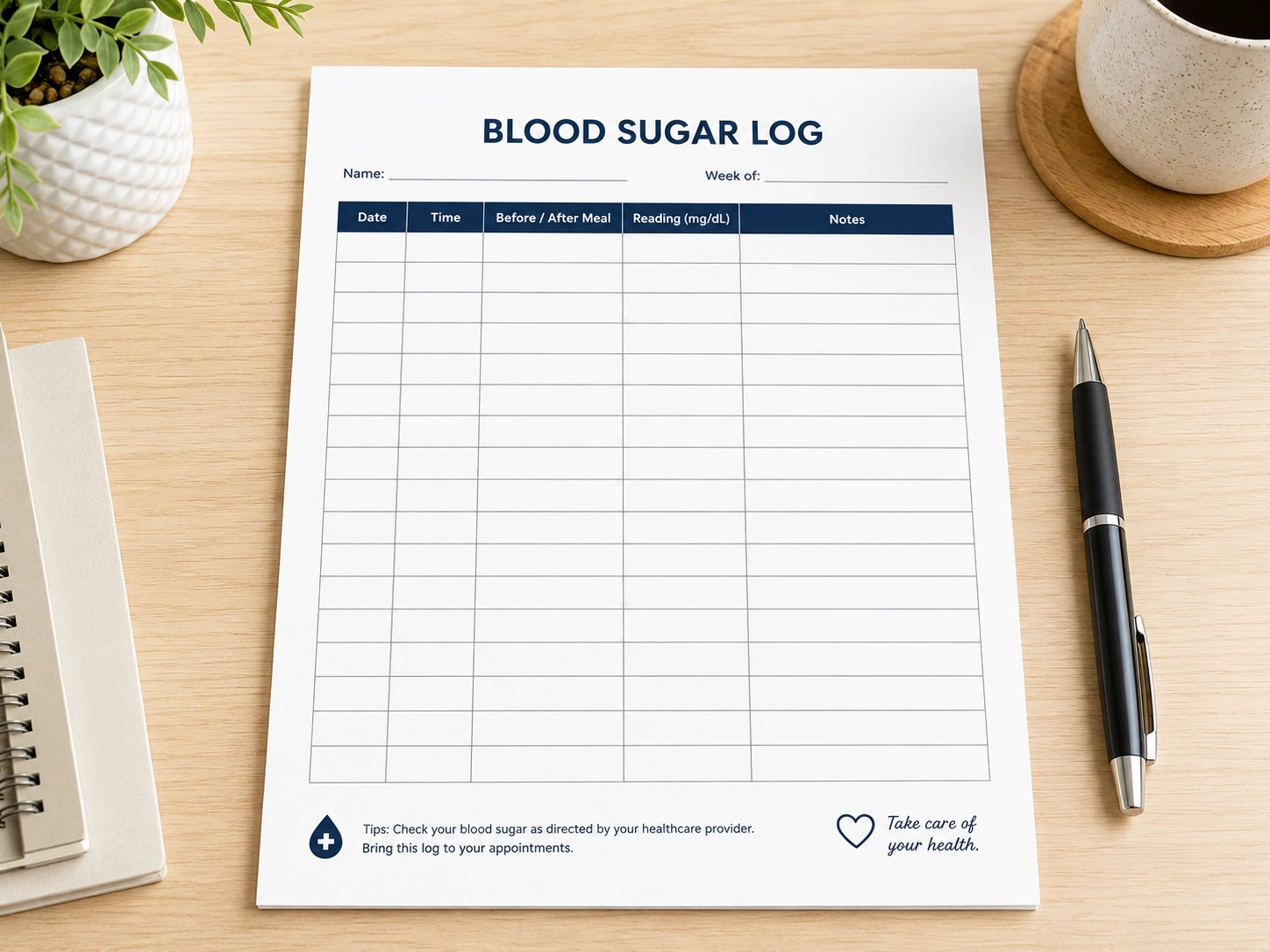
Here is a simple format you can use:
Date | Time | Reading | Timing | Meal / Activity / Notes | Pattern Noticed |
Monday | 8:00 AM | ___ | Fasting | Poor sleep, late dinner | Morning reading higher than usual |
Monday | 2:00 PM | ___ | After lunch | Rice bowl, chicken, vegetables, no walk | Higher after larger rice portion |
Tuesday | 7:30 PM | ___ | After dinner | Walked 20 minutes after meal | Felt steadier than usual |
You can simplify this even more:
Date | Time | Reading | Notes |
___ | ___ | ___ | ___ |
Start small. A log you actually use is better than a perfect template you abandon.
How to Review Your Log Without Overthinking It
Many people make the mistake of reacting emotionally to every single number.
A more helpful approach is to review your log once a week and ask simple questions.
Look for repeated patterns
Ask:
- Are readings often higher after certain meals?
- Are mornings different after poor sleep?
- Do readings look different on stressful days?
- Are weekends different from weekdays?
- Do walks after meals seem to make a difference?
- Are large portions linked with higher after-meal readings?
- Do skipped meals lead to cravings or unusual readings later?
Ask better questions
Instead of asking, “Was this number bad?” try asking:
- “What was happening around this reading?”
- “Is this a one-time event or a repeated pattern?”
- “What small change could I test next?”
- “Is this something I should discuss with my healthcare professional?”
This turns the log into a learning tool instead of a judgment tool.
Common Mistakes When Keeping a Blood Sugar Log
Only writing down the number
Numbers matter, but context makes them useful. Without notes, it can be hard to know what influenced the reading.
Tracking too much too soon
If your log has 20 columns, you may stop using it. Start with the essentials. You can always add more later.
Panicking over one unusual reading
One unusual reading does not always mean something is wrong. Food, stress, sleep, illness, activity, and timing can all affect readings. Repeated unusual readings are more useful to review with a healthcare professional.
Comparing your numbers to someone else’s
Blood sugar patterns can vary from person to person. Targets may also differ depending on age, health conditions, medications, pregnancy, and other factors.
Using the log as a guilt tool
Using the log as a guilt tool. A log should help you learn, not shame you. If tracking makes you anxious and managing blood sugar starts to feel like a full-time job, simplify the process and talk with a healthcare professional for guidance.
Changing medication based on your log without medical advice
Your log can support better conversations, but it should not be used to change medication on your own. Always speak with a qualified healthcare professional before making medication changes.
How to Make Blood Sugar Logging Easier
The easier the habit, the more likely you are to continue.
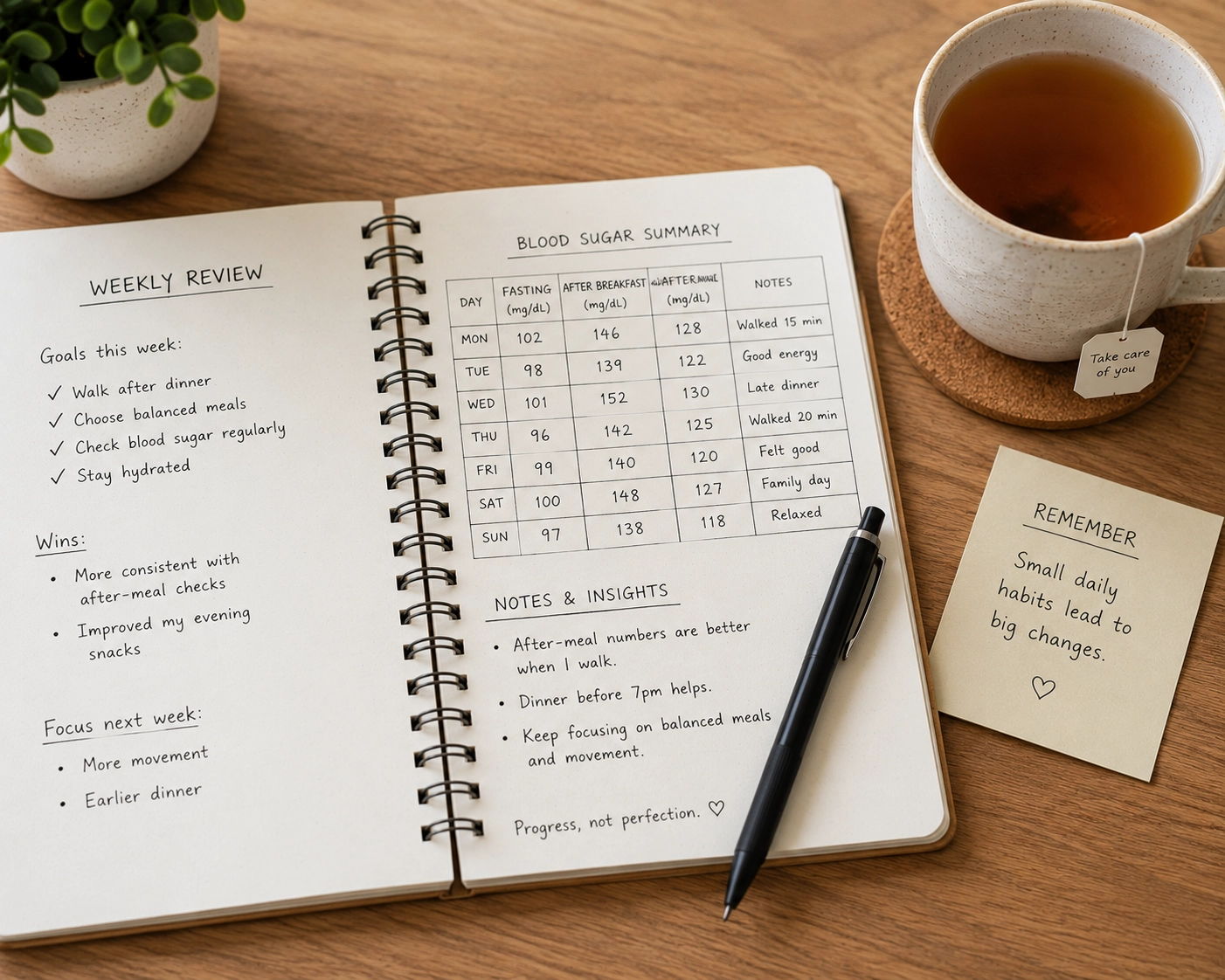
Try these practical tips:
- Keep your log near your glucose meter.
- Use the same format every day.
- Write short notes, not long explanations.
- Start with three to five columns.
- Review once a week instead of obsessing daily.
- Bring the log to healthcare appointments.
- Use reminders if you often forget.
- Choose paper, app, or spreadsheet based on your real habits.
You can also use a “minimum version” on busy days.
For example:
“7:45 AM — fasting — ___ — poor sleep”
That is still useful.
What Small Adjustments Can a Log Help You Notice?
A blood sugar log does not replace medical care, but it may help you notice areas to discuss or experiment with safely.
For example, some people may notice steadier patterns when they:
- Add protein to breakfast
- Include more fiber-rich foods
- Reduce sugary drinks
- Take a gentle walk after meals
- Eat meals at more consistent times
- Avoid very large portions of refined carbohydrates
- Improve sleep routines
- Manage stress more intentionally
These are not guaranteed results. They are possible patterns to observe and discuss, especially if you are managing diabetes, prediabetes, or insulin resistance concerns.
When to Talk to a Healthcare Professional
You should talk to a healthcare professional if:
- Your readings are often outside the range recommended for you
- You are not sure when or how often to check
- You experience symptoms that may be related to high or low blood sugar
- You use insulin or medications that can affect blood sugar
- You are pregnant or have gestational diabetes concerns
- You are making major diet, exercise, or medication-related changes
- Your readings are causing anxiety or confusion
Bring your log with you. It can help your doctor, dietitian, diabetes educator, or other healthcare professional understand what is happening in your daily routine.
Practical Takeaway
A blood sugar log is most useful when it connects numbers with real life.
The point is not to track perfectly. The point is to notice patterns.
A simple note like “late dinner,” “poor sleep,” “walked after lunch,” or “larger rice portion” may be more useful than a number by itself. Over time, these notes can help you understand what may be affecting your readings and what questions to bring to your healthcare team.
Think of your log as a conversation starter, not a report card.
FAQ
What is a blood sugar log?
A blood sugar log is a record of your glucose readings, usually with the date, time, reading, and notes about meals, activity, sleep, stress, or other daily factors.
What should I write in a blood sugar log?
At minimum, write the date, time, reading, and when the reading was taken. Adding short notes about food, movement, stress, sleep, or symptoms can make the log more useful.
How often should I record my blood sugar?
That depends on your health situation, medications, and healthcare professional’s advice. Some people check several times a day, while others check less often. Ask your healthcare team what schedule is right for you.
Should I use a paper log or an app?
Use the format you are most likely to maintain. Paper logs are simple. Apps can be convenient. Spreadsheets are flexible. A glucose monitor report may be useful for some people, especially with professional guidance.
Can a blood sugar log help with prediabetes?
A log may help some people with prediabetes notice how meals, movement, sleep, and stress are associated with their readings. It should be used as an educational tool, not as a replacement for medical advice.
Should I track food with my readings?
Tracking food can be helpful, especially around after-meal readings. You do not need to write every detail. Short notes about the meal, portion size, and food combination can be enough.
Why are my blood sugar readings different every day?
Readings can vary because of food, activity, sleep, stress, illness, hydration, medication timing, and other factors. A log may help you notice repeated patterns instead of focusing on one isolated number.
Should I bring my blood sugar log to my doctor?
Yes, it can be helpful. A log gives your healthcare professional more context than a few remembered numbers.
Do I need to keep a blood sugar log forever?
Not always. Some people track regularly, while others use a log for a short period to understand patterns or prepare for an appointment. Follow your healthcare professional’s guidance.
What should I do if my readings are often high or low?
Do not ignore repeated unusual readings. Contact a healthcare professional, especially if you have symptoms, use insulin, take medications that affect blood sugar, or are unsure what your readings mean.
You should also read:
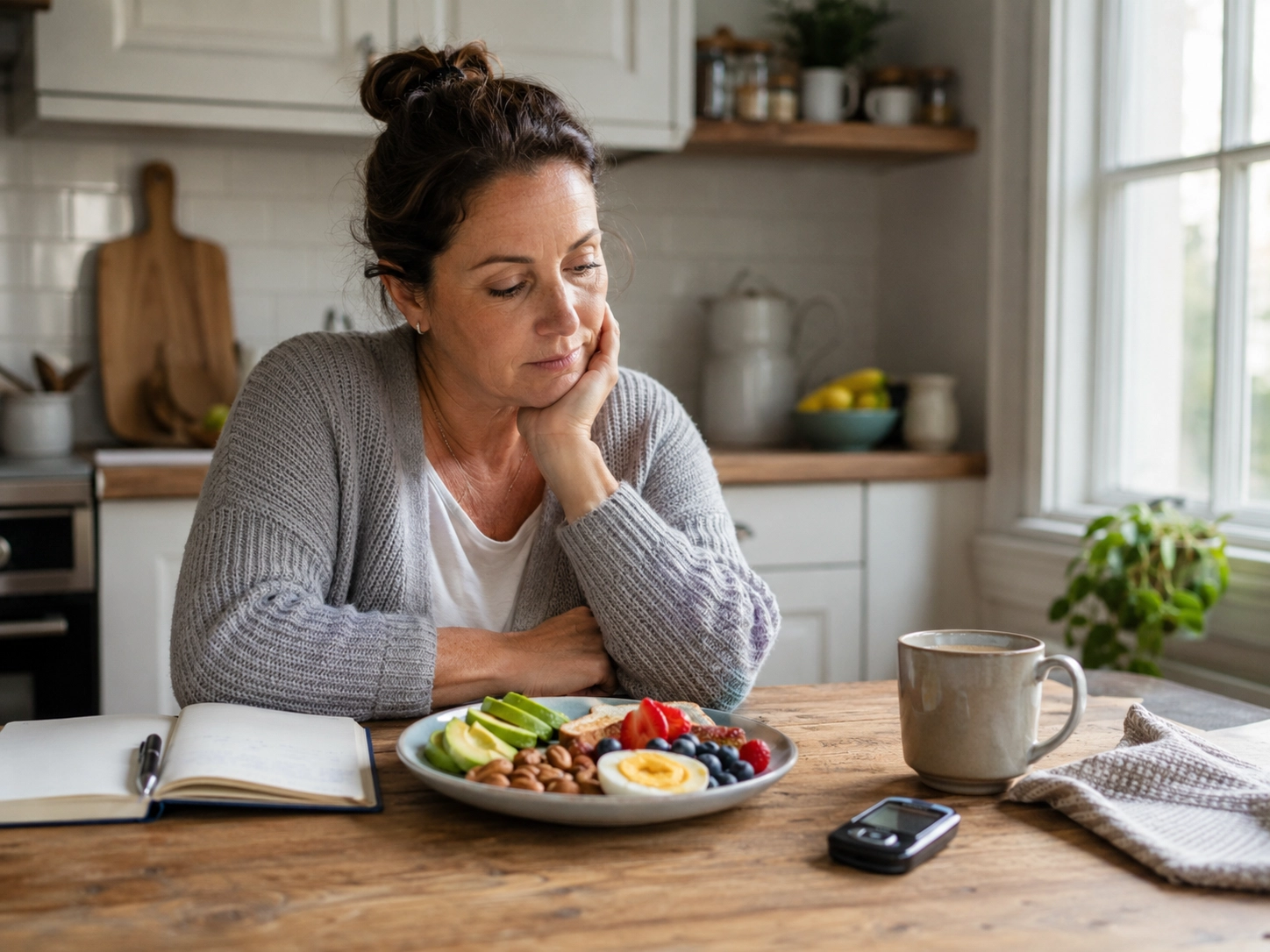
When Managing Blood Sugar Starts to Feel Like a Full-Time Job
There is a particular kind of tiredness that comes from having to think about food all the time. Not just deciding what sounds good for dinner, but wondering what a meal might do to your energy, your cravings, or the numbers you may see later.
Continue reading...
Normal Blood Sugar Range Chart: Fasting, After Meals, and A1C Explained
Checking a blood sugar number can feel simple at first. You see a reading, compare it with a chart, and expect a clear answer. But real life is not always that neat. A fasting blood sugar of 103 mg/dL may make one person anxious. A…
Continue reading...
Can Banana Be Eaten in Diabetes? A Practical Guide to Portion, Ripeness, and Blood Sugar
Bananas are one of those everyday foods that can feel confusing if you are watching your blood sugar. On one hand, a banana is a whole fruit. It is simple, affordable, portable, and naturally sweet. On the other hand, you may have heard that bananas…
Continue reading...