Could Your Type 2 Diagnosis Be Wrong? Understanding LADA and Type 3c

Being diagnosed with Type 2 diabetes is a life-altering moment. For many, it comes with a barrage of new information, prescriptions, and lifestyle changes. But what happens when the diagnosis just doesn't feel right?
Perhaps you have maintained a healthy weight your entire life, never struggling with the typical risk factors like a high BMI or metabolic syndrome. Or maybe your diagnosis came on the heels of a severe illness, like acute pancreatitis, and you were immediately placed on insulin regimens like Lantus. In the digital age, a quick scroll through online forums might introduce you to terms you have never heard from your doctor: LADA (Type 1.5 diabetes) or Type 3c diabetes.
If you are questioning whether your body truly fits the Type 2 profile, you are not alone. Many adults face a frustrating disconnect between their physical reality and their medical chart. Let’s break down the biology behind these different forms of diabetes, why misdiagnoses happen in adults, and how to advocate for the correct testing.
The Confusion of an Unexpected Diagnosis
The medical community often relies on statistics. Because Type 2 diabetes accounts for approximately 90% to 95% of all diabetes cases in adults, a new adult-onset case of elevated blood sugar is frequently assumed to be Type 2 by default.
Why Many Adults Feel Disconnected from the "Typical" Type 2 Profile
The psychological burden of an unexpected diagnosis is heavy. When a person with a normal BMI, who exercises regularly and eats well, is handed a Type 2 diagnosis, it often leads to profound confusion and even a sense of shame. You might wonder, "What did I do wrong?" The reality is that if you do not fit the metabolic profile of Type 2 diabetes (which is primarily driven by insulin resistance), your elevated blood sugar might be the result of a completely different biological mechanism.

This disconnect becomes a major barrier to effective treatment. If a patient is treated for insulin resistance (Type 2) but actually lacks insulin production due to autoimmune or structural damage, standard oral medications like Metformin may eventually stop working, leading to frustration, fear, and worsening health.
What is LADA (Type 1.5 Diabetes)?
Latent Autoimmune Diabetes in Adults (LADA), often informally called Type 1.5 diabetes, shares characteristics of both Type 1 and Type 2, which makes it incredibly easy to misdiagnose.
The Biological Mechanism: An Autoimmune Condition
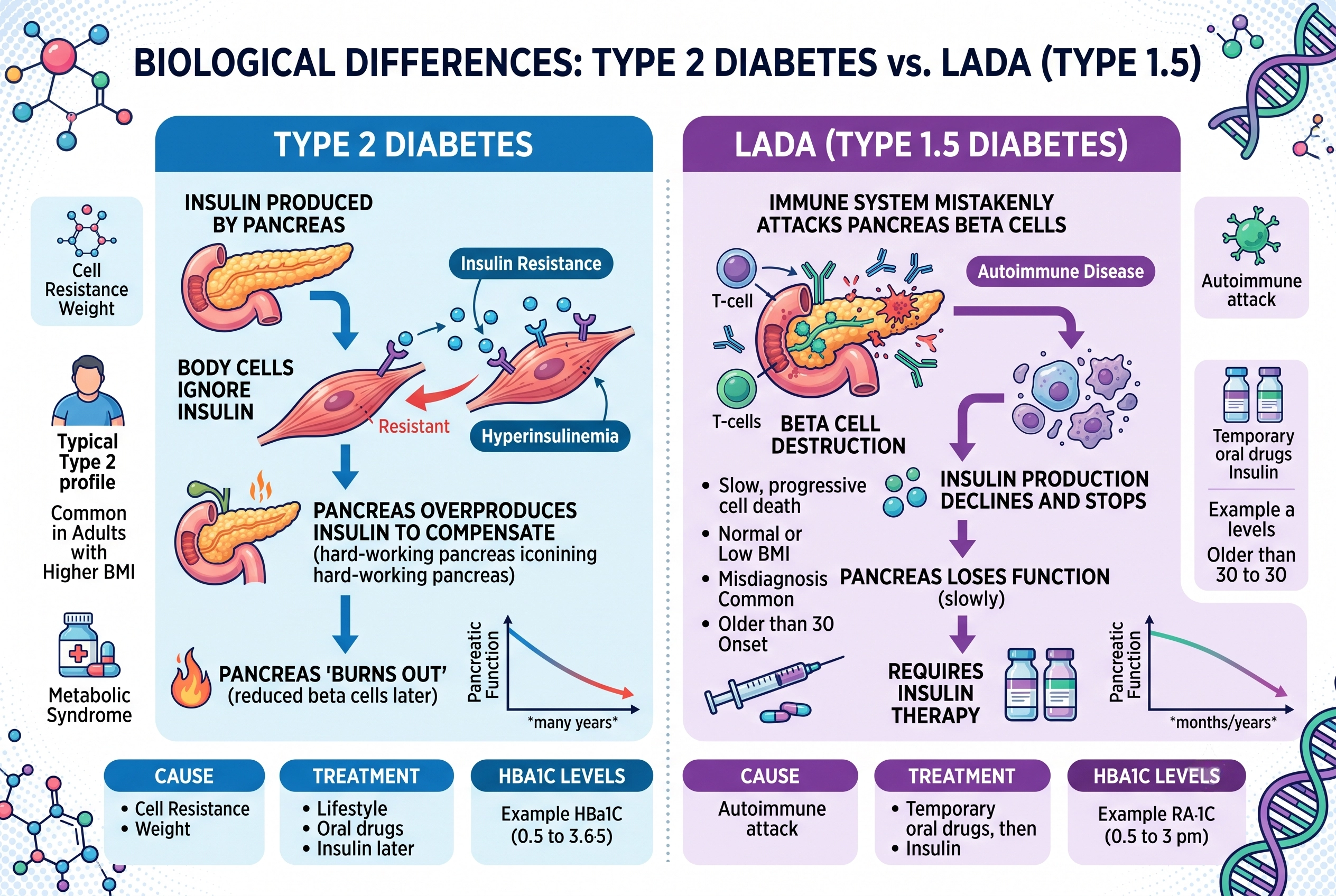
To understand LADA, we have to look at the pancreas. In classic Type 2 diabetes, the pancreas produces insulin, but the body’s cells become resistant to it. To compensate, the pancreas pumps out even more insulin until it eventually tires out.
LADA, however, is not about insulin resistance. It is an autoimmune disease, much like Type 1 diabetes. In LADA, the body's immune system mistakenly attacks and destroys the insulin-producing beta cells in the pancreas. The critical difference between Type 1 and LADA is the speed of this destruction. While Type 1 typically strikes quickly in childhood or adolescence, LADA progresses very slowly in adulthood. For months or even years, the pancreas retains enough function to prevent severe emergencies like Diabetic Ketoacidosis (DKA), which is why it masquerades so convincingly as Type 2 diabetes.
Key Differences: LADA vs. Type 2
When comparing these conditions in a real-world scenario, the differences become clearer:
- Physical Profile: A typical Type 2 patient often presents with a higher BMI, a history of metabolic syndrome, and high blood pressure. A LADA patient often has a normal or low BMI and lacks these metabolic markers.
- Response to Treatment: A Type 2 patient usually responds well initially to lifestyle changes and insulin-sensitizing drugs. A LADA patient might see a brief improvement on these drugs, but as their beta cells continue to die off, their blood sugar will inevitably rise again, eventually requiring insulin therapy.
- Age of Onset: LADA typically appears in adults over 30, precisely the age group routinely screened for Type 2.
Pancreatitis and Diabetes: The Type 3c Connection
While LADA is an autoimmune condition, there is another lesser-known form of diabetes that can develop in adults, especially after severe abdominal illness: Type 3c diabetes (pancreatogenic diabetes).
What is Type 3c Diabetes?
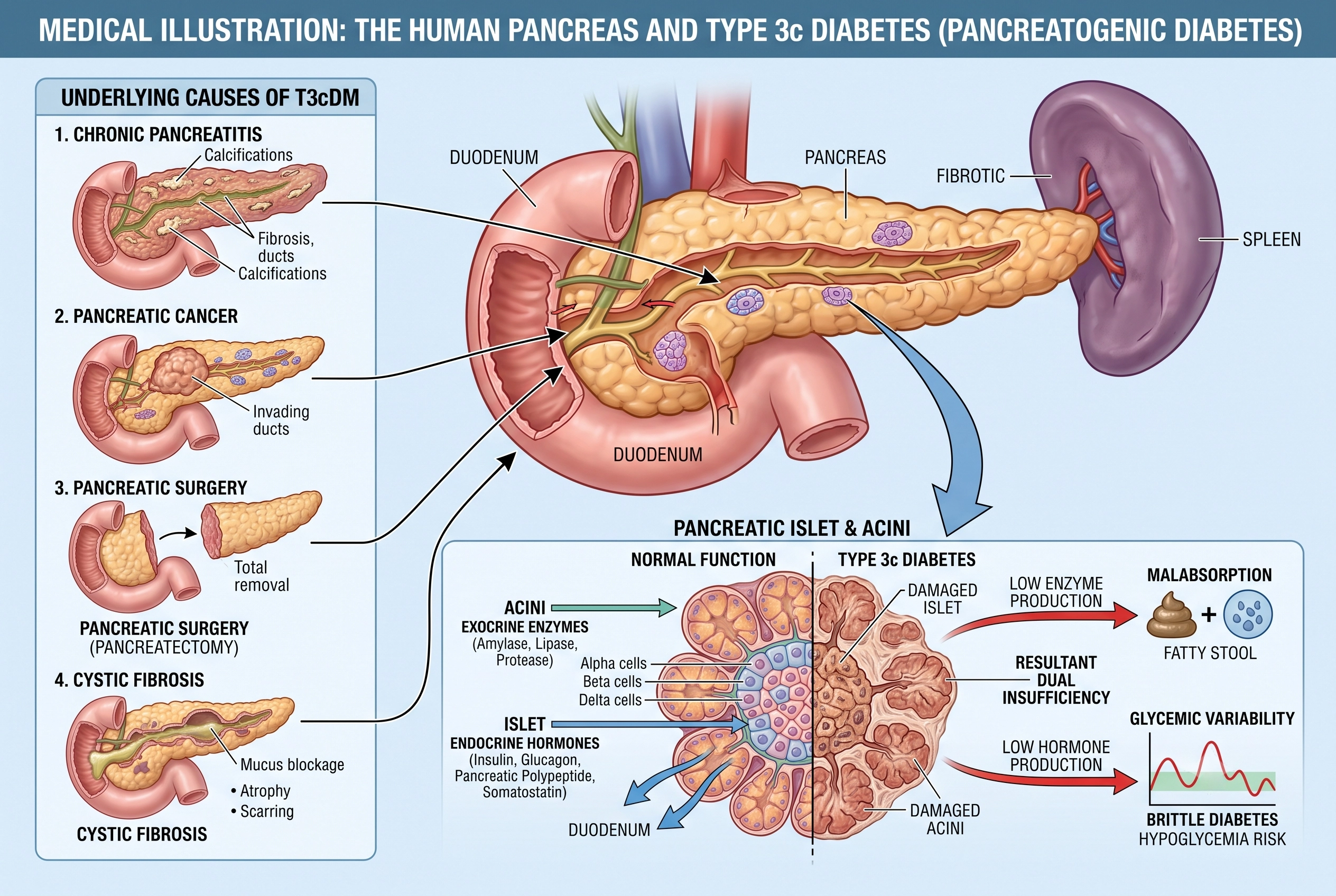
Type 3c diabetes occurs when the pancreas suffers physical, structural damage. The pancreas has two main jobs: endocrine (producing hormones like insulin) and exocrine (producing digestive enzymes). When a disease affects the exocrine pancreas, it can cause collateral damage to the insulin-producing beta cells.
Why Pancreatic Injury Changes the Equation
Consider a scenario where an adult with no history of weight issues suffers from acute pancreatitis—a severe inflammation of the pancreas. Shortly after recovering, they are diagnosed with diabetes and placed on multiple medications, including insulin.
In this situation, the diabetes is not caused by insulin resistance (Type 2) or an autoimmune attack (LADA). It is caused by the acute trauma of pancreatitis, which physically destroyed a portion of the beta cells. Because the exocrine tissue is also damaged, patients with Type 3c often struggle with digestion and nutrient absorption alongside their blood sugar issues. Unfortunately, because awareness of Type 3c is low, these patients are frequently swept under the broad umbrella of a Type 2 diagnosis.
Advocating for Yourself: When to Get a Second Opinion
If your diagnosis does not align with your physical reality—especially if you have a normal BMI, a history of pancreatic injury, or if standard Type 2 medications are failing—it is highly reasonable to seek a second opinion. Getting the correct diagnosis is not just about a label; it dictates your entire medical trajectory.
Important Tests to Discuss with Your Doctor
You do not have to guess which type of diabetes you have. Specific biological markers can provide clear answers. When speaking with an endocrinologist, you may want to ask about:
- C-Peptide Test: This blood test measures how much insulin your pancreas is actually producing. High levels often point to Type 2 (insulin resistance), while very low levels suggest Type 1, LADA, or extensive pancreatic damage (Type 3c).
- Autoantibody Screening (such as GAD65): This test checks for the presence of the immune system antibodies that attack the pancreas. A positive result confirms an autoimmune condition like LADA.
Daily Support for Blood Sugar Maintenance
Navigating a diabetes diagnosis requires daily diligence, regardless of the specific type. While waiting for specialist appointments or test results, maintaining a stable daily routine is crucial. This includes prioritizing lean proteins, monitoring carbohydrate intake, and engaging in regular, gentle movement like post-meal walking to help muscles utilize glucose.

In addition to foundational lifestyle habits, some individuals look for supplementary ways to support their body's metabolic processes. NuviaLab Sugar Control is a unique food supplement that supports the maintenance of normal blood sugar levels. Regular use of the product supports the maintenance of proper macronutrient metabolism in the blood, contributes to the regulation of hormonal activity and the reduction of feelings of fatigue. Formulated as a combination of 9 ingredients that work together to create an effective supplement to help control blood sugar levels, it includes certified plant extracts, as well as vitamins and minerals. Furthermore, NuviaLab Sugar Control helps reduce appetite and calorie intake.
Frequently Asked Questions (FAQ)
Can Type 2 diabetes turn into LADA over time?
No, Type 2 diabetes cannot biologically transform into LADA. They have different underlying causes. However, a person can be misdiagnosed with Type 2 initially, only to discover years later that they actually had LADA all along as their pancreas slowly stopped producing insulin.
What are the first signs that you might have LADA instead of Type 2?
Common red flags include being diagnosed at a normal or low body weight, lacking a family history of Type 2 diabetes, having an active autoimmune disease (like Celiac or Hashimoto's), and experiencing a rapid decline in blood sugar control despite strictly adhering to oral Type 2 medications.
How is Type 3c diabetes diagnosed after pancreatitis?
Type 3c is often diagnosed by reviewing the patient's medical history (identifying past pancreatic trauma or chronic pancreatitis), observing a need for insulin therapy, and testing for exocrine pancreatic insufficiency (often through a stool test to see if the body is producing enough digestive enzymes).
Medical Disclaimer: The information provided in this article is for educational purposes only and is not intended as a substitute for professional medical advice, diagnosis, or treatment. Always seek the advice of your physician or other qualified health provider with any questions you may have regarding a medical condition. Do not alter, stop, or change your prescribed medications (including insulin or oral hypoglycemics) without direct supervision from your healthcare team.
You should also read:

Constant Hypos in Early Pregnancy? Why Your Usual Insulin Dose is Suddenly Too High
Finding out you are pregnant is a moment filled with profound joy, excitement, and anticipation. But if you are managing diabetes alongside your first trimester, that joy can quickly be overshadowed by a terrifying and exhausting new reality: constant, sudden low blood sugars. You might…
Continue reading...
When Doing Everything "Right" Isn't Enough: Understanding High Blood Sugar in Fit Adults
You track your macros. You walk for 20 minutes after every meal. You eat your vegetables before your carbohydrates, practice intermittent fasting, and maintain a low body fat percentage. Your fitness tracker says you have the cardiovascular health of a 25-year-old. And yet, you stare…
Continue reading...
"I Haven't Changed My Diet!" Why Your Blood Sugar is Suddenly Spiking
It is one of the most frustrating experiences in diabetes management: You step over to your meter. You know exactly what you’ve eaten. You’ve been perfectly consistent with your low-carb, high-protein routine. Your numbers have been steady—maybe averaging around 125 mg/dL between meals and 150…
Continue reading...