Constant Hypos in Early Pregnancy? Why Your Usual Insulin Dose is Suddenly Too High

Finding out you are pregnant is a moment filled with profound joy, excitement, and anticipation. But if you are managing diabetes alongside your first trimester, that joy can quickly be overshadowed by a terrifying and exhausting new reality: constant, sudden low blood sugars.
You might find that a simple walk around the neighborhood, or taking your exact usual dose of mealtime insulin, suddenly sends your blood glucose plummeting into the 50s—or even the 40s. At first, you might brush it off with a laugh, treating it as just another excuse to drink a sweet juice box. But when these severe crashes happen daily, the humor fades. The sheer physical exhaustion of a glycemic rollercoaster, combined with the underlying fear of harming your developing baby, is incredibly overwhelming.
If you feel like your body has suddenly rewritten all the rules of your diabetes management overnight, you are not doing anything wrong. You are experiencing a well-documented, yet rarely discussed, metabolic shift that occurs during early pregnancy. Here is why your usual insulin routine is suddenly causing severe hypoglycemia, and how you can protect yourself and your baby during these critical early weeks.
The "Surprise" of First Trimester Blood Sugars
For years, you have likely worked hard to figure out your exact insulin-to-carb ratios, your basal rates, and how your body responds to a standard 20-minute walk. You built a routine that made your blood sugar predictable.
Then pregnancy begins, and that predictability shatters. Many women describe the first trimester as a state of metabolic whiplash. You might take your standard dose for a familiar meal, only to find yourself shaking, sweating, and staring at a double-arrow-down on your continuous glucose monitor (CGM) an hour later.
Psychologically, this is incredibly taxing. Pregnancy already brings a wave of fatigue, nausea, and hormonal emotional shifts. Adding severe, unexpected hypoglycemia to the mix creates a state of hyper-vigilance. You become afraid to exercise, afraid to bolus for your meals, and exhausted by the constant alarms waking you up in the middle of the night. It feels as though the safety net you built to catch your blood sugars has completely unraveled.
The Biology Behind Early Pregnancy Hypos
To understand why your blood sugar is crashing so violently, we have to look at the invisible biological heavy lifting happening inside your body right now.
The Placenta and Your Metabolism
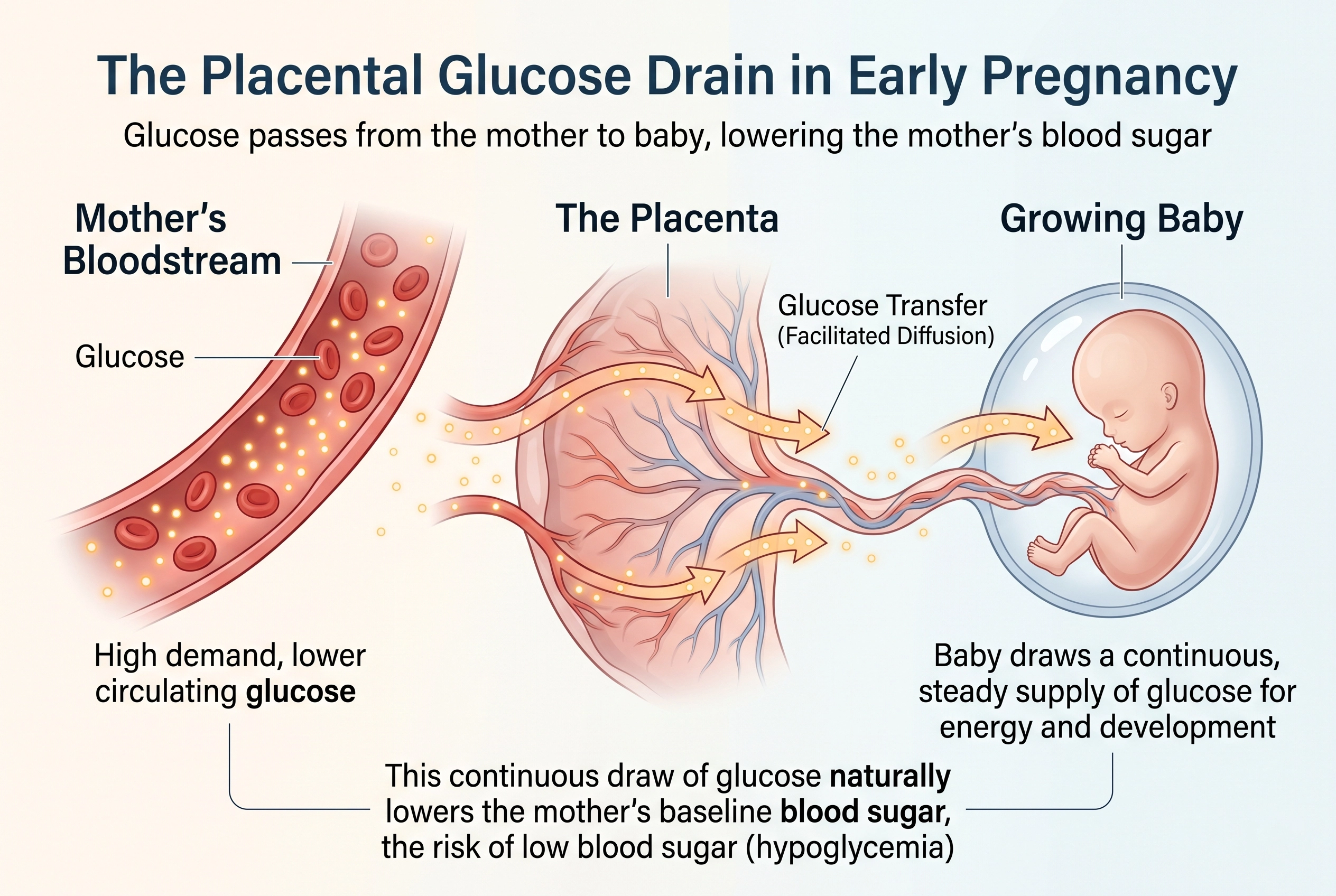
From the moment of conception, your body’s primary objective is to fuel the rapid cellular division and growth of your baby. Glucose is the primary energy source for this growth. Through a process called facilitated diffusion, your body continuously siphons glucose from your bloodstream across the placenta to the fetus.
Because the baby is taking a continuous, steady stream of your circulating sugar, your baseline blood glucose levels naturally drop. You are quite literally fueling two metabolisms simultaneously.
Increased Insulin Sensitivity
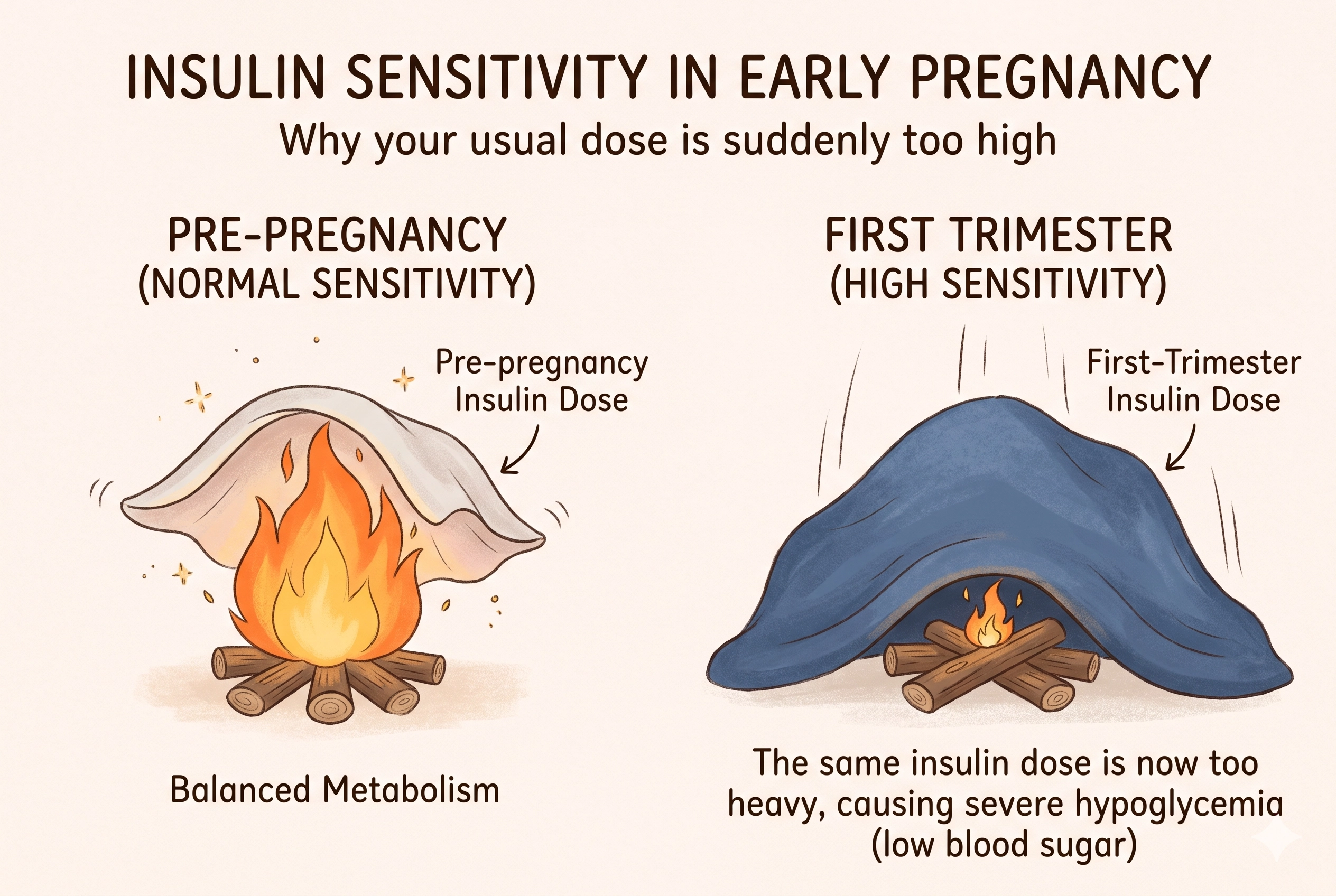
While you might have heard that pregnancy causes insulin resistance (which is true later on, leading to gestational diabetes in some women), the first trimester is entirely different. During the first 10 to 12 weeks of pregnancy, the unique cocktail of early hormonal changes—specifically elevated levels of estrogen and progesterone—often makes maternal cells significantly more sensitive to insulin.
Think of your pre-pregnancy metabolism like a well-calibrated engine. A specific amount of fuel (food) required a specific amount of coolant (insulin) to keep the temperature perfect. In the first trimester, your engine naturally runs much cooler because the baby is absorbing so much of the fuel. If you add the same amount of coolant (your pre-pregnancy insulin dose) to this newly sensitive environment, the system freezes up. Your standard meal dose is no longer just "covering your carbs"; it is acting like a heavy wet blanket on a very small fire, driving your blood sugar dangerously low.
The Danger of Treating Hypos as Just an "Excuse for Juice"
When you are hit with a blood sugar reading of 45 mg/dL, survival instinct kicks in. The immediate response is to consume whatever fast-acting sugar is nearby. While treating the low is non-negotiable, casually writing off these crashes as an "excuse to drink a sweet juice box" masks a significant danger.
The Toll on Your Body and Hypo Unawareness
Frequent severe hypoglycemia is physically traumatic. It triggers massive releases of adrenaline and cortisol—your body’s stress hormones—leaving you feeling drained, shaky, and foggy for hours after the event.
More dangerously, if your blood sugar is constantly dipping into the 50s and 60s, your brain will begin to adapt to this new, lower baseline. This leads to hypoglycemia unawareness. You may stop feeling the early warning signs of a crash (like sweating or palpitations) and instead drop straight into dangerous cognitive impairment, increasing your risk of fainting or seizures.
Safe Treatment Protocols: The 15-15 Rule
When a severe low strikes, the goal is to correct the number without triggering a massive rebound high. Over-treating a low with too much juice or candy will spike your blood sugar into the 200s, leading you to take a correction dose of insulin, which will only crash you back into the 50s a few hours later.
Stick strictly to the 15-15 rule:
- Consume 15 grams of fast-acting carbohydrates (like 4 ounces of apple juice or 4 glucose tablets).
- Wait 15 minutes.
- Check your blood sugar again.
- If it is still below 70 mg/dL, repeat the process.
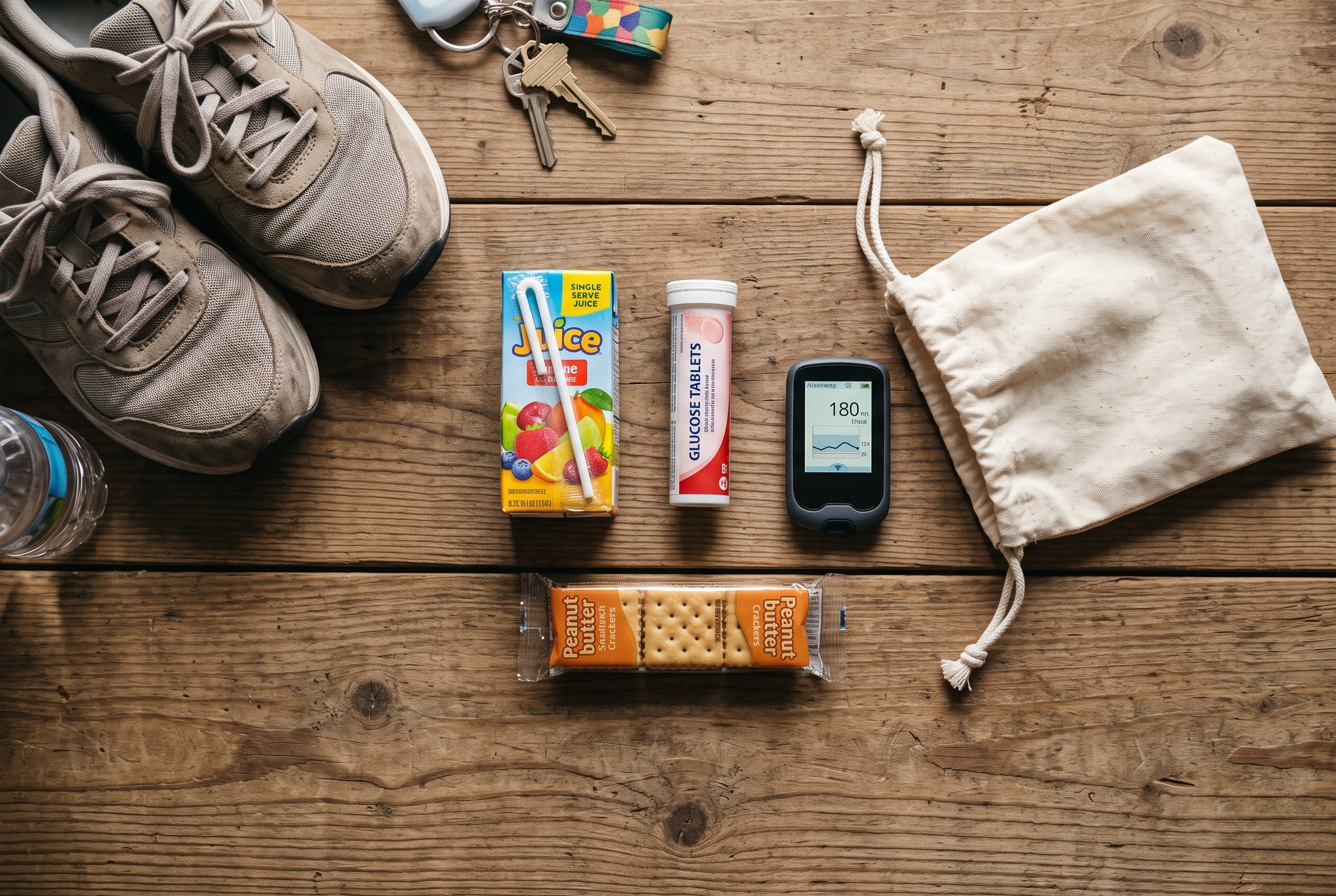
Once your blood sugar has stabilized, follow up with a small snack containing complex carbohydrates and protein (like half an apple with peanut butter) to anchor the number in place.
Action Plan: Stopping the Drop Before It Happens
You cannot simply out-eat a consistently incorrect insulin dose. If you are experiencing constant lows, the solution is not to buy more juice boxes; the solution is to adjust your medical protocol.
The Critical Step: Adjusting Your Insulin
The moment you confirm your pregnancy, or the moment you notice a pattern of unexplained lows, you must contact your endocrinologist or maternal-fetal medicine specialist. Your basal rates (background insulin) and your insulin-to-carb ratios will almost certainly need to be reduced. Many women require a 10% to 20% reduction in their total daily insulin during the first trimester to safely accommodate their new metabolic sensitivity. Do not wait for your next scheduled appointment, and do not attempt to guess these adjustments entirely on your own.

Rethinking Exercise
Exercise is vital during pregnancy, but your body’s response to physical activity has changed. A "simple walk" that used to barely register on your CGM now causes your working muscles to absorb glucose at a hyper-accelerated rate, compounding with your new insulin sensitivity.
To prevent exercise-induced crashes:
- Always check your blood sugar before starting activity.
- Keep your heart rate in a moderate zone.
- Carry fast-acting glucose on your person at all times—not just in your car or at home.
- Consider eating a 10-15 gram carbohydrate snack without taking insulin right before you walk to provide a buffer for the physical exertion.
Looking Ahead
The constant hypos of the first trimester are exhausting, but they are temporary. By the end of the first trimester and the beginning of the second, the placenta will begin secreting hormones like human placental lactogen (hPL), which actively block the action of insulin. At that point, your insulin needs will begin to climb steadily, and the risk of severe lows will be replaced by the challenge of managing insulin resistance.
For now, give yourself grace. Your body is doing incredible, demanding work. By partnering closely with your healthcare team to adjust your doses and utilizing strict, measured treatments for your lows, you can step off the blood sugar rollercoaster and start safely enjoying your journey to motherhood.
FAQ
Is it normal to have lower blood sugar in early pregnancy?
Yes. In the first trimester, the fetus draws a continuous supply of glucose from the mother's bloodstream. Combined with hormonal changes that increase maternal insulin sensitivity, this frequently results in lower baseline blood sugar levels and a higher risk of hypoglycemia for individuals taking insulin.
Will my insulin needs stay this low for the whole pregnancy?
No. While insulin needs often decrease in the first trimester, the placenta begins producing hormones around weeks 14 to 16 that cause significant insulin resistance. Your insulin requirements will gradually, and sometimes dramatically, increase throughout the second and third trimesters.
Can low blood sugar harm my baby?
While severe maternal hypoglycemia is incredibly dangerous for the mother (due to the risk of fainting, trauma, or seizures), the fetus is generally well-protected during a brief low-blood-sugar event. The primary danger of hypoglycemia lies in the physical risk to the mother and the subsequent rebound high blood sugars, as chronic high blood sugar (hyperglycemia) does pose severe developmental risks to the baby.
Disclaimer: The information provided in this article is for educational and informational purposes only and is not intended as medical advice. Pregnancy significantly alters glucose metabolism. Do not make changes to your insulin dosages or treatment plans without direct consultation with your endocrinologist, OBGYN, or a qualified healthcare professional.
Medical References & Trusted Sources:
American Diabetes Association (ADA): Management of Diabetes in Pregnancy – Comprehensive guidelines on glycemic targets, insulin sensitivity shifts, and the physiological changes during the first trimester.
American College of Obstetricians and Gynecologists (ACOG): Pregestational Diabetes Mellitus – Best clinical practices for managing maternal hypoglycemia and adjusting insulin protocols to ensure fetal safety.
Centers for Disease Control and Prevention (CDC): Treating Low Blood Sugar – Official medical guidelines outlining the safe application of the 15-15 Rule to prevent rebound hyperglycemia.
You should also read:
"I Haven't Changed My Diet!" Why Your Blood Sugar is Suddenly Spiking
It is one of the most frustrating experiences in diabetes management: You step over to your meter. You know exactly what you’ve eaten. You’ve been perfectly consistent with your low-carb, high-protein routine. Your numbers have been steady—maybe averaging around 125 mg/dL between meals and 150…
Continue reading...
Fasting Insulin Explained: The Lab Test Many People Don’t Understand
If you have ever checked your blood sugar, you may already know about fasting glucose, A1C, or a blood sugar log. But then you see another term on a lab order or health article: fasting insulin. At first, it can feel confusing. Blood sugar is…
Continue reading...
Not Hungry for Lunch? How to Manage Long-Acting Insulin When You Have No Appetite
Coming home from the hospital after a diabetes-related emergency is a jarring experience. While you were in the ward, your day was heavily structured. Nurses brought you three meals a day on a strict schedule, administered your long-acting insulin, and monitored your blood sugar around…
Continue reading...