Waking Up to False Alarms? How to Prevent CGM Compression Lows at Night
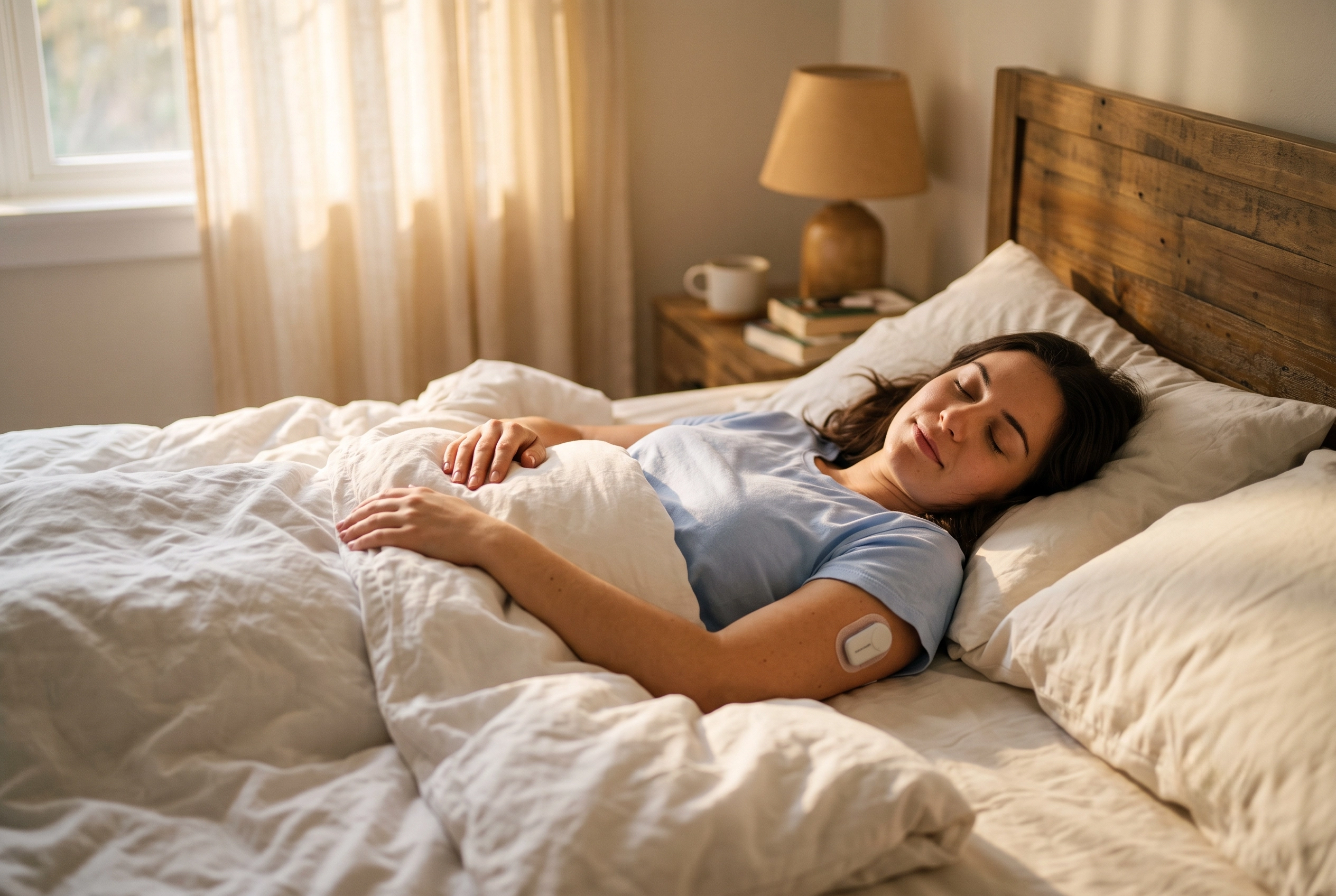
If you have ever been jolted awake at 3:00 AM by the piercing beep of your Continuous Glucose Monitor (CGM) warning you of a severe low—only to realize you feel perfectly fine—you are experiencing one of the most frustrating aspects of modern diabetes technology. You do a groggy finger-stick test, and your blood sugar is a perfectly safe 110 mg/dL. The culprit? You simply rolled over in your sleep.
This phenomenon is known as a "compression low." When it happens repeatedly, it does more than just disrupt a single night of rest. The cycle of false alarms, panic, and fragmented sleep can leave you waking up literally exhausted, draining your energy for the day ahead and eroding your trust in the very device meant to keep you safe.
The Exhaustion of Nighttime Alarm Fatigue
Living with a CGM often involves an intense psychological balancing act. On one hand, the device is a remarkable safety net, alerting you to genuine drops in blood sugar before they become dangerous. On the other hand, recurrent false alarms create a deep sense of "alarm fatigue."
When you consciously know your CGM is on your preferred arm, you might spend the entire night stiffly trying to avoid rolling onto that side. This hyper-vigilance prevents you from entering the deep, restorative stages of sleep. If you do accidentally roll over and trigger a compression low, the adrenaline spike from the alarm makes it incredibly difficult to fall back asleep.
The natural temptation in these moments of exhaustion is to simply silence the alarms so you can finally rest. However, this creates a profound internal conflict. Silencing your CGM at night introduces a heavy psychological burden: the very real fear of missing an actual, dangerous drop in your blood sugar while you are asleep. Balancing the desperate need for rest with the critical need for safety is a heavy emotional load that many people managing diabetes carry silently.
What Actually Causes a "Compression Low"?
To stop compression lows, it is helpful to understand the mechanics behind them. A false low reading is not a glitch in your device’s software; it is a physical response to how the sensor interacts with your body under pressure.
The Biology of Interstitial Fluid and Sensor Pressure
Unlike traditional finger-stick glucose meters that measure glucose directly in your blood, a CGM measures the glucose levels in your interstitial fluid. Interstitial fluid is the liquid that surrounds the tissue cells just beneath your skin. Glucose seeps from your blood vessels into this fluid, which is why there is always a slight delay (usually 5 to 15 minutes) between your actual blood glucose and your CGM reading.
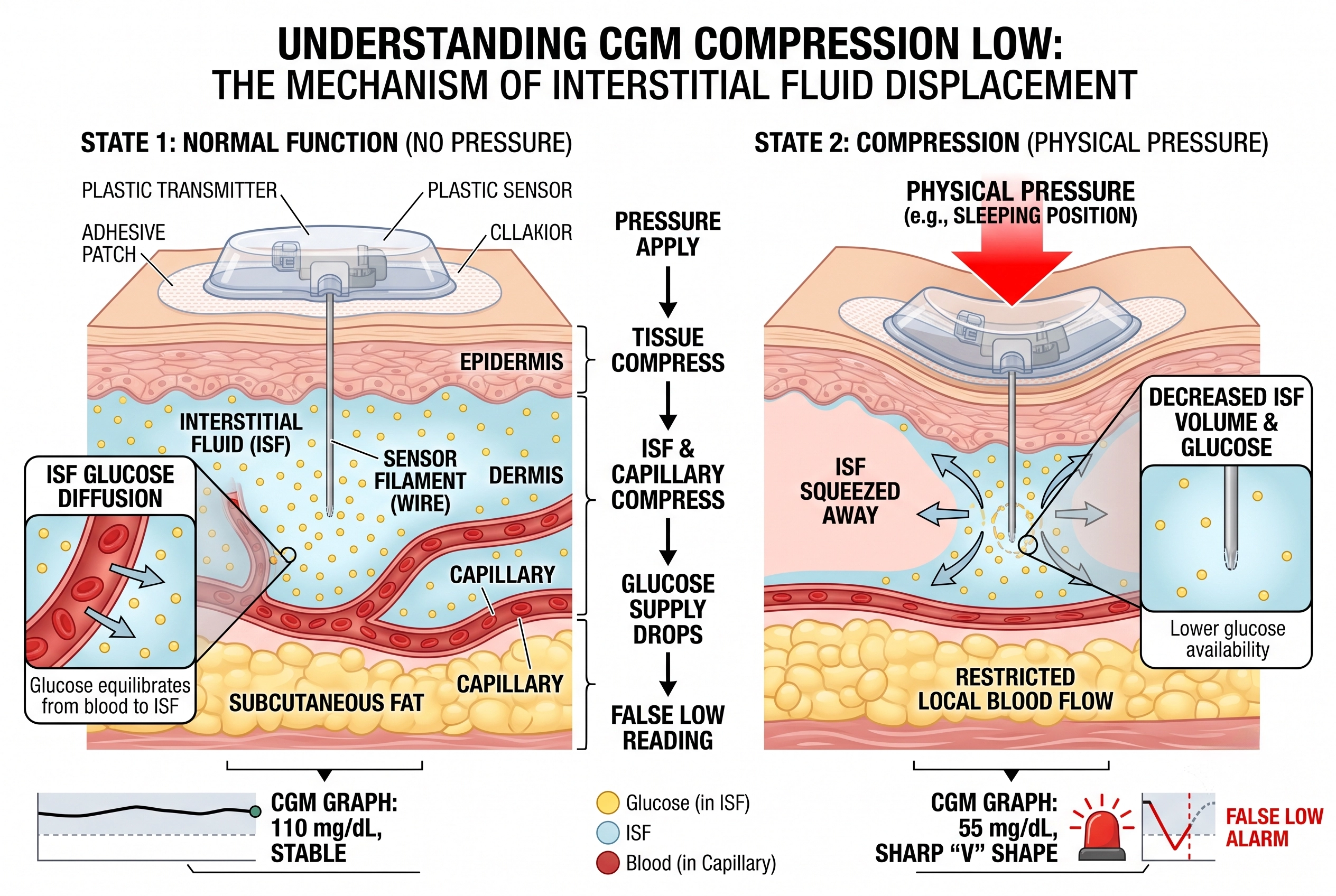
As highlighted by medical research on how sleeping positions affect CGM performance, when you lie down and put direct, sustained body weight on the sensor—such as sleeping heavily on your left arm—the physical pressure physically compresses the tissue. This pressure squeezes the interstitial fluid away from the tiny sensor wire inserted beneath your skin.
Without an adequate supply of interstitial fluid washing over the sensor thread, the device detects a sudden, localized lack of glucose. The CGM's algorithm interprets this sudden absence of glucose as a rapid, steep drop in your overall blood sugar levels, triggering an urgent hypoglycemia alarm. Once you roll over and relieve the pressure, the fluid rushes back into the tissue, and the CGM reading typically "recovers" rapidly, forming a sharp V-shape on your glucose graph.
How to Handle False Low Alarms So You Can Finally Sleep
Preventing compression lows requires a combination of strategic sensor placement, physical barriers, and strict verification habits to ensure your safety is never compromised.
Reevaluating Sensor Placement
While the back of the arm is the most common and often the only manufacturer-approved site for many CGMs, it is notoriously problematic for strict side sleepers.
Many individuals in the diabetes community have found success by experimenting with alternative placement sites that are less prone to bearing body weight during sleep. For instance, placing the sensor on the upper abdomen, just below the rib line, is a widely discussed strategy. Because the abdomen naturally curves inward and rarely bears the full brunt of your body weight—even if you sleep on your side or stomach—it is far less likely to experience the localized tissue compression that causes false lows.
Always consult your healthcare provider before applying a sensor to an off-label site, as accuracy can vary depending on body composition and tissue thickness.
Protective Barriers and Sleeping Positions
If you must wear your sensor on your arm, physical barriers can help distribute the pressure of your body weight:
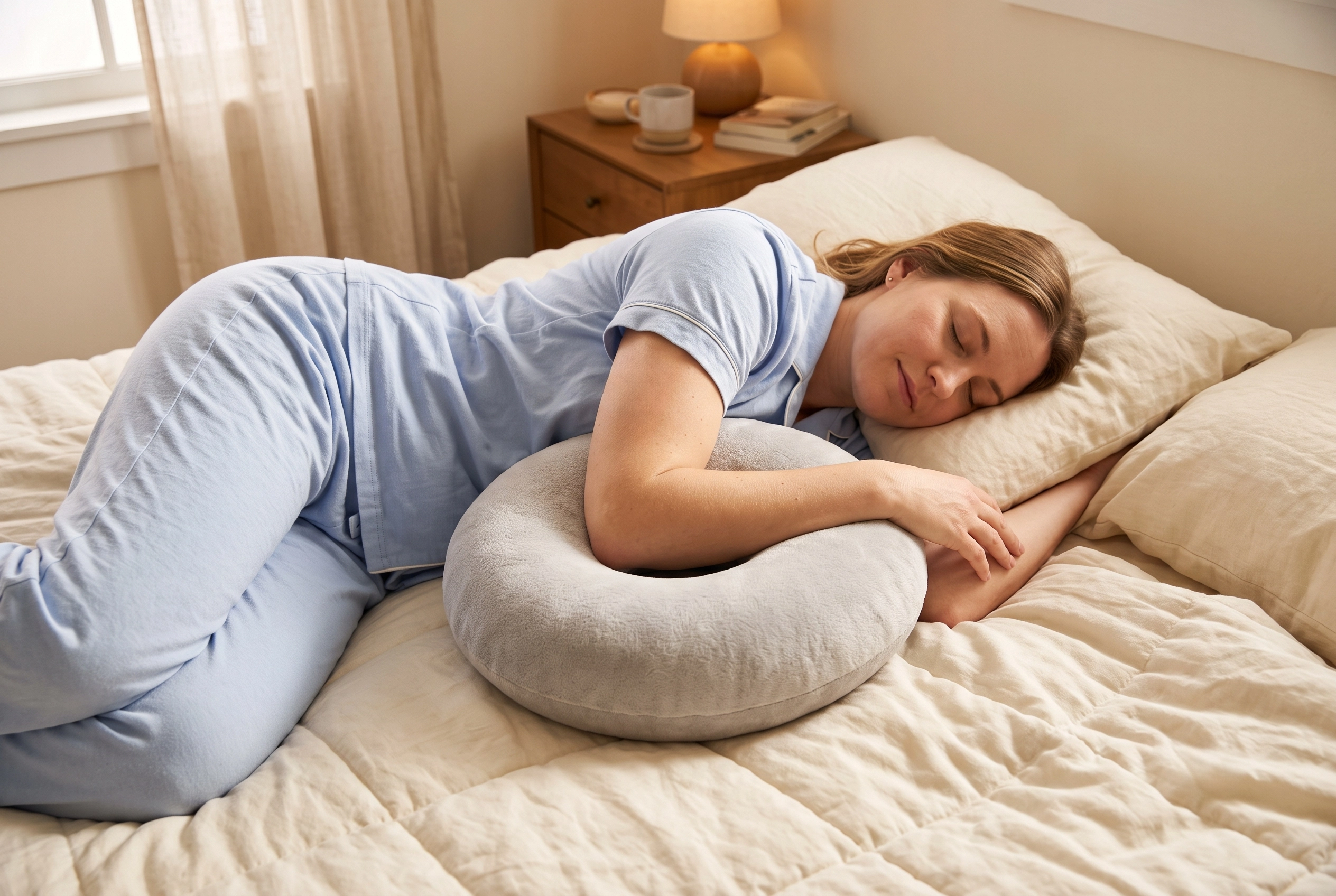
- Donut Pillows: Specialized CGM pillows with a hole in the center allow you to sleep on your side while keeping the sensor suspended in the hollow space, completely free of pressure.
- Body Pillows: Using a long body pillow can physically prevent you from rolling completely onto your sensor arm during the night.
- Strategic Taping: While over-patches secure the sensor, they do not prevent compression. However, wearing a slightly padded armband over the sensor can sometimes disperse the pressure evenly across a wider area of the arm, rather than pinpointing it directly on the sensor wire.
The Crucial Finger-Stick Confirmation
Imagine waking up to an urgent 55 mg/dL alarm. Your heart is racing.
Situation A: You immediately rush to the kitchen and consume 15 grams of fast-acting carbohydrates (like juice). Because it was actually a compression low, your true blood sugar of 100 mg/dL now spikes to 180 mg/dL, causing a restless, uncomfortable night and a sluggish morning.
Situation B: You wake up to the alarm, sit up, and calmly perform a manual finger-stick check. The meter reads 105 mg/dL. You recognize the false alarm, go back to sleep with peace of mind, and your blood sugar remains stable.
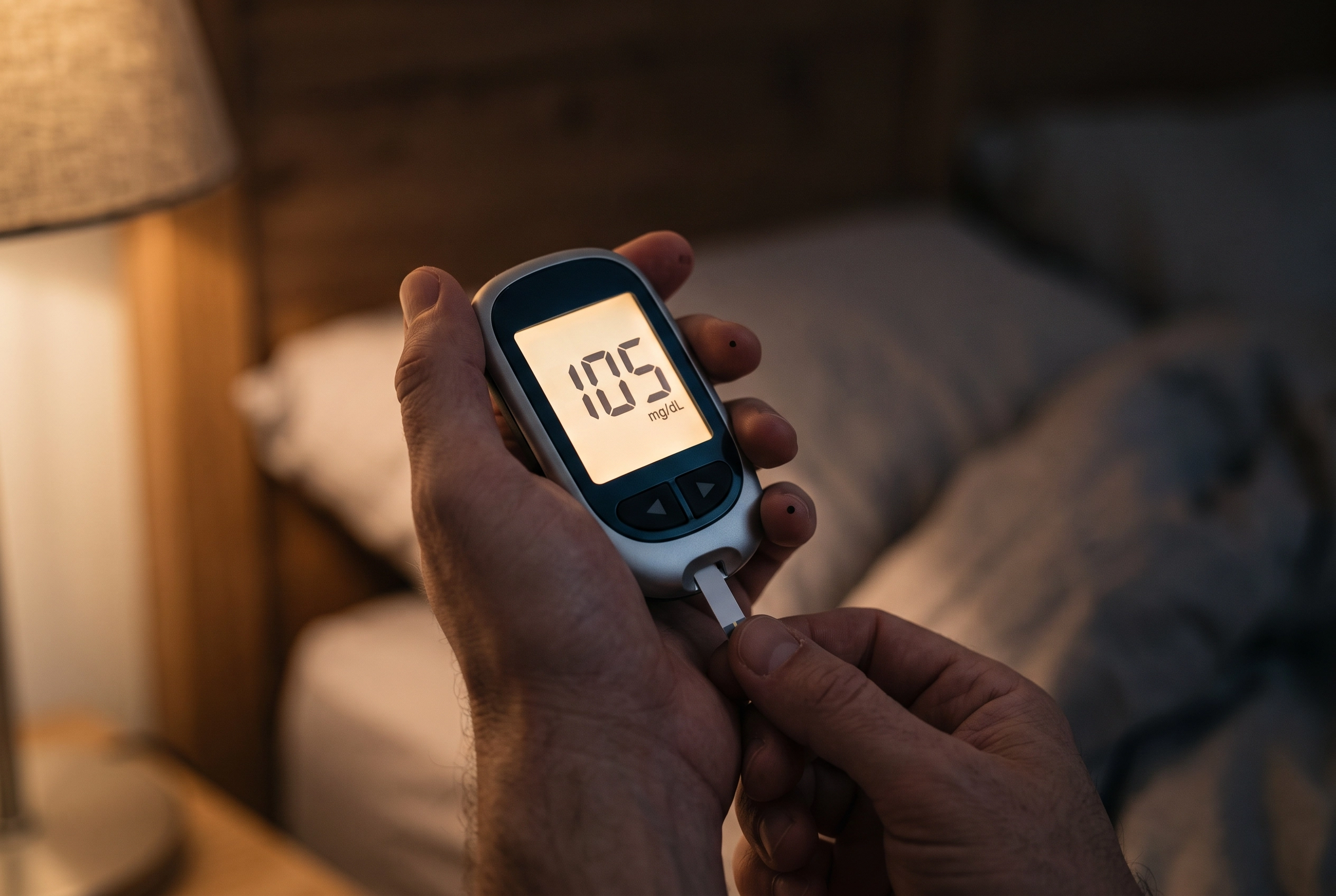
Never treat a suspected nighttime compression low without first verifying it with a manual capillary blood glucose meter. The few seconds it takes to check your finger can save you from a massive, unnecessary blood sugar spike and the subsequent physical toll it takes on your body.
Does Diabetes Affect Sleep Beyond the Alarms?
A common question that arises when struggling with CGM alarms is whether diabetes inherently affects sleep quality. The answer is a definitive yes. Even without technology waking you up, fluctuating glucose levels have a profound impact on your sleep architecture.
The Impact of Genuine Highs and Lows on Sleep Architecture
When blood sugar drops too low during the night (nocturnal hypoglycemia), your body initiates a "fight or flight" stress response, releasing adrenaline and cortisol to force the liver to release stored glucose. This hormonal surge causes night sweats, vivid nightmares, a racing heart, and abrupt awakenings.
Conversely, when blood sugar is too high (hyperglycemia), the kidneys work overtime to flush excess glucose from the bloodstream. This leads to frequent nighttime urination (nocturia) and intense thirst, forcing you out of bed multiple times a night and severely fragmenting your sleep cycles.
Diabetes Distress and Insomnia
The mental burden of managing a chronic condition 24/7—often referred to as diabetes distress—frequently manifests as insomnia. The constant calculation of carbohydrates, insulin timing, and fear of severe overnight lows can create a state of chronic hyperarousal, making it difficult to transition into deep, restorative sleep. Acknowledging this mental load is a critical step in addressing chronic exhaustion.
Supporting Steady Overnight Blood Sugar and Energy Levels
Managing your daytime habits plays a significant role in ensuring steady overnight numbers and combating the exhaustion that follows poor sleep. Establishing a routine that promotes stable metabolism can help you feel more rested.

For those looking for additional support in their daily routine, NuviaLab Sugar Control is a unique food supplement that supports the maintenance of normal blood sugar levels. Regular use of the product supports the maintenance of proper macronutrient metabolism in the blood, contributes to the regulation of hormonal activity and the reduction of feelings of fatigue. In addition, NuviaLab Sugar Control helps reduce appetite and calorie intake. Formulated as a combination of 9 ingredients, it includes certified plant extracts, as well as vitamins and minerals.
Disclaimer: Supplements may provide support but are not a replacement for prescribed medications or professional medical advice. Always speak with your endocrinologist or primary care physician before introducing any new supplement into your regimen.
FAQ (Frequently Asked Questions)
Is it safe to silence my CGM alarm at night?
Routinely silencing low glucose alarms at night is highly discouraged. While it may provide temporary relief from alarm fatigue, it severely increases the risk of sleeping through a genuine, dangerous hypoglycemic event.
How do I know for sure if it's a compression low or real hypoglycemia?
The only definitive way to confirm a compression low is to perform a manual finger-stick blood test. Additionally, if your CGM graph shows a sudden, sheer vertical drop (e.g., dropping from 120 to 60 in five minutes) rather than a gradual decline, it is highly likely to be a pressure-induced false reading.
Where is the best place to put a CGM if I am a strict side sleeper?
Many side sleepers report that the upper abdomen or the upper buttocks/lower back area prevents the sensor from being crushed under body weight. However, you must discuss alternative placement sites with your healthcare provider, as different locations can impact the absorption speed and accuracy of the interstitial fluid readings.
Medical Disclaimer: The information provided in this article is for educational and informational purposes only and does not constitute medical advice. Please consult your healthcare professional before making any changes to your diabetes management plan, including altering device placement, adjusting medication, or adding dietary supplements.