Diabetic Gastroparesis: Why Digestion Slows Down and Practical Ways to Manage It

If you have recently visited your doctor for something as routine as a summer cold, only to be told that your unexplained nausea or erratic blood sugars might be due to "diabetic gastroparesis," you are likely feeling a mix of shock and profound confusion. It is incredibly jarring to have a chronic, complex digestive complication mentioned in passing, leaving you with more questions than answers.
Living with diabetes is already a daily balancing act. When you add gastroparesis—a condition where the stomach empties its contents into the small intestine much slower than it should—that balancing act can feel impossible. You might be eating the same carefully planned meals and taking the same insulin doses, yet your blood glucose meter shows crashing lows right after a meal, followed by stubborn, unexplainable highs hours later.
If this sounds familiar, you are not alone, and it is not your fault. The frustration of doing everything "right" and still seeing chaotic numbers is a heavy emotional burden. Let’s break down exactly what happens in the body when digestion slows down, why it makes blood sugar so difficult to predict, and, most importantly, the practical steps you and your healthcare team can take to regain stability.
What Happens Inside the Stomach in Diabetic Gastroparesis?
To understand how to manage this condition, it helps to look at the biological mechanics of digestion and how diabetes impacts them over time.
The Role of the Vagus Nerve in Digestive Motility
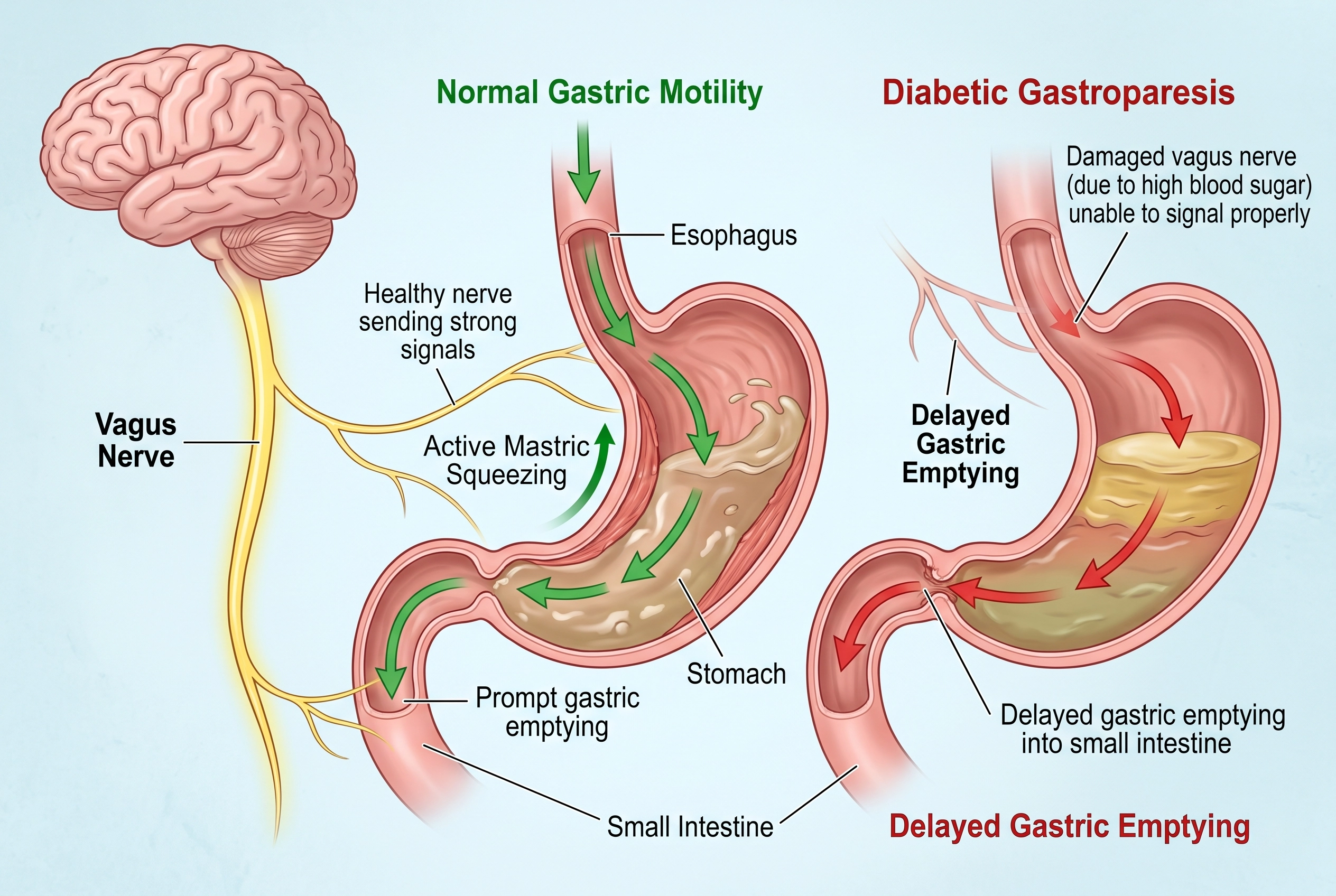
Every time you eat, your stomach acts as a muscular churn, grinding food into smaller particles and steadily pushing it into the small intestine, where nutrients and glucose are absorbed into the bloodstream. This entire process is controlled by the vagus nerve, a massive nerve pathway that acts as the communication highway between your brain and your digestive tract.
Over time, prolonged periods of elevated blood glucose levels can cause neuropathy (nerve damage). While many people associate diabetic neuropathy with tingling in the feet or hands, it can also affect the autonomic nervous system—the system that controls involuntary actions like heartbeat and digestion. When the vagus nerve is damaged, it stops sending the correct "squeeze and push" signals to the stomach muscles. As a result, food sits in the stomach far longer than normal.
Common Warning Signs (From Early Satiety to Nausea)
Because the stomach is not emptying efficiently, you may start to experience physical symptoms that disrupt your daily life. These often include:
- Early Satiety: Feeling completely full after taking only a few bites of food.
- Nausea and Vomiting: Especially vomiting undigested food from a meal eaten hours or even a day prior.
- Bloating and Upper Abdominal Pain: A sensation that food is just sitting like a brick in your stomach.
- Heartburn or Acid Reflux: Caused by food backing up into the esophagus.
However, for people with diabetes, the most alarming and frustrating symptom is often invisible to the naked eye: severe blood sugar unpredictability.
The Blood Sugar Disconnect: Why Glucose Readings Become Unpredictable
Managing blood sugar often relies on a predictable timeline: you eat carbohydrates, they digest, glucose enters your bloodstream, and your body (or your injected insulin) handles it. Gastroparesis completely shatters this timeline.
The Insulin-Absorption Mismatch Explained
Imagine you sit down to eat a sandwich and take your rapid-acting mealtime insulin. Normally, the insulin peaks in your bloodstream right around the time the bread digests and enters your blood as glucose. They meet, they balance out, and your blood sugar remains stable.
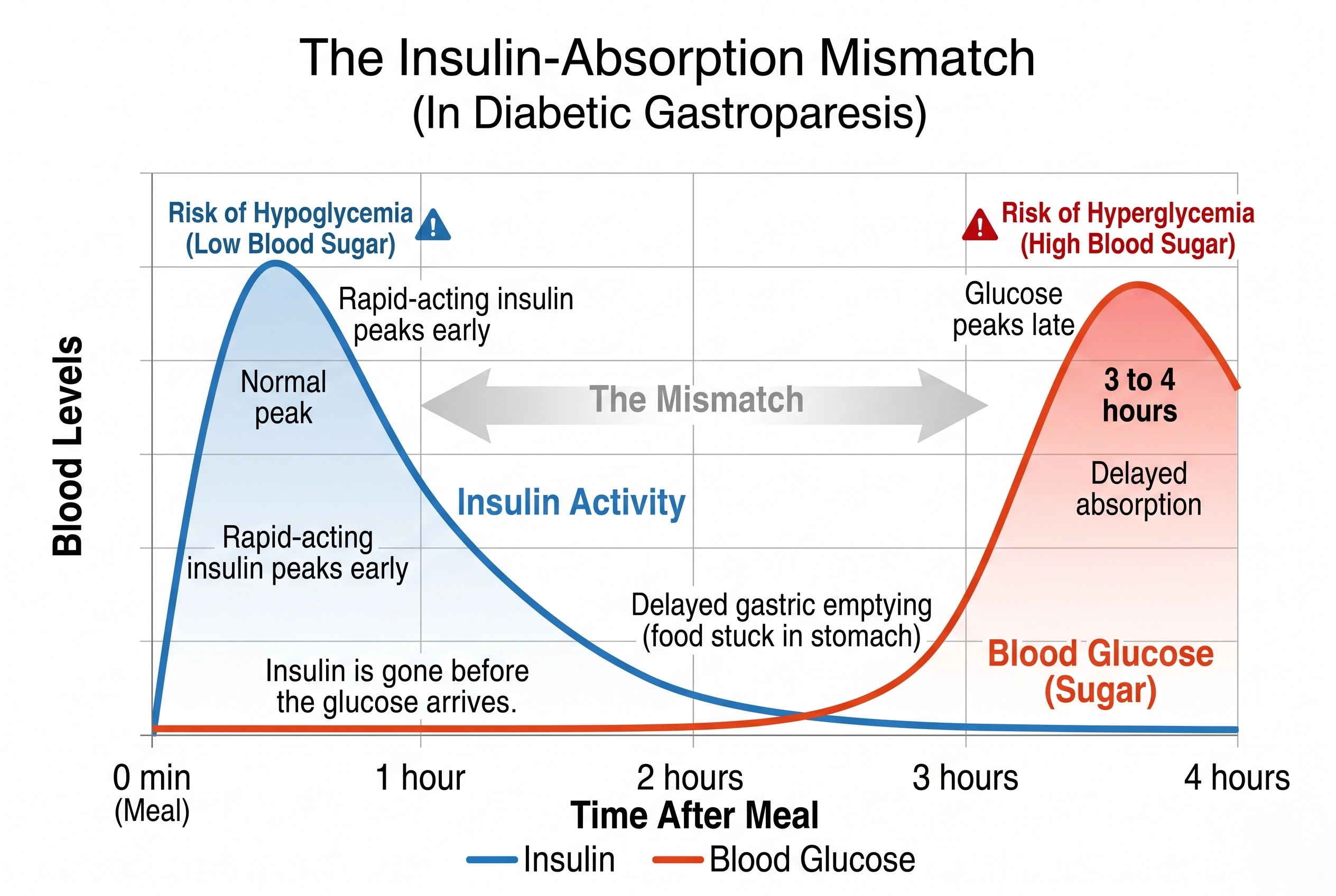
With gastroparesis, you take the insulin, and it goes to work exactly on schedule. But the sandwich is still trapped in your paralyzed stomach. Because the carbohydrates haven't reached the small intestine to be absorbed, your blood sugar drops dangerously low (hypoglycemia) shortly after eating. You treat the low with juice or glucose tabs. Then, three or four hours later, the stomach finally dumps the sandwich into the intestines. A massive wave of glucose hits your bloodstream all at once, long after your mealtime insulin has worn off, resulting in a severe spike (hyperglycemia).
This mismatch creates a terrifying rollercoaster. It leads to immense diabetes burnout because the standard rules of carbohydrate counting and insulin timing no longer apply.
The Vicious Cycle: High Glucose and Further Delayed Emptying
To make matters more complicated, biology creates a vicious cycle. High blood sugar levels inherently slow down gastric emptying even further. So, when that delayed food finally spikes your blood sugar, the high glucose environment makes your stomach even more sluggish for your next meal. Breaking this cycle requires a very intentional, multi-layered approach to both diet and medical treatment.
How Is Gastroparesis Medically Diagnosed and Treated?
If your doctor casually mentions gastroparesis, it is vital to have the condition officially confirmed so you can map out a targeted treatment plan.
Confirming the Diagnosis (Gastric Emptying Scintigraphy)
Gastroparesis cannot be diagnosed purely by guessing or listening to a stethoscope. The gold standard for diagnosis is a Gastric Emptying Study (Scintigraphy). You will eat a small meal (often eggs and toast) that contains a harmless, microscopic amount of radioactive material. A scanner will then take images of your abdomen over the course of four hours to see exactly how fast—or slow—the food is leaving your stomach.
Prescription Options (Prokinetics, Antiemetics, and Medical Guidance)
Once diagnosed, your endocrinologist and a gastroenterologist will work together to manage the condition. Treatment often involves:
- Prokinetic Medications: These are drugs designed to stimulate the stomach muscles and force them to contract.
- Antiemetics: Medications used to control nausea and prevent vomiting.
- Insulin Adjustments: Your doctor may suggest taking your rapid-acting insulin after you eat, or splitting the dose, to better match the delayed absorption of your food. Never adjust your insulin timing or dosing strategy without direct guidance from your healthcare team.
Practical Dietary Shifts That Ease Stomach Workload
While medications play a role, dietary modifications are often the most effective day-to-day tool for managing gastroparesis. The goal is to make the stomach's job as easy as possible.
Meal Texture and Particle Size: Shifting to Softer Foods
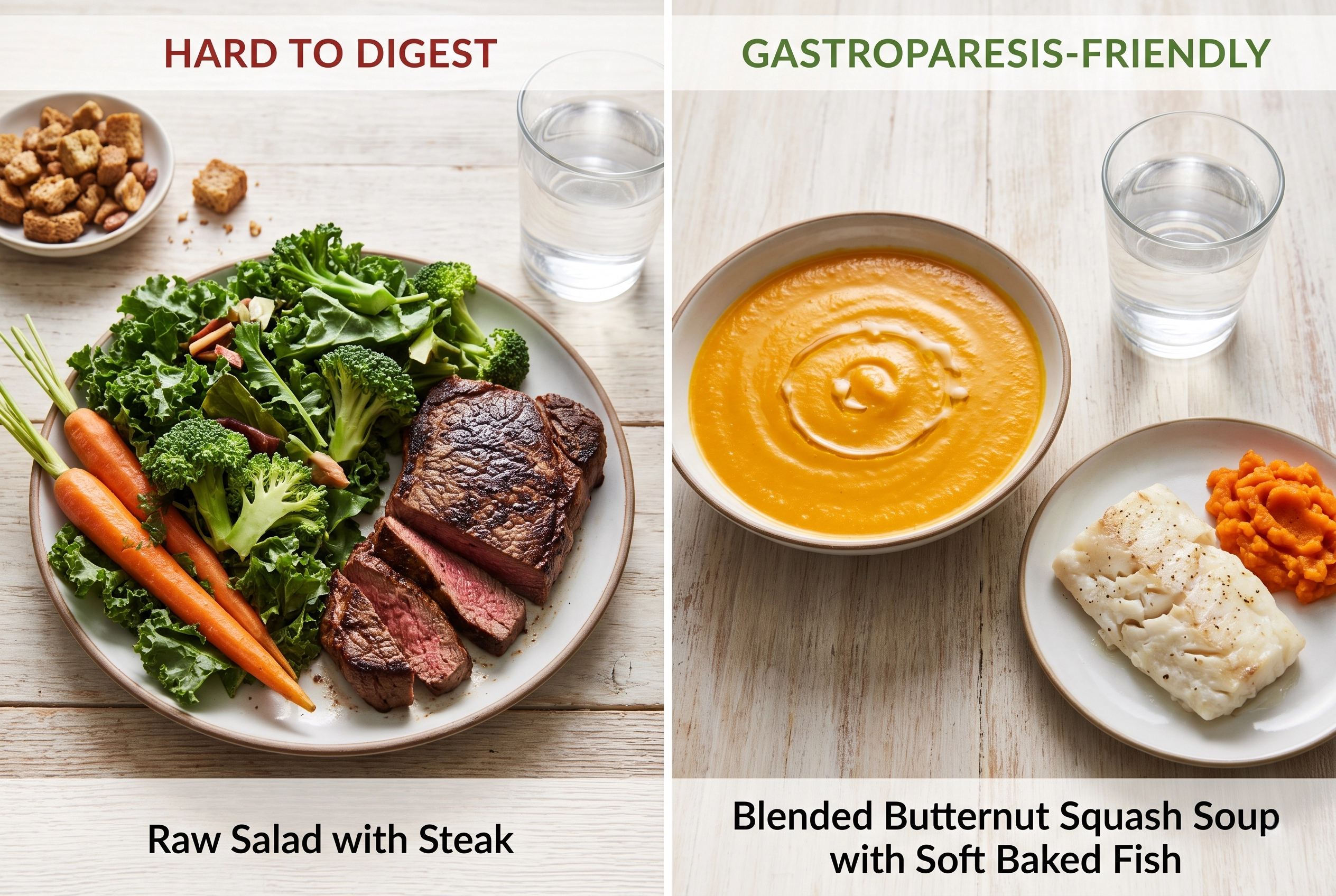
Because the stomach is struggling to grind down solid food, you can help by doing the grinding beforehand. Shifting toward softer foods, purées, and liquid calories can drastically improve symptoms.
- Solid vs. Liquid: The stomach empties liquids much faster than solids. Smoothies, protein shakes, and blended soups can provide necessary calories and nutrition without sitting in the stomach for hours.
- Chew Thoroughly: If you are eating solid foods, chew until the food is practically liquid in your mouth before swallowing.
Rethinking Fiber and Dietary Fats Without Sacrificing Nutrition
In standard diabetes management, high-fiber diets and healthy fats are heavily encouraged because they slow down digestion and prevent blood sugar spikes. However, in gastroparesis, your digestion is already too slow.
- Reduce Raw Fiber: Raw vegetables, tough skins on fruits (like apples or potatoes), and heavy whole grains take massive muscular effort to break down. Cook vegetables until they are very soft, and consider peeling your fruits.
- Manage Dietary Fat: Fat naturally delays gastric emptying. Eating heavy, high-fat meals (like deep-fried foods or rich cuts of meat) will only worsen the paralysis. Opt for lean proteins like poultry, fish, or eggs.
Situational Comparison: Eating a raw broccoli and steak salad might be a great low-carb meal for standard diabetes, but for someone with gastroparesis, it could cause hours of painful bloating and a midnight blood sugar spike. A better alternative would be well-cooked carrots, mashed sweet potato, and baked white fish.
Post-Meal Habits: Why Gentle Movement Beats Resting
Gravity is your friend. Lying down after a meal forces your sluggish stomach to work against gravity. Instead, try to remain upright for at least two hours after eating. Taking a gentle, 10-to-15-minute walk after meals not only helps gravity move food through your digestive tract but also helps your muscles absorb glucose from the bloodstream, gently lowering blood sugar without the need for extra insulin.

Navigating the Emotional Burden and Doctor Discussions
Being diagnosed with a complication is emotionally heavy. It can feel like a failure, even though it is simply a biological reality of a complex disease. If your doctor casually suggests gastroparesis, do not let the conversation end there. Advocate for yourself.
Essential Questions to Ask Your Healthcare Team
At your next appointment, bring this list of questions to ensure you get a clear action plan:
- What specific tests will we do to confirm this diagnosis?
- Should I be referred to a gastroenterologist or a registered dietitian who specializes in diabetes?
- How should we adjust the timing of my insulin or oral medications to prevent low blood sugars after I eat?
- Are any of my current medications (like GLP-1 agonists) contributing to delayed gastric emptying?
Frequently Asked Questions (FAQ)
Is diabetic gastroparesis reversible?
Gastroparesis caused by vagus nerve damage is generally considered a chronic condition. While it is rarely completely "cured," the symptoms and blood sugar fluctuations can be highly managed through diet, medication, and tight glucose control. Some people experience periods where symptoms improve significantly.
Why does my blood sugar crash after eating and spike hours later?
This is the "mismatch" effect. Your insulin goes to work immediately, but your food is trapped in your stomach. The insulin lowers your blood sugar because there is no glucose yet. Hours later, the food finally digests, but the insulin is gone, causing a massive spike.
Can supplements or over-the-counter aids help?
You should be incredibly cautious with over-the-counter digestion aids, herbal supplements, or laxatives. Because your digestion is unpredictable, oral supplements may not absorb correctly or could severely irritate your stomach. Always consult your doctor before adding any supplement to your routine.
Authoritative Medical References
The information and clinical concepts discussed in this article are grounded in guidelines provided by leading medical organizations:
National Institute of Diabetes and Digestive and Kidney Diseases (NIDDK): For an in-depth overview of gastroparesis, its causes, and diagnostic criteria.
American Diabetes Association (ADA): For comprehensive guidelines on managing diabetic complications and autonomic neuropathy (Standards of Care in Diabetes).
Medical Disclaimer: The information provided in this article is for educational purposes only and is not intended as medical advice. Diabetic gastroparesis is a complex condition requiring individualized medical care. Always consult with your physician, endocrinologist, or a registered dietitian before making any changes to your diet, medication, or insulin regimen.
You should also read:

Is a Medication Tracker Actually Useful for Diabetes Management?
We’ve all been there: staring at a pill bottle or an insulin pen, a sudden wave of uncertainty washing over us. Did I just take my morning dose, or am I remembering yesterday? The panic sets in. Taking it twice could cause a dangerous drop…
Continue reading...
Can Herbs Really Help With Blood Sugar? A Practical, Cautious Guide
Many people search for herbs to lower blood sugar because they want a natural way to feel more in control. Maybe your blood sugar has been higher than expected. Maybe you feel tired after meals. Or maybe you saw someone online say that cinnamon, bitter…
Continue reading...
Not Hungry for Lunch? How to Manage Long-Acting Insulin When You Have No Appetite
Coming home from the hospital after a diabetes-related emergency is a jarring experience. While you were in the ward, your day was heavily structured. Nurses brought you three meals a day on a strict schedule, administered your long-acting insulin, and monitored your blood sugar around…
Continue reading...