When Managing Diabetes Feels Impossible: How to Cope with Depression and Chronic Burnout

Living with diabetes is a relentless, full-time job you can never clock out from. It demands constant vigilance, mental math, and physical intervention. But what happens when you are simultaneously battling clinical depression?
When you have lived with diabetes for a decade or more, the daily grind can slowly erode your resilience. Add depression to the mix, and the result is often profound executive dysfunction—a state where you know intellectually that you need to care for your health, but you simply cannot summon the motivation or energy to do so.
For many, this manifests in the most critical moments of self-care. You might find yourself relying solely on long-acting insulin just to fend off night cramps, while skipping mealtime boluses because the sheer cognitive load of carb counting and injecting feels like climbing a mountain. If you feel like "everything just sucks" and the motivation to manage your diabetes has vanished, you are not alone, you are not a failure, and you are not broken.
Here is a compassionate, human-centered guide to understanding why this happens and how you can navigate self-care when you have nothing left in the tank.
The Vicious Cycle: Why Depression and Diabetes Feed Each Other
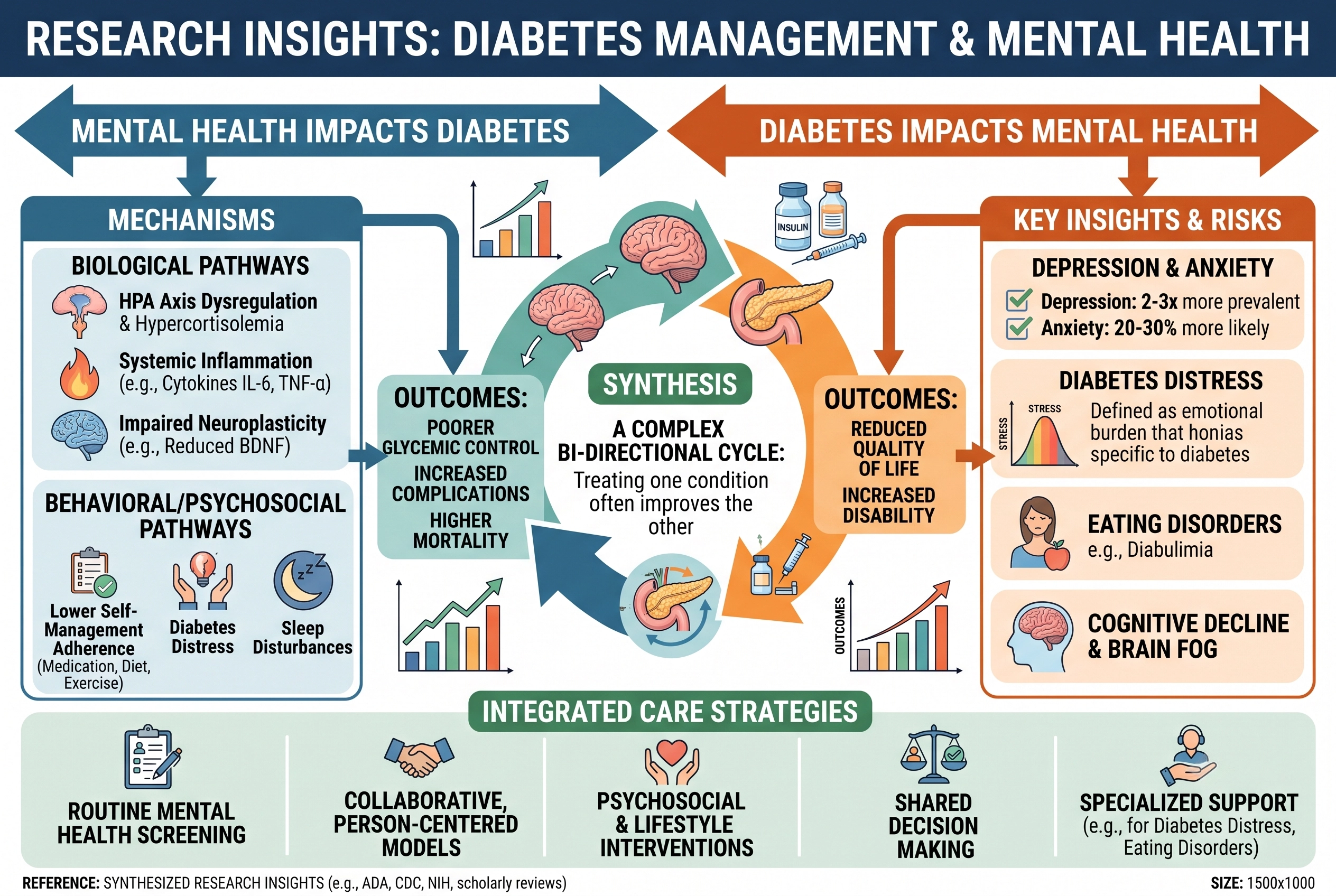
To overcome the paralysis of depression and diabetes burnout, we first have to understand that this is not a failure of willpower. It is a complex physiological and psychological loop.
The Biology of Depletion: Neurotransmitters, Cortisol, and Glucose
Depression is not just a state of mind; it is a physical illness that alters your brain chemistry. When you are depressed, neurotransmitters like dopamine (which drives motivation and reward) and serotonin (which stabilizes mood) are severely depleted. Because of this, the multi-step process of taking mealtime insulin—deciding what to eat, calculating carbs, prepping a pen or pump, and administering the dose—requires more cognitive fuel than your brain currently has available.
Furthermore, the biological relationship between mood and blood sugar is completely bidirectional. Chronic depression and stress cause your body to release elevated levels of cortisol, a primary stress hormone. Cortisol prompts your liver to release stored glucose into the bloodstream (a survival mechanism for "fight or flight"), while simultaneously making your cells more resistant to insulin.
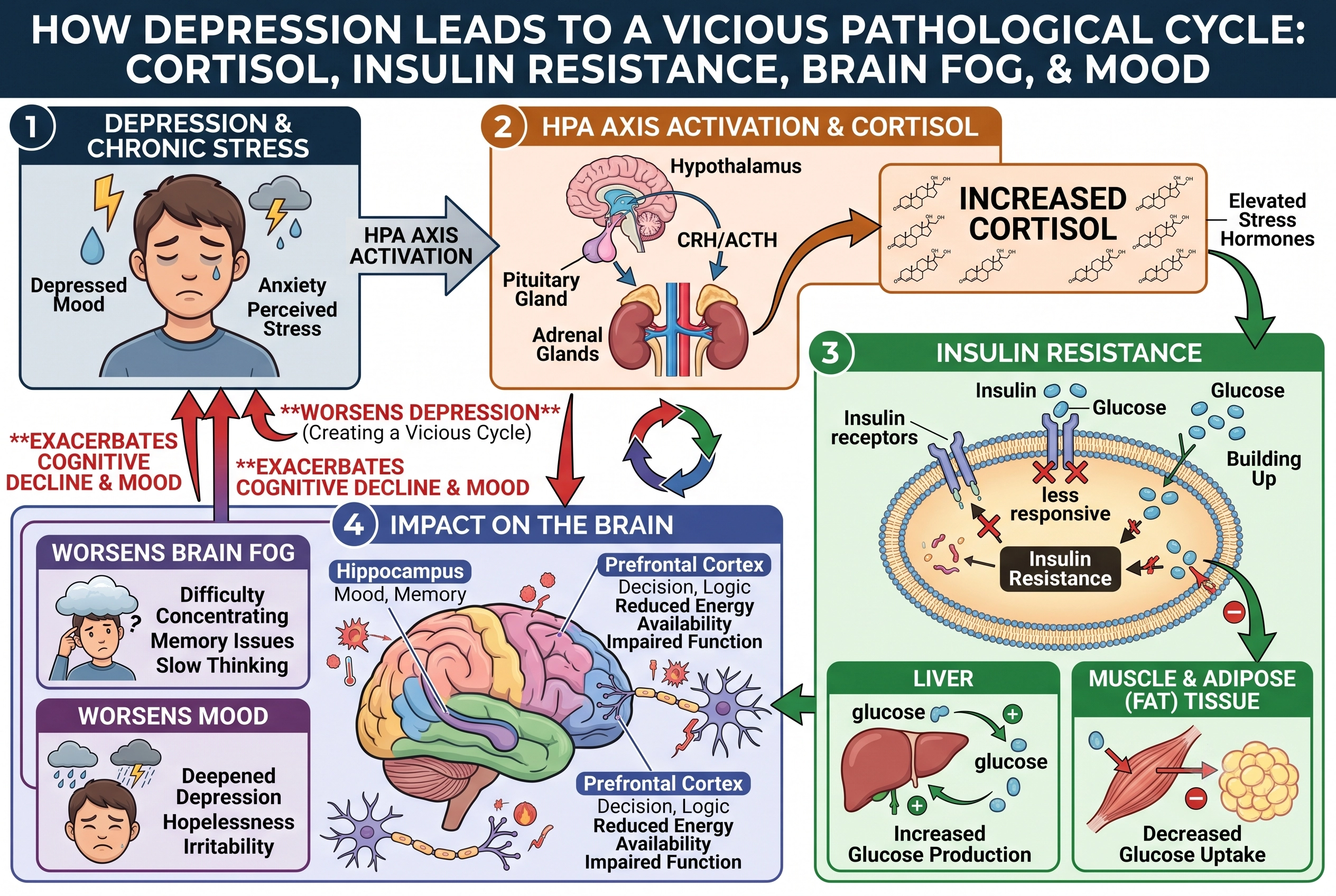
This means that even if you take your insulin, your body doesn't use it efficiently. As your blood sugar rises, the blood becomes thicker, leading to lethargy, brain fog, and fatigue. This physical exhaustion directly deepens your depressive symptoms, creating a vicious cycle that is incredibly difficult to break.
Diabetes Distress vs. Clinical Depression
While they overlap, it is helpful to distinguish between diabetes distress and clinical depression. Diabetes distress is the emotional burden specifically tied to the demands of managing the disease—the frustration of a random blood sugar spike or the fatigue of constant monitoring. Clinical depression, on the other hand, is a pervasive sense of apathy, hopelessness, and lack of pleasure that bleeds into every aspect of life. Often, severe diabetes distress evolves into clinical depression. Recognizing which one is driving your exhaustion can help you and your care team tailor the right support.
Breaking the Executive Dysfunction Trap: Harm Reduction Over Perfection
When you are deeply depressed, the "all or nothing" mindset is your worst enemy. If you feel you cannot manage your diabetes perfectly, you might be tempted to stop managing it entirely. We need to shift the goalpost from "perfect control" to "harm reduction."
Situational Comparison: The "All or Nothing" Trap vs. Minimum Viable Care
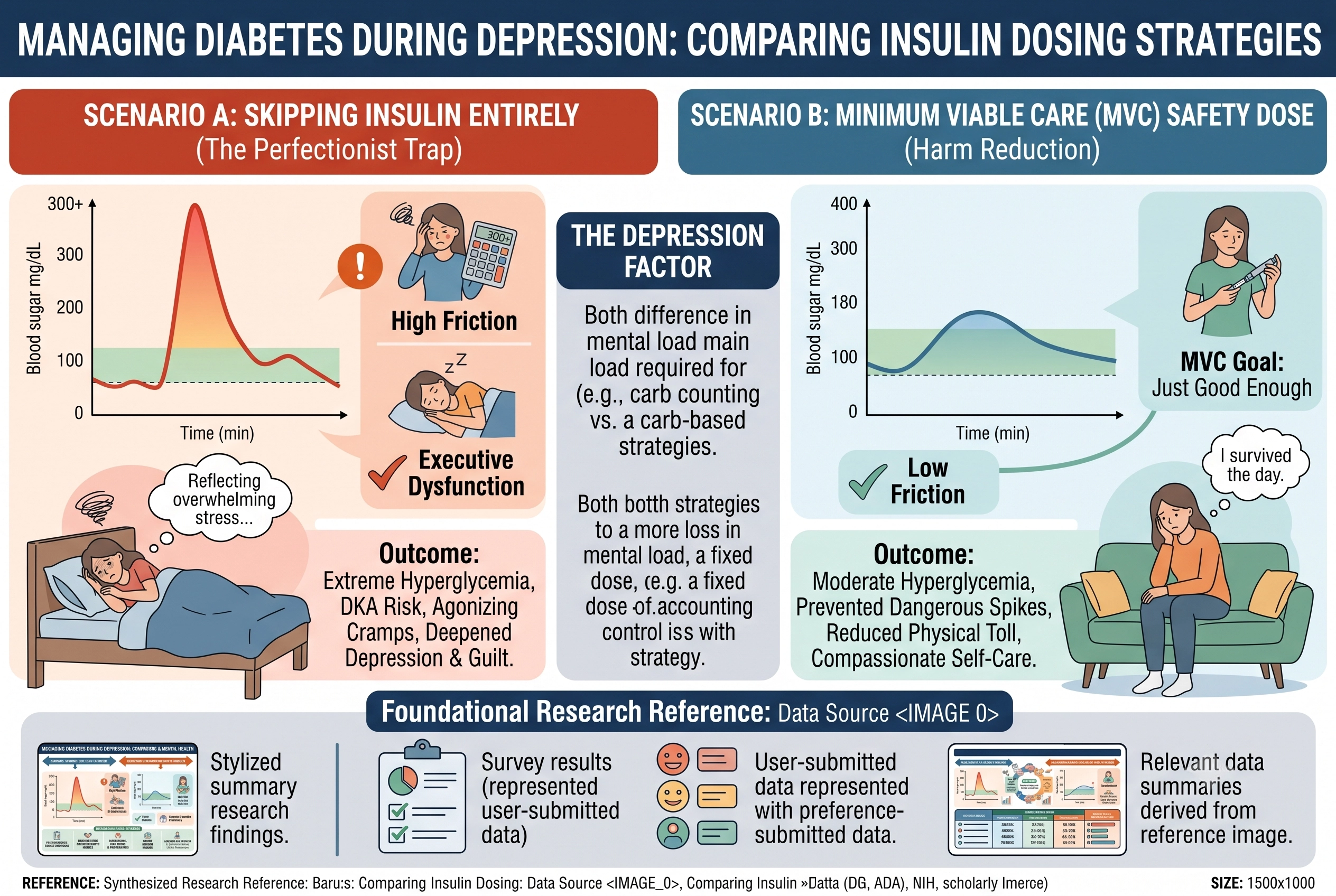
Scenario A (The Perfectionist Trap): You look at your dinner. You know you should calculate the exact macronutrients, pre-bolus 15 minutes before eating, and monitor your continuous glucose monitor (CGM) for the next two hours. Because that feels impossible, you freeze. You eat the meal but skip the insulin entirely. Your blood sugar spikes to 300 mg/dL. You wake up with agonizing leg cramps, a dry mouth, and an overwhelming sense of guilt that fuels the next day's depression.
Scenario B (Minimum Viable Care): You look at your dinner. You acknowledge that you don't have the energy to count carbs or wait 15 minutes. Instead of doing nothing, you administer a generic, pre-set "small meal" dose (e.g., 3 or 4 units) that you and your doctor previously agreed is safe. It might not perfectly cover the meal, and your blood sugar might still rise to 180 mg/dL, but it prevents the dangerous 300 mg/dL spike. You wake up without cramps. You survived the day.
Minimum Viable Care (MVC) is about keeping yourself out of the hospital. On your hardest days, your MVC might simply be taking your long-acting (basal) insulin to prevent Diabetic Ketoacidosis (DKA) and night cramps. Removing the pressure to be a "perfect diabetic" can actually free up enough mental energy to take the bare minimum steps for your safety.
Navigating the Medical System When You Feel Judged
One of the most devastating barriers for people dealing with depression and diabetes is medical gatekeeping.
Many patients report that when they confess their struggles with motivation, their endocrinologists refuse to prescribe advanced technology—like closed-loop systems or automated insulin pumps—because they are deemed "irresponsible" or "non-compliant."
This is a tragic misunderstanding of both mental health and medical technology. Automated insulin delivery systems were not designed solely as a reward for "perfect" patients; they are vital tools that offload the cognitive burden of diabetes. If you are struggling to remember or find the motivation to take insulin, a closed-loop system that automatically adjusts your basal rates is exactly what you need.
How to Advocate for Yourself:
If your doctor is resistant, try reframing the conversation. Say: "My depression is currently causing severe executive dysfunction. The manual steps of using an insulin pen are acting as a barrier to my care. I need a closed-loop system specifically to help reduce the mental load so I can stay safe while I treat my depression."
If your doctor still refuses to see depression as a legitimate medical barrier rather than a character flaw, it may be time to look for a trauma-informed endocrinologist.
Practical Day-to-Day Strategies to Lower the Friction of Self-Care
When motivation is zero, we must rely on lowering the friction of tasks.
- The "One Step" Rule: Don't commit to taking your insulin. Just commit to taking the cap off the pen. Often, breaking the physical barrier of the first step can trick your brain into finishing the task.
- Keep Supplies Everywhere: Keep a meter or insulin pen on your nightstand, next to your couch, and in your bathroom. If you don't have to get up and walk to the kitchen to fetch your supplies, you are more likely to use them.

- Safe Foods: Stock up on zero-prep, nutrient-dense foods that don't cause massive glucose spikes (like nuts, cheese sticks, or pre-made protein shakes). When you can't fathom dosing insulin, eating a low-carb snack that requires zero math can keep you nourished and safe.
Managing diabetes with depression is incredibly unfair. Give yourself grace. Celebrate the days you manage your basal insulin. Treat your depression as the primary medical emergency, and let your diabetes management be "just good enough" while you heal.
Frequently Asked Questions (FAQs)
Why does high or low blood sugar worsen depressive mood?
Rapid fluctuations in blood glucose interfere with brain function. Low blood sugar triggers adrenaline (causing anxiety and panic), while high blood sugar thickens the blood, reducing oxygen flow to the brain and causing profound lethargy, irritability, and depressive symptoms.
What should I do if I cannot find the energy to inject bolus insulin before a meal?
Talk to your endocrinologist about setting up a "sliding scale" or a fixed safety dose for low-energy days. Even a partial dose is better than no dose, as it helps blunt the worst of the post-meal glucose spike.
Can treating depression improve glycemic numbers?
Absolutely. Treating depression (through therapy, medication, or both) restores your executive function, making self-care physically and mentally easier. Additionally, treating depression lowers systemic cortisol levels, which can naturally improve your body's insulin sensitivity.
Disclaimer: The content provided on Wakadam is for informational and educational purposes only and is not a substitute for professional medical advice, diagnosis, or treatment. Always seek the advice of your physician or qualified mental health provider with any questions you may have regarding a medical condition or treatment plan.
You should also read:
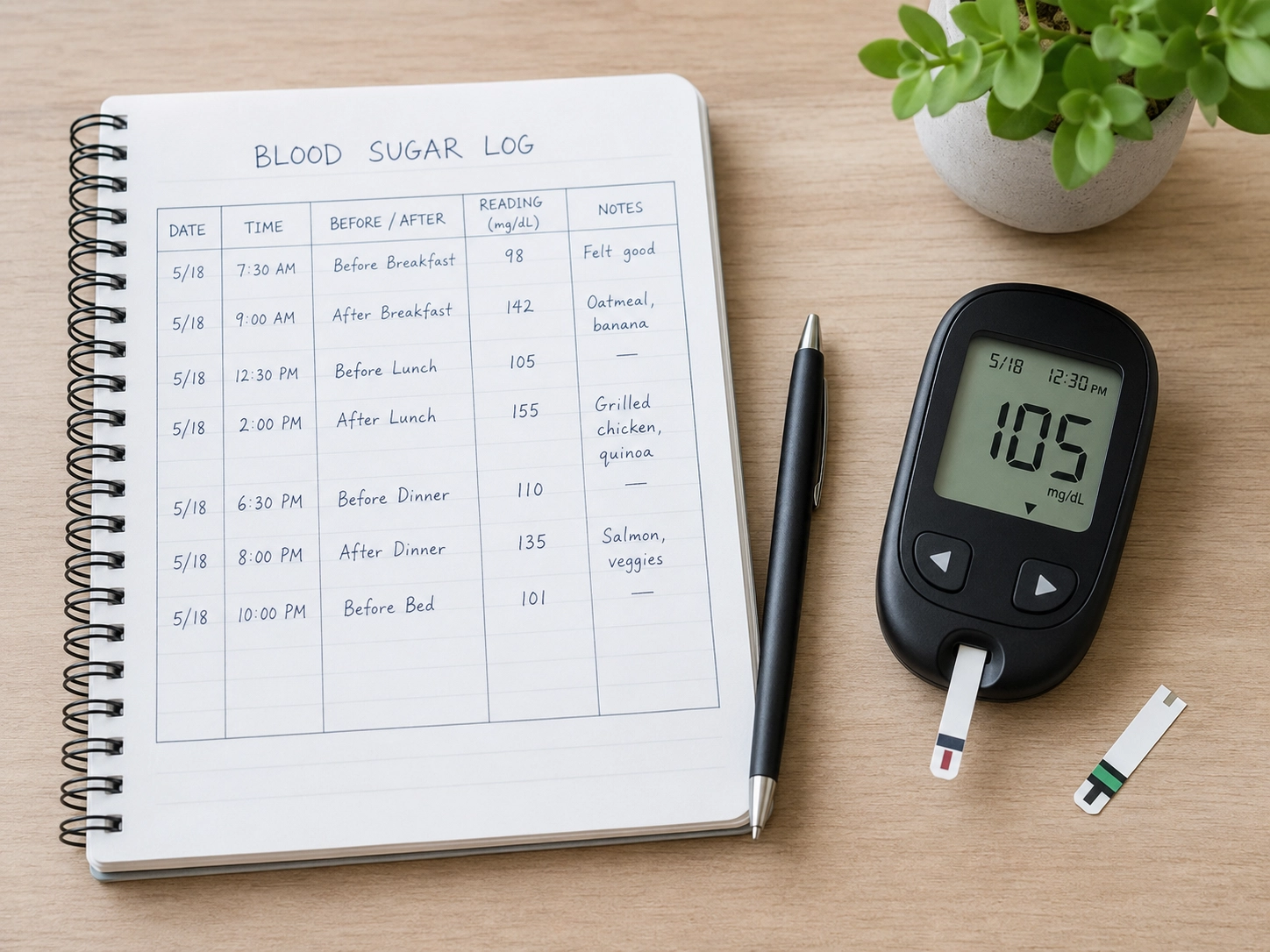
How to Use a Blood Sugar Log Without Feeling Overwhelmed
Checking your blood sugar can feel simple at first: test, see a number, write it down. But after a few days, many people realize the hard part is not getting the number. The hard part is understanding what the number means. Why was your morning…
Continue reading...
Can Banana Be Eaten in Diabetes? A Practical Guide to Portion, Ripeness, and Blood Sugar
Bananas are one of those everyday foods that can feel confusing if you are watching your blood sugar. On one hand, a banana is a whole fruit. It is simple, affordable, portable, and naturally sweet. On the other hand, you may have heard that bananas…
Continue reading...
Can You Eat Watermelon with Diabetes? A Practical Guide Without Food Fear
Watermelon is one of those foods that can feel confusing if you are watching your blood sugar. It is fresh, light, and mostly water. At the same time, it tastes very sweet. So it is natural to wonder: can diabetics eat watermelon, or is it…
Continue reading...