When Managing Blood Sugar Starts to Feel Like a Full-Time Job

Table of Contents
- It Is Not Always a Lack of Knowledge
- The Emotional Weight of “Getting It Wrong”
- Start by Reducing Friction
- Why Herbs Often Sound Appealing
- When “Natural” Becomes Another Complicated Routine
- A More Structured Plant-Based Option
- Why Energy and Cravings Matter More Than They Seem
- What Supporting Macronutrient Metabolism Means
- Who Might Appreciate a Combined Formula?
- When It May Not Be the Right Choice
- A Better Question Than “Will It Work?”
- A Simple Seven-Day Reset Before Deciding
- How to Review the Formula Without Being Pressured
- The Routine Still Comes First
- Final Thoughts
- Frequently Asked Questions
- References & Further Reading:
There is a particular kind of tiredness that comes from having to think about food all the time.
Not just deciding what sounds good for dinner, but wondering what a meal might do to your energy, your cravings, or the numbers you may see later.
Should you eat the bread?
Was there too much rice?
Would adding protein make the meal more balanced?
Are you actually hungry, or are you tired?
Should you go for a walk now, even though it has already been a long day?
For some people, supporting healthy blood sugar begins to feel less like a wellness goal and more like a job that never ends.
You may already know the usual advice. Eat more vegetables. Choose more fiber. Reduce sugary drinks. Sleep better. Move after meals. Manage stress.
None of that advice is necessarily wrong.
The difficult part is doing all of it consistently while also dealing with work, family, social events, fatigue, cravings, medication schedules, grocery shopping, and ordinary life.
That is why a realistic blood sugar routine should not be built around perfection.
It should be built around making better choices easier to repeat.
It Is Not Always a Lack of Knowledge
Many people who struggle with their blood sugar habits already understand what they are “supposed” to do.

They know that a balanced breakfast may be more helpful than coffee and a pastry. They know that drinking soda every afternoon is probably working against their goals. They know that sleep and movement matter.
Knowing is not always the problem.
The problem may be that the healthy choice requires more planning, more preparation, more energy, and more decisions.
When you are tired, stressed, or short on time, the easiest option often wins.
That may look like:
- Skipping breakfast and becoming extremely hungry later
- Grabbing a sweet snack during an afternoon energy slump
- Ordering a convenient meal without knowing what is in it
- Eating more at night because meals earlier in the day were not satisfying
- Avoiding social meals because the choices feel overwhelming
- Starting a strict routine, then abandoning it after one difficult day
- These patterns are not proof that someone is lazy or undisciplined.
They often mean the routine is asking for more energy than the person can consistently give.
The Emotional Weight of “Getting It Wrong”
Blood sugar concerns can create a complicated relationship with food.
A meal is no longer only a meal. It may feel like a test.
A higher-than-expected reading can make someone replay every bite they ate. A craving can feel like a personal failure. A social dinner may bring more anxiety than enjoyment.

Some people begin to divide food into categories of “good” and “bad.” Others become so worried about making the wrong choice that they keep switching plans, removing foods, buying new supplements, or following increasingly restrictive advice.
That pressure can become exhausting.
One imperfect meal does not erase every helpful choice you have made. A difficult week does not mean the routine has failed. And needing additional support does not mean you lack willpower.
The goal is not to control every variable perfectly.
The goal is to create a routine that still works on ordinary, imperfect days.
Start by Reducing Friction
A sustainable routine usually contains fewer complicated rules and more repeatable defaults.

Instead of trying to redesign your entire life at once, you might begin with a few reliable choices:
- A breakfast you can prepare without much thought
- A lower-sugar drink you genuinely enjoy
- A source of protein you can add to simple meals
- A short walk that fits naturally into your day
- A planned snack for the time cravings usually appear
- A simple way to track patterns without judging yourself
These actions may look small, but small choices repeated consistently often matter more than dramatic changes that last only a few days.
The same principle applies to natural ingredients and supplements.
The best option is not necessarily the one with the most complicated routine. It is the one you can use responsibly and consistently without expecting it to do everything for you.
Why Herbs Often Sound Appealing
Herbs and plant extracts feel approachable.

Cinnamon is familiar. Herbal tea feels simple. Ingredients such as fenugreek, bitter melon, and gymnema are often discussed in conversations about metabolic wellness.
For someone who feels overwhelmed by medical language, natural ingredients may appear calmer and easier to understand.
Food-level use can be practical.
Cinnamon may make plain oatmeal or yogurt more enjoyable without adding syrup. Unsweetened herbal tea may replace a sugary drink. Spices can make vegetables, beans, fish, and other everyday foods taste better.
In these situations, the herb helps because it supports a better choice.
It does not cancel out an unbalanced meal or act like medication.
Concentrated extracts are different. They may provide much larger amounts than the quantities normally used in cooking. They can also interact with medication or be unsuitable for some health conditions.
This is why natural support still requires realistic expectations and sensible precautions.
When “Natural” Becomes Another Complicated Routine
Some people begin by purchasing one individual supplement.
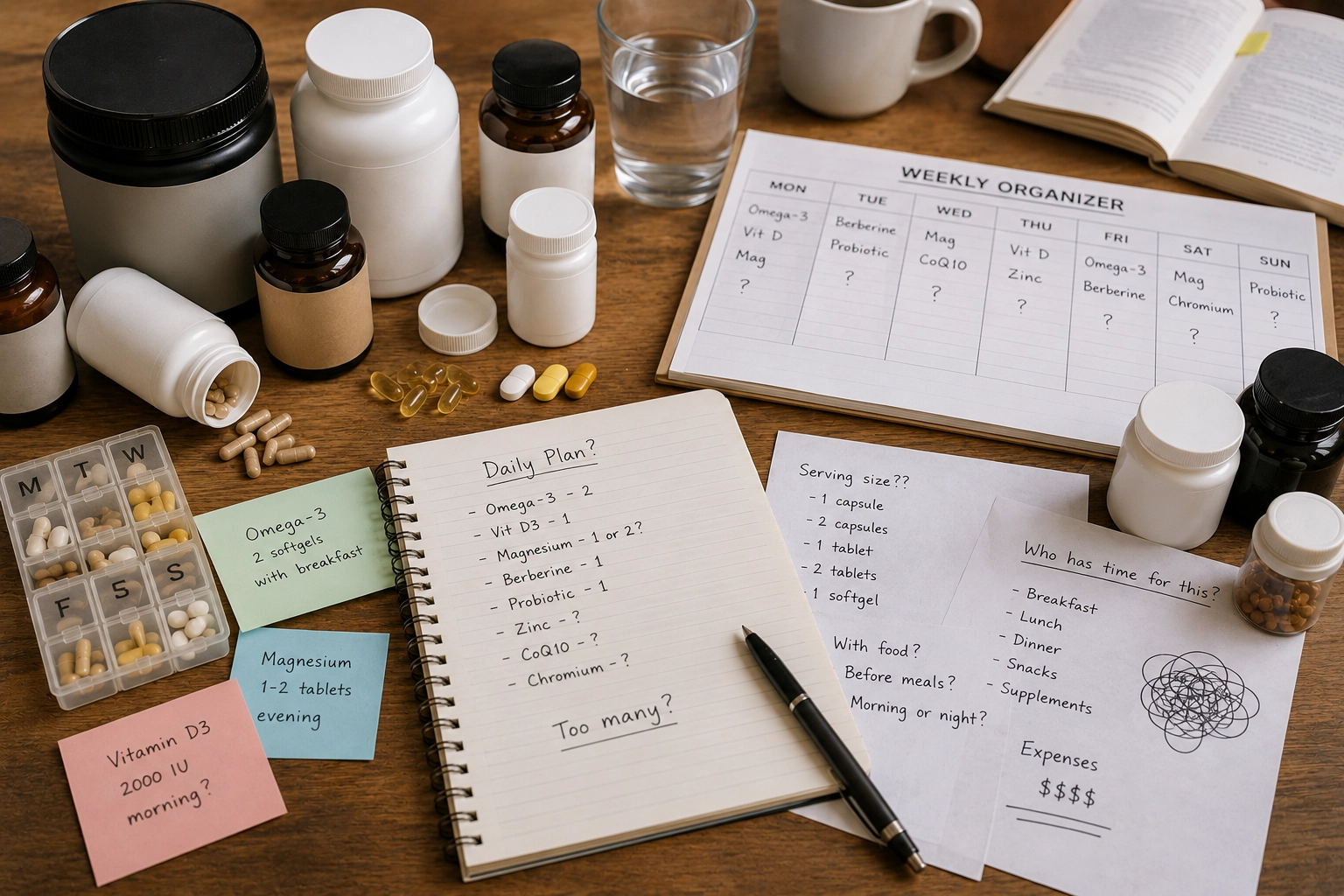
Then they read about another ingredient that sounds promising. Soon there are several bottles, different serving instructions, overlapping nutrients, and uncertainty about which combination makes sense.
What began as an attempt to simplify wellness becomes another source of decision fatigue.
Questions start to accumulate:
- Am I taking too many ingredients?
- Do these formulas overlap?
- Should they be taken with food?
- Which one is actually useful?
- Is this appropriate with my medication?
- How long should I continue?
- Am I expecting too much?
There is nothing automatically wrong with using individual supplements. Some people prefer that level of control.
Others would rather consider one structured formula instead of assembling several separate products.
Convenience alone is not proof that a supplement will work for everyone. But reducing complexity can make a routine easier to understand and follow.
A More Structured Plant-Based Option
One combined formula available in this category is NuviaLab Sugar Control.
It brings together nine ingredients, including certified plant extracts, vitamins, and minerals, in one food supplement.
According to the product information, the combination is intended to support:
- The maintenance of normal blood sugar levels
- Normal macronutrient metabolism
- Normal hormonal activity
- The reduction of tiredness and fatigue
- Appetite and calorie-intake management
That list may sound appealing, particularly to someone dealing with low energy, frequent cravings, or the frustration of managing several individual supplements.
But the wording matters.
The formula is intended to support normal functions. It is not presented as a diabetes treatment, a replacement for medication, or a way to force blood sugar down quickly.
Its most immediate practical benefit is simpler: it places several selected ingredients into one structured routine.
[See the Full 9-Ingredient Formula and Directions]

Why Energy and Cravings Matter More Than They Seem
It is easy to discuss food choices as though every decision happens in a calm and rational moment.
Real life is rarely like that.
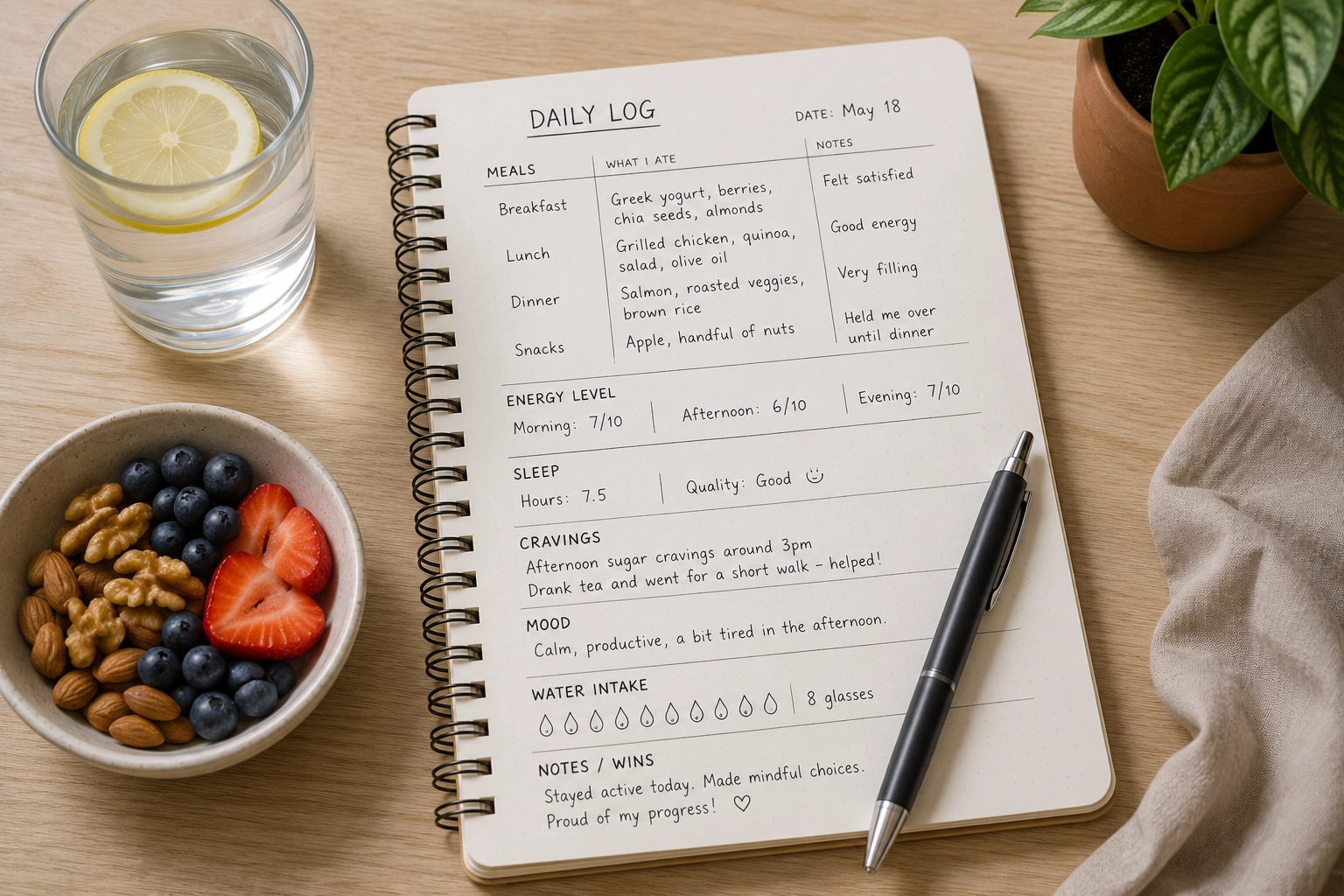
A craving often appears when someone is tired, stressed, underfed, or surrounded by convenient food. An evening meal may become larger because breakfast and lunch were too small. A sugary drink may be less about sugar and more about needing enough energy to finish the workday.
This does not mean appetite should be ignored.
It means appetite needs context.
A routine that supports more stable eating patterns may include:
- Enough protein at meals
- Fiber-rich carbohydrates
- Regular meal timing
- Better sleep
- Planned snacks
- Fewer liquid calories
- Less restrictive dieting
- Support for normal energy metabolism
The formula discussed above is designed in part to support appetite management and the reduction of tiredness and fatigue.
That does not guarantee fewer cravings or more energy for every person. It does, however, explain why these areas are included alongside normal blood sugar and macronutrient metabolism.
They are connected parts of everyday metabolic wellness rather than completely separate concerns.
What Supporting Macronutrient Metabolism Means
Carbohydrates often receive most of the attention in blood sugar conversations.
However, the body also needs to process proteins and fats. Together, these are known as macronutrients.
Supporting normal macronutrient metabolism means supporting the body’s usual processes for using these nutrients.
It does not mean:
- Blocking carbohydrates
- Erasing calories
- Making portion sizes irrelevant
- Preventing every rise in blood glucose after eating
- Turning a highly processed meal into a balanced one
This distinction is important because marketing language can sometimes make ordinary nutritional support sound like a dramatic metabolic shortcut.
A supplement may support normal processes. Your eating pattern still provides the larger context in which those processes take place.
Who Might Appreciate a Combined Formula?
This type of supplement may feel relevant to an adult who is already making some effort but wants the routine to feel more organized.
For example, someone who:
- Is trying to eat more balanced meals
- Has reduced some sugary drinks but still struggles with cravings
- Wants plant extracts, vitamins, and minerals in one formula
- Feels overwhelmed by managing several separate bottles
- Understands that meaningful changes still depend on daily habits
- Wants to review a structured option without expecting a cure
- The motivation does not need to be dramatic.
It may simply be:
“I am already trying to take better care of myself. I want something that can fit alongside those efforts without making my routine more complicated.”
That is a reasonable reason to explore a supplement.
It is very different from expecting a capsule to compensate for every meal, replace professional care, or undo a medical condition.
When It May Not Be the Right Choice
A supplement should not be purchased simply because someone is frightened by a glucose reading or frustrated after a difficult week.
Fear can create urgency, but it does not always lead to a good decision.
The formula is unlikely to be appropriate for someone who wants to:
- Replace diabetes medication
- Stop monitoring blood glucose
- Treat or reverse diabetes without medical care
- Continue an unhealthy routine without making other changes
- Achieve guaranteed weight loss
- Eliminate cravings immediately
- Combine several supplements without checking for overlap
Extra caution is important for people who:
- Have diabetes or prediabetes
- Use insulin or glucose-lowering medication
- Experience episodes of low blood sugar
- Take several medications
- Are pregnant or breastfeeding
- Have kidney or liver disease
- Are preparing for surgery
- Have a diagnosed metabolic or hormonal condition
In these situations, a qualified healthcare professional should review the ingredient list before use.

Do not stop, reduce, or replace prescribed medication because you begin taking a food supplement.
A Better Question Than “Will It Work?”
People often search for a simple verdict:
- Will this work?
- The problem is that “work” can mean many different things.
- Does it mean curing diabetes? It cannot do that.
- Does it mean replacing medication? It should not.
- Does it mean guaranteeing fewer cravings or more energy? Individual experiences cannot be guaranteed.
A more useful question is:
Does this formula make sense within the routine I am already trying to build?
To answer that, consider:
- Are the intended benefits relevant to your goals?
- Have you reviewed all nine ingredients?
- Are you already taking similar vitamins, minerals, or extracts?
- Is the formula appropriate for your medication and health situation?
- Can you follow the directions consistently?
- Are your expectations based on support rather than treatment?
- Does one combined formula feel easier than several separate products?
This kind of decision may be less exciting than believing a miracle claim, but it is far more useful.
A Simple Seven-Day Reset Before Deciding
You do not need to transform your entire lifestyle before considering additional support.
Try observing your current routine for seven days.
Do not aim for perfection. Just notice what is actually happening.
In the Morning
Ask:
- Did I eat a meal or rely only on coffee?
- Did breakfast include protein?
- Was the meal satisfying for more than an hour or two?
In the Afternoon
Notice:
- When do cravings usually begin?
- Did I skip or under-eat at lunch?
- Am I reaching for sugar because I feel tired?
- Would a planned snack have helped?
In the Evening
Look at:
- Whether dinner portions become larger after a restrictive day
- Whether sugary drinks or desserts are automatic habits
- Whether a brief walk feels realistic
- Whether stress or poor sleep affects evening eating
At the end of the week, you may see that the main problem is not a lack of information.
It may be a predictable gap in the routine: an unsatisfying breakfast, afternoon fatigue, convenience food, or too many decisions.
That insight can help you decide whether you need a change in meals, better planning, medical guidance, or an additional support tool.
How to Review the Formula Without Being Pressured
A responsible product page should give you enough information to make your own decision.

Before purchasing, check:
- The complete ingredient list
- The amount of each ingredient
- Recommended daily use
- Warnings and precautions
- Current package options
- Current price
- Shipping availability
- Return or refund conditions
- Contact information for customer support
Avoid making a decision based only on a discount message or a prominent button.
The ingredients, directions, suitability, and limitations matter more than the urgency of a promotion.
[Review Ingredients, Current Price, and Purchase Details]

The Routine Still Comes First
No supplement removes the need to eat.
No capsule can replace sleep.
No formula can take a walk for you, prepare a balanced meal, or decide when it is time to ask for medical help.
That does not make supplements meaningless.
It simply puts them in the correct place.
For some adults, the role of a combined formula is to make an already-improving routine feel more structured. The value may come from convenience, nutritional support, and having fewer separate products to organize.
The foundation remains:
- Meals that are satisfying enough to repeat
- Movement that fits real life
- Fewer sugary drinks
- Better awareness of craving patterns
- Consistent sleep where possible
- Appropriate medical care
- Realistic expectations
The goal is not to build the most impressive routine.
It is to build one you can still follow when the week becomes difficult.
Final Thoughts
Living with blood sugar concerns can involve more than food choices.
It can involve uncertainty, frustration, constant decision-making, fear of getting things wrong, and the exhaustion of trying to stay consistent.
A useful approach should reduce some of that pressure—not add more.
NuviaLab Sugar Control offers a nine-ingredient combination of plant extracts, vitamins, and minerals for adults interested in additional support for normal blood sugar maintenance, macronutrient metabolism, hormonal activity, energy, and appetite management.
It will not replace medication or medical care. It will not correct every habit. It cannot guarantee a particular result.
What it may offer is a more organized way to include several supportive ingredients without building a complicated collection of separate supplements.
For someone already trying to improve meals, movement, sleep, and daily consistency, that may be enough reason to examine the formula more closely.
Not because you need another promise.
Because you may want a routine that feels a little easier to maintain.

[View the Complete Formula and Decide Whether It Fits Your Routine]
Frequently Asked Questions
Is this supplement intended to treat diabetes?
No. It is a food supplement intended to support normal bodily functions. It is not designed to diagnose, treat, cure, or prevent diabetes or another disease.
Can someone with diabetes use it?
People with diabetes or prediabetes should speak with a qualified healthcare professional before using a blood sugar support supplement, especially when taking insulin or glucose-lowering medication.
Can it replace medication?
No. Prescribed medication should not be stopped, reduced, or replaced because of a supplement.
Why choose a combined formula instead of separate ingredients?
Some people prefer the convenience of receiving several plant extracts, vitamins, and minerals in one structured formula. Others may prefer individual supplements. The appropriate choice depends on personal needs, current products, medication use, and professional advice.
Will it stop sugar cravings?
The formula is designed to support appetite and calorie-intake management, but it cannot guarantee that cravings will disappear. Meal quality, protein, fiber, sleep, stress, hydration, and eating patterns also affect appetite.
Will it lower blood sugar quickly?
It should not be treated as a fast-acting method for lowering blood sugar. People experiencing high or low glucose readings should follow their healthcare professional’s instructions.
Where can the complete ingredient list be found?
The full nine-ingredient formula, directions, warnings, current pricing, and purchase conditions should be reviewed on the linked product page before ordering.
Health Disclaimer: This content is for educational purposes only and is not medical advice. Supplements do not replace prescribed medications, blood glucose monitoring, or professional care. Always consult your healthcare provider before starting any new supplement, especially if you have a medical condition, take medications, or are pregnant/breastfeeding.
References & Further Reading:
Centers for Disease Control and Prevention (CDC): Diabetes and Mental Health. Explores the reality of "diabetes distress" and the psychological exhaustion that comes with the daily, full-time burden of managing blood sugar. Read more
National Institute of Diabetes and Digestive and Kidney Diseases (NIDDK): Managing Diabetes. Emphasizes the importance of building a realistic, sustainable daily routine and managing stress to support overall metabolic health. Read more
You should also read:
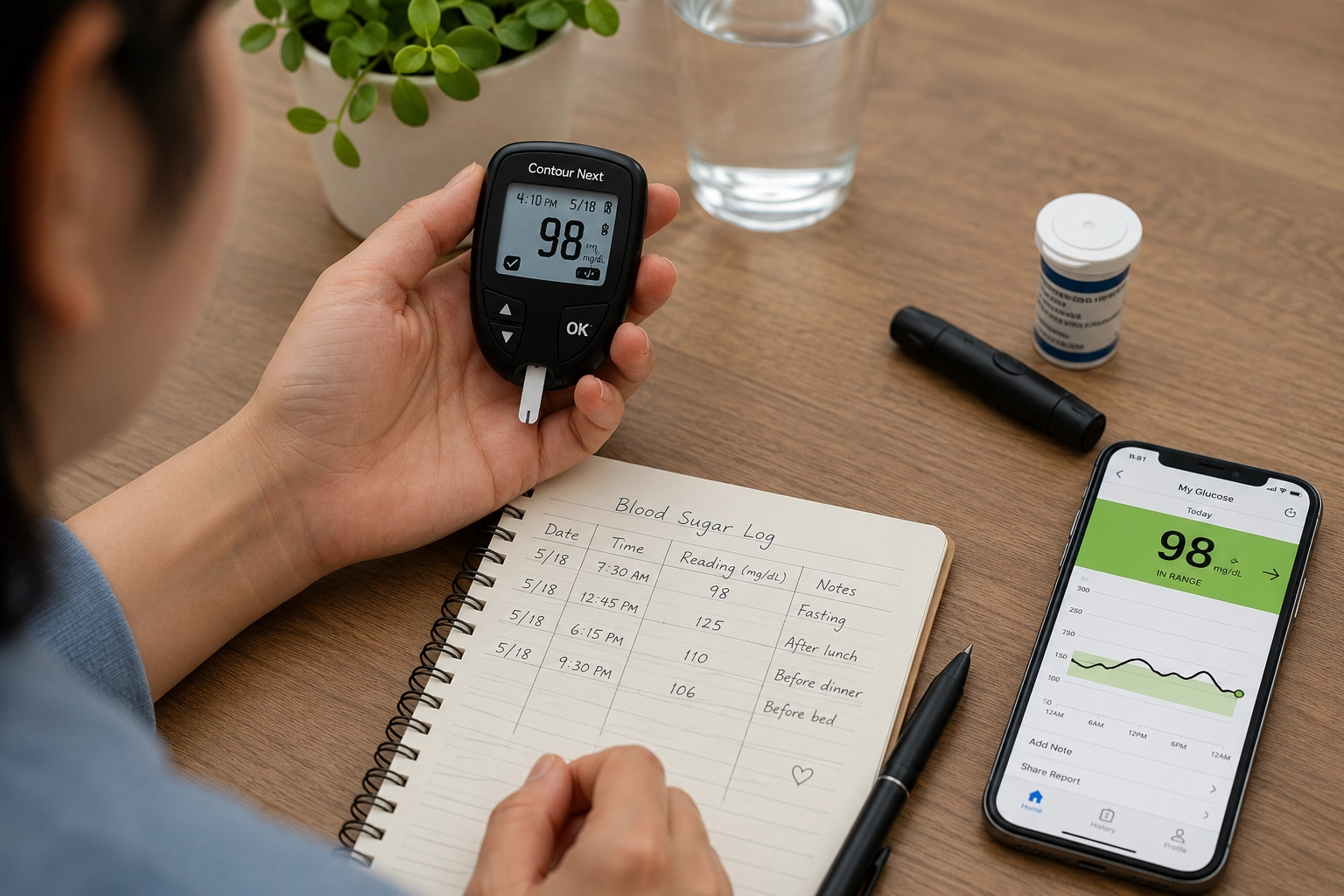
Blood Sugar Conversion Chart: How to Understand Your Glucose Numbers in Different Units
Blood sugar numbers can be confusing enough on their own. They become even more confusing when one website shows a reading in mg/dL, your glucose meter uses mmol/L, or a lab report lists a number that looks completely unfamiliar. For example, you may see 100…
Continue reading...
Blood Sugar Support in Real Life: What Actually Helps Day to Day?
If you have ever felt tired after a meal, craved something sweet in the afternoon, or felt confused by blood sugar numbers, the phrase “blood sugar support” can sound both helpful and vague. Some people use it to talk about food choices. Others use it…
Continue reading...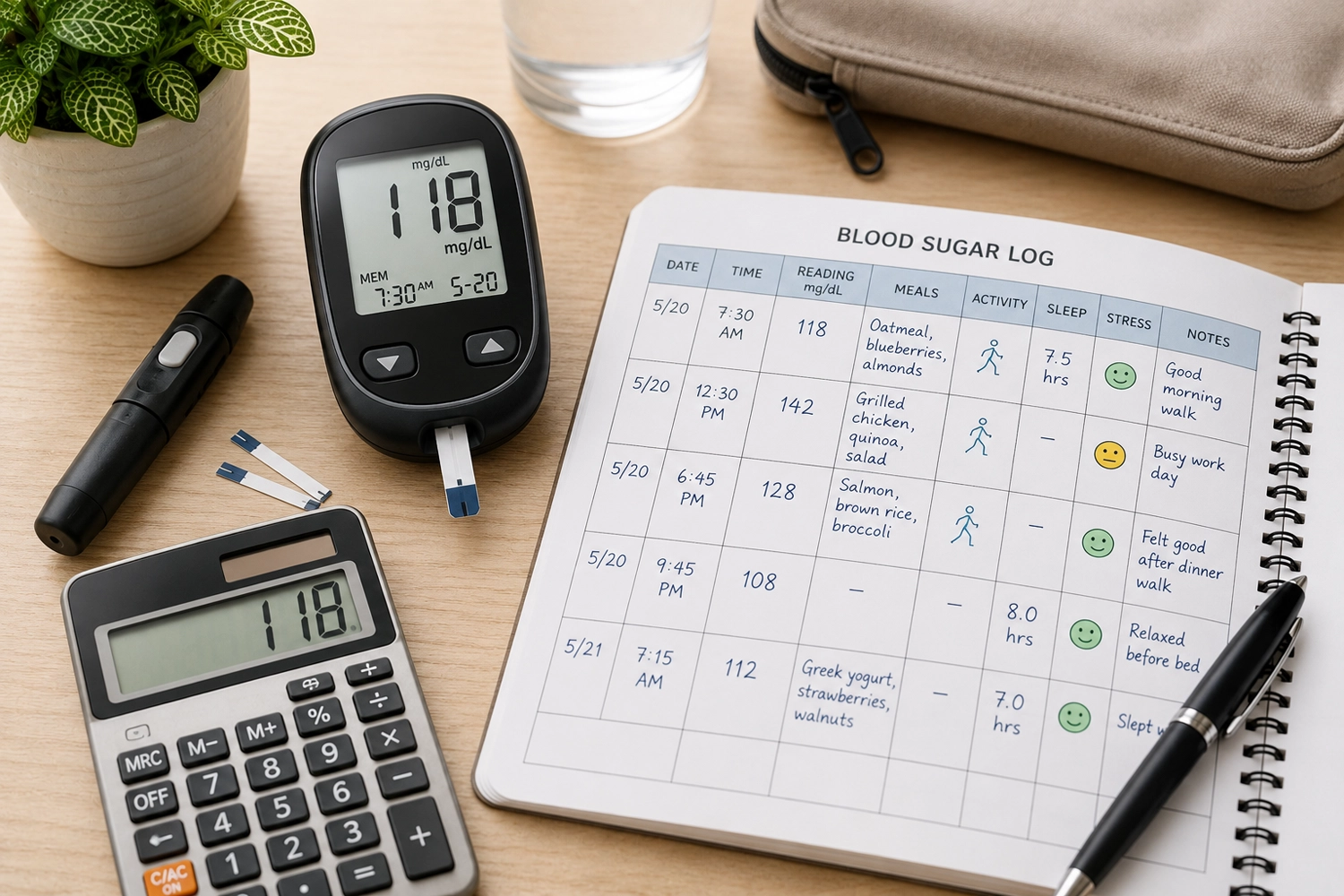
Glucose to A1C Calculator: How to Estimate A1C from Average Blood Sugar
If you track your blood sugar at home, you may already know numbers like 98, 126, 154, or 180 mg/dL. Then you go to a healthcare appointment and hear a different kind of number: your A1C. At first, it can feel like glucose readings and…
Continue reading...