Fasting Insulin Explained: The Lab Test Many People Don’t Understand
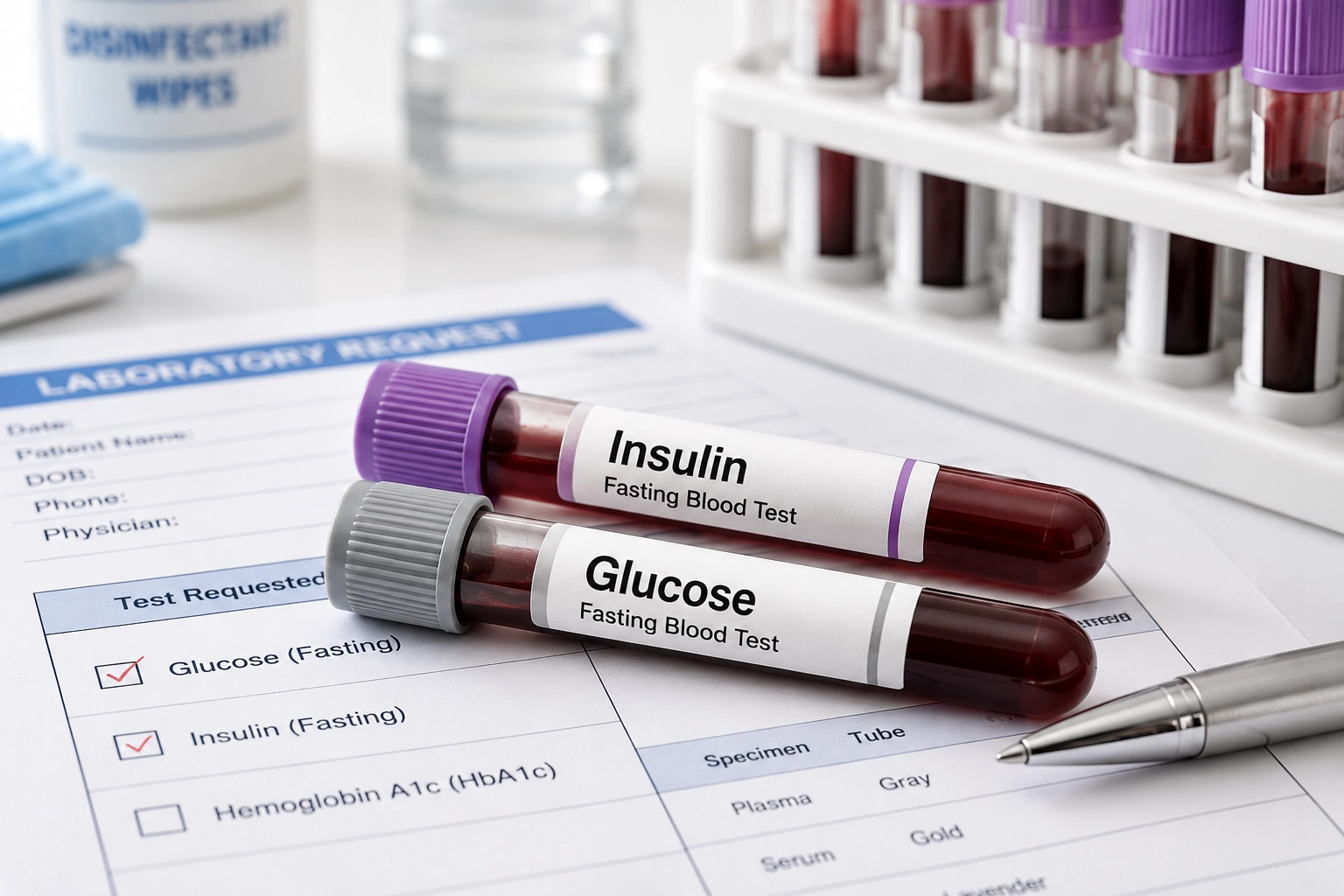
If you have ever checked your blood sugar, you may already know about fasting glucose, A1C, or a blood sugar log. But then you see another term on a lab order or health article: fasting insulin.
At first, it can feel confusing. Blood sugar is already hard enough to understand. Now there is another number that seems connected to insulin resistance, prediabetes, weight, cravings, and metabolic health.
The most important thing to know is this: fasting insulin is not a simple “good or bad” number that you should interpret by yourself. It can provide helpful information in some situations, but it needs context. Your doctor should look at it together with your symptoms, health history, medications, blood sugar results, A1C, and other markers.
This article explains what fasting insulin means, how it relates to blood sugar and insulin resistance, and what questions you can ask your healthcare professional if this test appears on your lab report.
What Is Fasting Insulin?
Insulin is a hormone made by the pancreas. Its main job is to help move glucose, or blood sugar, from your bloodstream into your cells, where it can be used for energy.
When you eat a meal that contains carbohydrates, your body breaks many of those carbohydrates down into glucose. As blood glucose rises, insulin helps move that glucose out of the blood and into your cells.
“Fasting insulin” refers to the amount of insulin in your blood after a period without food. In simple terms, it gives a picture of how much insulin your body is producing when you are not actively digesting a recent meal.
The “fasting” part matters because insulin naturally changes after eating. A test taken soon after a meal may look different from a test taken after fasting. That is why you should always follow the fasting instructions given by your doctor or lab.
What Is a Fasting Insulin Test?
A fasting insulin test is a blood test that measures insulin after a fasting period. It may be ordered by a healthcare professional when they want more information about how your body is handling insulin and glucose.
It may be discussed alongside other tests, such as:
- Fasting blood glucose
- A1C
- Oral glucose tolerance test
- Lipid panel
- Liver markers
- Blood pressure and waist measurement
- Other hormone or metabolic tests, depending on the situation
For everyday readers, the key point is that fasting insulin is not the same as fasting blood sugar.
Fasting blood sugar tells you how much glucose is in your blood at that moment. Fasting insulin tells you how much insulin is present. These two numbers are connected, but they are not identical.
Why Insulin and Blood Sugar Are Connected
Blood sugar and insulin work together. A helpful way to picture this is to imagine glucose as energy waiting in the bloodstream, and insulin as a signal that helps move that energy into the cells.
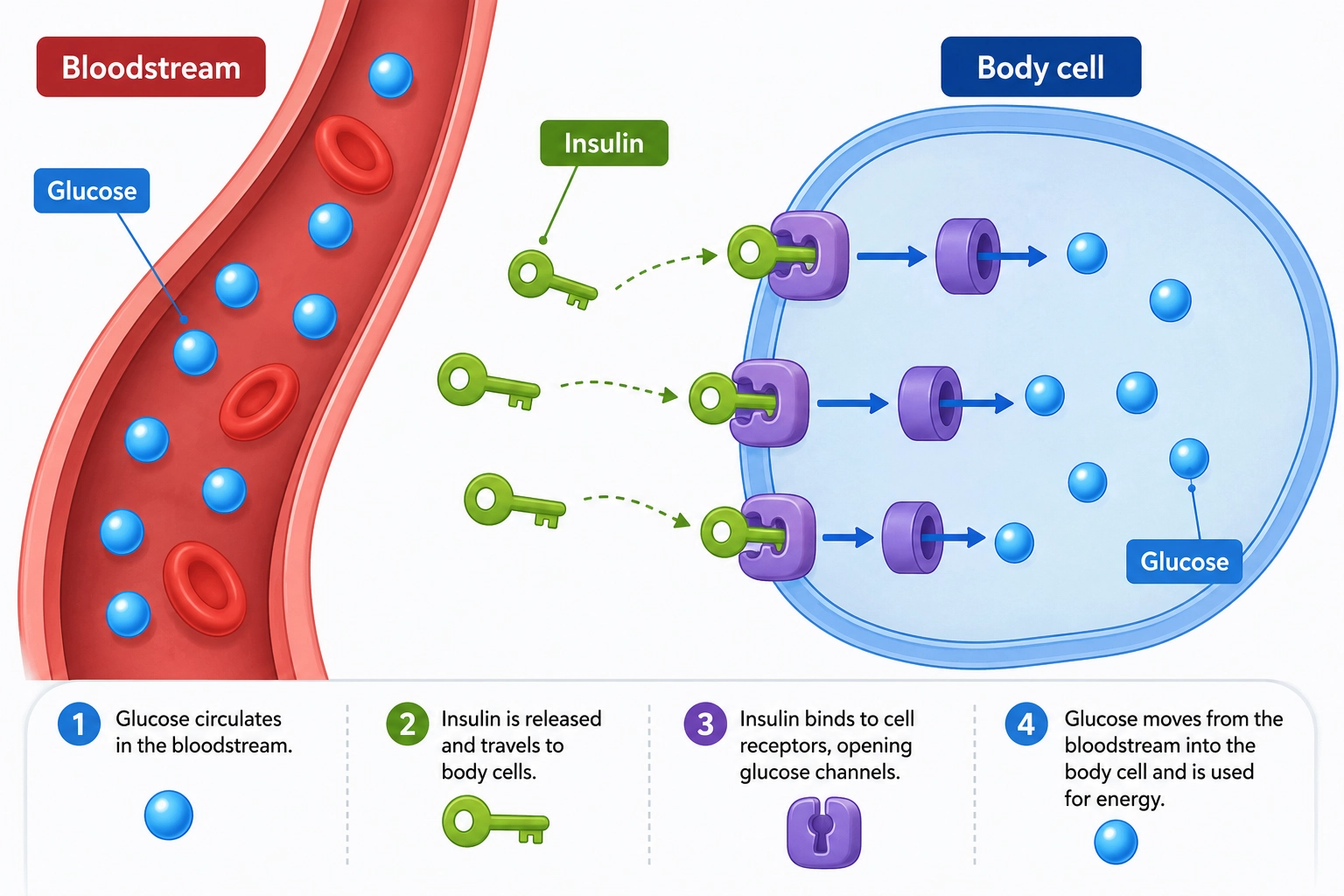
When this system works smoothly, the body can usually keep blood sugar within a healthy range. But in some people, the cells may not respond to insulin as effectively as expected. This is often called insulin resistance.
When insulin resistance is present, the body may need to produce more insulin to help manage the same amount of glucose. Over time, this may be associated with higher blood sugar levels in some people, but the process can be different from person to person.
This is one reason fasting insulin can be interesting in metabolic health discussions. It may give extra context about how hard the body may be working to keep glucose controlled.
But this does not mean you should diagnose yourself from a single fasting insulin level. Lab results need professional interpretation.
Fasting Insulin and Insulin Resistance
Insulin resistance means the body’s cells do not respond to insulin as well as they should. When that happens, the pancreas may produce more insulin to help move glucose into cells.
Some people wonder: “Can fasting insulin show insulin resistance?”
The careful answer is: it may provide useful context, but it should not be used alone as a diagnosis.
A fasting insulin level can be affected by many things, including lab method, timing, recent eating patterns, medications, body composition, sleep, stress, hormonal conditions, and overall health. Different labs may also use different reference ranges.
That is why a fasting insulin blood test should be viewed as one part of a larger picture, not a final answer by itself.
Fasting Insulin vs. Fasting Blood Sugar vs. A1C
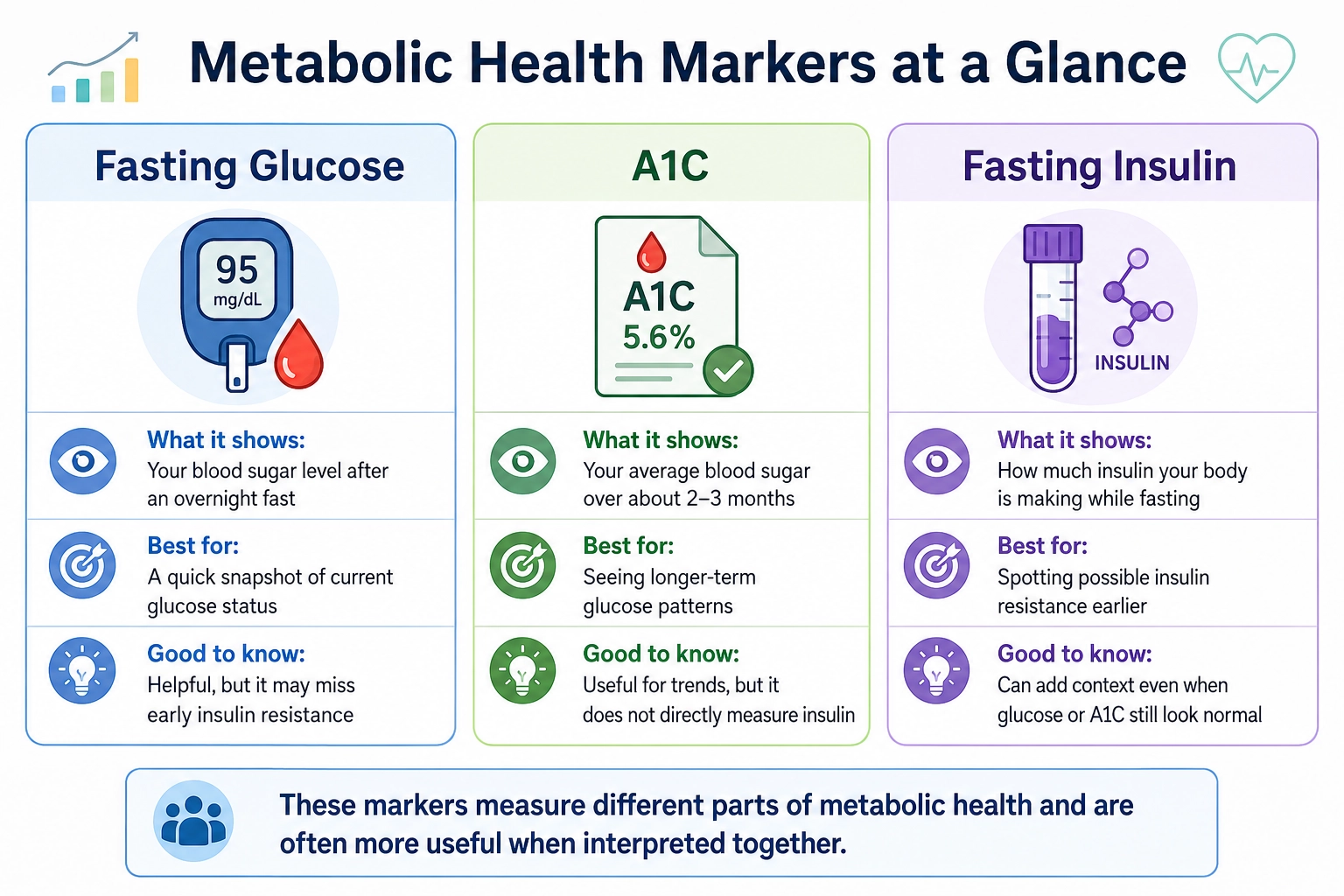
Many readers feel confused because these tests sound related. They are related, but each one tells you something different.
Fasting Blood Sugar
Fasting blood sugar measures glucose in your blood after fasting. It is a snapshot of your blood sugar at one point in time.
This test is commonly used in diabetes and prediabetes screening. However, one number may not explain your full daily pattern. Someone’s fasting number may look different from their after-meal numbers.
A1C
A1C gives a broader picture of average blood sugar over the past few months. It is often used to screen for or monitor blood sugar problems.
A1C can be helpful because it is not just one moment in time. But it also has limitations. Certain medical conditions may affect how accurate A1C is for some people.
Fasting Insulin
Fasting insulin measures insulin, not glucose. It may help explain how much insulin is present while fasting.
For example, two people may have similar fasting glucose numbers, but their insulin levels may be different. This does not automatically prove one person is healthy and the other is not. It simply means there may be more to discuss with a healthcare professional.
Can Fasting Insulin Be High When Blood Sugar Looks Normal?
Yes, this can happen in some situations, but the meaning depends on the full context.
Here is a simple example.
Imagine two people both have fasting blood sugar that appears to be within the expected range. Person A’s body may need a modest amount of insulin to maintain that level. Person B’s body may need more insulin to keep blood sugar in a similar range.
From the outside, their fasting glucose may look similar. But their insulin response may not be the same.
This does not mean Person B should panic. It also does not mean they should diagnose themselves with insulin resistance. But it may be a useful reason to ask a doctor:
“How does my fasting insulin relate to my fasting glucose, A1C, and overall risk factors?”
That question is much safer and more useful than searching online for one “perfect” fasting insulin number.
What Can Affect Fasting Insulin Levels?
Fasting insulin may be influenced by many factors. Some are short-term. Others are related to longer-term metabolic health.
Possible influences include:
- Recent eating patterns
- Large portions of refined carbohydrates
- Physical activity level
- Sleep quality
- Stress
- Body weight and body composition
- Certain medications
- Hormonal conditions
- Liver health
- PCOS or other metabolic conditions
- Lab timing and testing method
This does not mean one bad night of sleep or one high-carb meal explains everything. It also does not mean you can look at this list and diagnose yourself.
A better approach is to use these factors as discussion points. For example, if you sleep poorly, feel tired after meals, and have a family history of diabetes, those details may help your healthcare professional understand your broader picture.
A Real-Life Scenario: “My Glucose Looks Fine, So Why Test Insulin?”
Suppose someone named Daniel gets a routine checkup. His fasting blood sugar looks normal, but he often feels tired after large lunches and has gained weight around the waist. His doctor orders several tests, including fasting glucose, A1C, lipids, and fasting insulin.
Daniel searches online and finds many different opinions. Some sites tell him fasting insulin is the “most important” marker. Others give strict number ranges and make scary claims.
A more balanced view is this: Daniel should not ignore the result, but he should not treat it as a standalone diagnosis either.
The useful next step is to ask his doctor how the fasting insulin result fits with:
- His fasting glucose
- His A1C
- His cholesterol and triglycerides
- His blood pressure
- His waist measurement
- His family history
- His symptoms and lifestyle patterns
This is the kind of practical, real-life thinking that makes lab results less confusing.
What Should You Ask Your Doctor About a Fasting Insulin Result?

If you have a fasting insulin test result, consider asking questions such as:
- Why was this test ordered?
- What does my result mean in the context of my other labs?
- How does it relate to my fasting glucose and A1C?
- Do I need any follow-up testing?
- Could my medications or health conditions affect this result?
- Should this test be repeated?
- Are there lifestyle habits that may support my overall metabolic health?
- What changes are realistic for me right now?
These questions keep the conversation practical without turning the lab result into a self-diagnosis.
What Can Support Healthier Insulin and Blood Sugar Patterns?
Lifestyle habits cannot replace medical care, and they should not be presented as a guaranteed way to change one lab number. However, certain habits are often associated with better metabolic health and may support healthier blood sugar and insulin patterns over time.

Build More Balanced Meals
A balanced meal often includes protein, fiber-rich carbohydrates, and healthy fats.
For example, compare these two breakfasts:
A sweet drink and white bread may digest quickly and leave some people hungry again soon.
A meal with eggs or Greek yogurt, vegetables or fruit, and a higher-fiber carbohydrate may feel more satisfying and may support steadier energy for some people.
The goal is not to fear carbohydrates. The goal is to make meals more balanced and less likely to cause big energy swings.
Pay Attention to Refined Carbs and Sugary Drinks
Frequent sugary drinks, desserts, and large portions of refined carbohydrates can make it harder for some people to maintain steady energy and healthy blood sugar patterns.
A practical first step may be replacing sweet drinks with water, unsweetened tea, or another low-sugar option most days.
Small changes are often easier to maintain than extreme rules.
Move After Meals When Possible
A short walk after meals may support post-meal blood sugar management for some people. It does not need to be intense.
Even 10 to 15 minutes of gentle movement after a meal may be more realistic than trying to start a difficult workout plan immediately.
Strength training and regular physical activity are also often associated with better insulin sensitivity.
Take Sleep Seriously
Poor sleep can affect hunger, cravings, energy, and daily food choices. When someone sleeps badly, they may be more likely to reach for quick energy from sugary or refined foods.
Improving sleep does not mean becoming perfect. It may start with a consistent bedtime, reducing late caffeine, or limiting screens before bed.
Manage Stress in Practical Ways
Stress can affect eating habits, sleep, movement, and energy. Some people snack more, skip meals, or choose more comfort foods when they are stressed.
Simple stress-support habits may include walking, journaling, breathing exercises, stretching, or creating a more consistent daily routine.
Again, these habits are not a treatment for a lab result. They are part of a broader metabolic health foundation.
Common Mistakes About Fasting Insulin
Mistake 1: Treating It as a Diabetes Diagnosis
Diabetes and prediabetes are usually evaluated with glucose-based tests such as fasting plasma glucose, A1C, or an oral glucose tolerance test. Fasting insulin may offer context in some situations, but it is not usually the main diagnostic test for diabetes.
Mistake 2: Comparing Your Number to Random Online Ranges
Different labs may use different methods and reference ranges. Your lab report and healthcare professional are better sources than random online charts.
Mistake 3: Assuming Normal Blood Sugar Means Everything Is Perfect
Normal blood sugar is helpful information, but it may not answer every question about insulin response, energy crashes, or long-term metabolic risk.
This is why it can be useful to look at patterns instead of one number.
Mistake 4: Trying to “Hack” One Lab Marker
It is easy to become obsessed with a single result. But your body is not a spreadsheet. A better goal is improving overall metabolic health through sustainable habits and appropriate medical care.
Mistake 5: Using Supplements Instead of Medical Evaluation
A lab-test concern should not be handled by buying a supplement and ignoring medical advice. Supplements should not be treated as a way to diagnose, treat, prevent, reverse, or correct insulin resistance, prediabetes, diabetes, or abnormal lab results.
For this topic, education and medical guidance are more appropriate than product recommendations.
A Simple Framework: Ask, Compare, Track
When you see fasting insulin on a lab report, use this three-step framework.
1. Ask
Ask why the test was ordered and what your doctor wanted to learn from it.
A test result is more useful when you understand the reason behind it.
2. Compare
Compare fasting insulin with other relevant information, such as fasting glucose, A1C, lipids, blood pressure, waist measurement, symptoms, family history, and medications.
This helps prevent overreacting to one number.
3. Track
Track patterns over time if your healthcare professional recommends it.
For some people, a blood sugar log may help show how meals, activity, sleep, and stress relate to daily glucose patterns. However, home tracking should not replace professional lab testing or medical advice.
When to Talk to a Healthcare Professional
You should speak with a healthcare professional if you have questions about a fasting insulin level, especially if you also have:
- Unusual thirst
- Frequent urination
- Ongoing fatigue
- Unexplained weight changes
- A family history of diabetes
- A history of prediabetes or glucose intolerance
- PCOS
- Fatty liver
- High triglycerides
- High blood pressure
- Pregnancy or plans for pregnancy
- Medications that may affect blood sugar
You can also link internally to your article on glucose intolerance here, because it is closely related to how the body handles blood sugar.
Practical Takeaway
Fasting insulin can be useful, but it should not be treated as a simple pass-or-fail number.
Think of it as one piece of the metabolic health puzzle:
- Fasting glucose shows blood sugar at one point in time.
- A1C gives a longer-term blood sugar picture.
- Fasting insulin may add context about insulin levels.
- Your symptoms, medical history, medications, and lifestyle patterns also matter.
The safest next step is not to diagnose yourself. It is to ask better questions and review your results with a qualified healthcare professional.
Health Disclaimer
This article is for general education only and does not replace medical advice. Fasting insulin results should be interpreted by a qualified healthcare professional together with your symptoms, medical history, medications, and other lab results.
FAQ
What is fasting insulin?
Fasting insulin is the amount of insulin in your blood after a fasting period. Insulin is a hormone that helps move glucose from the bloodstream into cells.
Is fasting insulin the same as fasting blood sugar?
No. Fasting blood sugar measures glucose. Fasting insulin measures insulin. The two are related, but they tell you different things.
Why would a doctor order a fasting insulin test?
A doctor may order it to better understand insulin production, insulin response, or possible metabolic health concerns. It is often interpreted with other tests, not by itself.
Can fasting insulin show insulin resistance?
It may provide helpful context, but fasting insulin alone should not be used to diagnose insulin resistance. A healthcare professional should interpret it alongside other lab results and personal risk factors.
Can fasting insulin be high if blood sugar is normal?
It can happen in some situations. The meaning depends on the full medical context, including fasting glucose, A1C, symptoms, medications, and other risk factors.
What is a normal fasting insulin level?
Reference ranges can vary by lab and testing method. Use the range shown on your own lab report and ask your healthcare professional what it means for your situation.
Is fasting insulin used to diagnose diabetes?
Diabetes and prediabetes are usually evaluated with glucose-based tests such as fasting plasma glucose, A1C, or an oral glucose tolerance test. Fasting insulin may be used as supporting context in some cases.
Can lifestyle changes improve fasting insulin?
Healthy eating patterns, regular movement, better sleep, and weight management may support insulin sensitivity and metabolic health for some people. However, lifestyle changes should not replace medical care or be treated as a guaranteed way to change one lab result.
You should also read:

Can Skinny People Get Diabetes? What Thin and Normal-Weight People Should Know
Many people think of diabetes as something that only happens to people who are overweight. So if you are thin, active-looking, or have always had a smaller body, it can feel confusing to even ask the question: can skinny people get diabetes? The simple answer…
Continue reading...
Diabetic Chicken Recipes That Don’t Feel Like Diet Food
Chicken is one of the first foods many people think of when they want to eat better for blood sugar. It is high in protein, naturally low in carbohydrates, easy to cook, and familiar enough for everyday dinners. But here is the part that often…
Continue reading...
Not Hungry for Lunch? How to Manage Long-Acting Insulin When You Have No Appetite
Coming home from the hospital after a diabetes-related emergency is a jarring experience. While you were in the ward, your day was heavily structured. Nurses brought you three meals a day on a strict schedule, administered your long-acting insulin, and monitored your blood sugar around…
Continue reading...