Can Diabetics Eat Grits? A Practical Breakfast Guide
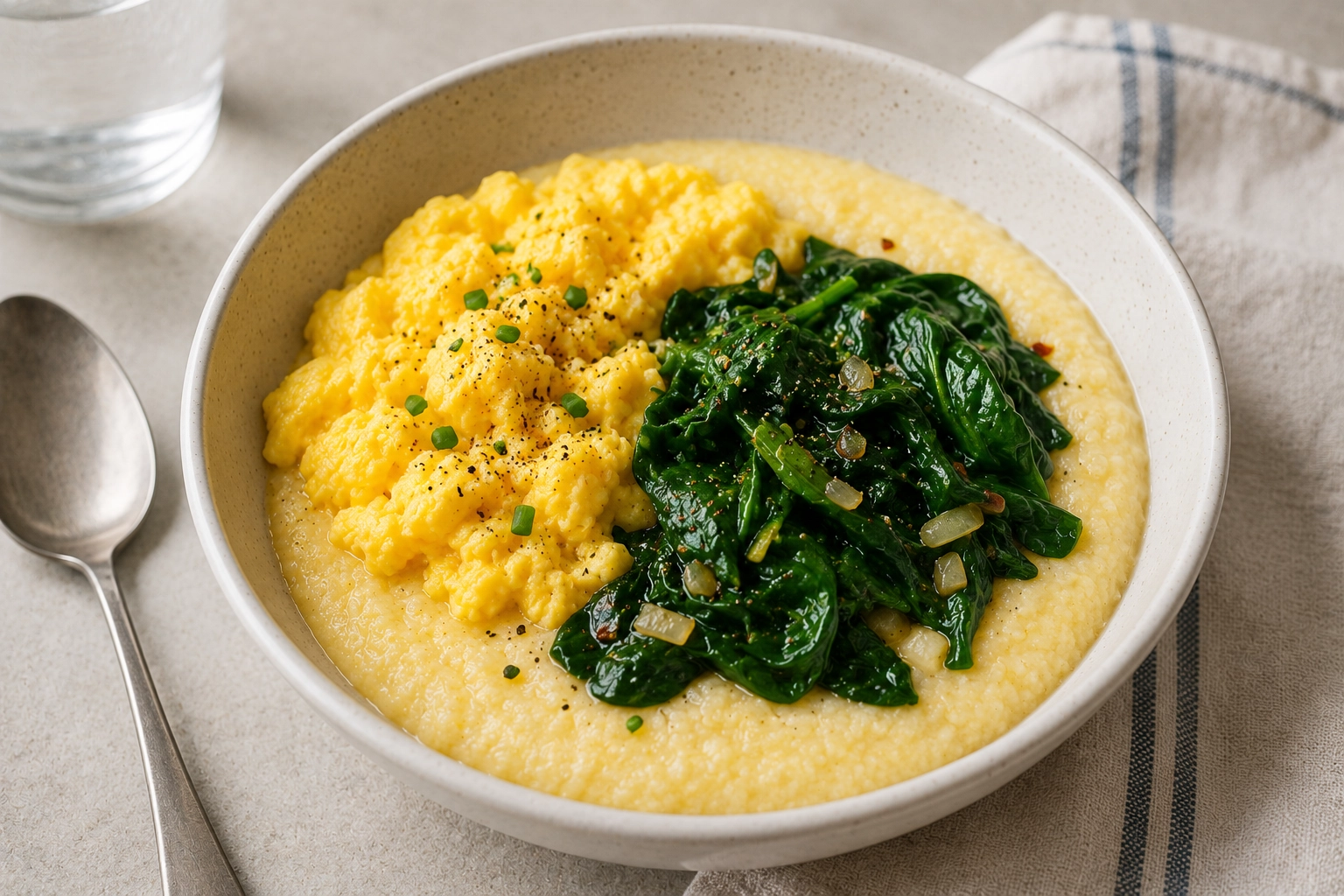
Grits are one of those foods that can feel comforting, familiar, and confusing at the same time. If you grew up eating grits for breakfast, you may not want to give them up completely. But if you have diabetes, prediabetes, insulin resistance, or you are trying to avoid blood sugar spikes, you may wonder: can diabetics eat grits, or are they too high in carbs?
The practical answer is: some people with diabetes may be able to eat grits, but the portion size, toppings, preparation style, and the rest of the meal matter a lot.
Grits are made from corn, which means they contain carbohydrates. Carbohydrates can raise blood sugar, especially when eaten in large portions or without enough protein, fiber, or fat. But that does not mean grits are automatically “bad” for every person with diabetes. A small serving of plain grits with eggs and vegetables is very different from a large bowl of sweetened grits with biscuits, juice, and sugary coffee.
Health Disclaimer: This article is for general education only and is not a substitute for medical advice. If you have diabetes, take glucose-lowering medication, or have specific blood sugar targets, ask your healthcare professional or registered dietitian for personalized guidance.
What Are Grits?
Grits are a cooked dish made from ground corn. They are often served warm and soft, almost like a savory breakfast porridge. Many people eat them plain, with butter, with cheese, with shrimp, or as part of a larger breakfast plate.
Because grits come from corn, they are a carbohydrate food. This is the main reason people with diabetes often have questions about them.
Carbohydrates are broken down into glucose during digestion. That glucose enters the bloodstream and can raise blood sugar. This does not make carbohydrates “forbidden,” but it does mean that the amount, type, and meal combination matter.
Are Grits Good for Diabetics?
A better question may be: how are the grits being eaten?
The phrase “are grits good for diabetics” is too broad because there is no single answer for everyone. Some people may find that a small serving of grits fits into their eating pattern. Others may notice that grits raise their blood sugar more than they expected.
Several things can change the answer:
- The portion size
- Whether the grits are plain, instant, sweetened, or restaurant-style
- Whether they are eaten alone or with protein and fiber
- Whether the meal includes other carbs like biscuits, toast, juice, or sweet drinks
- The person’s own glucose response
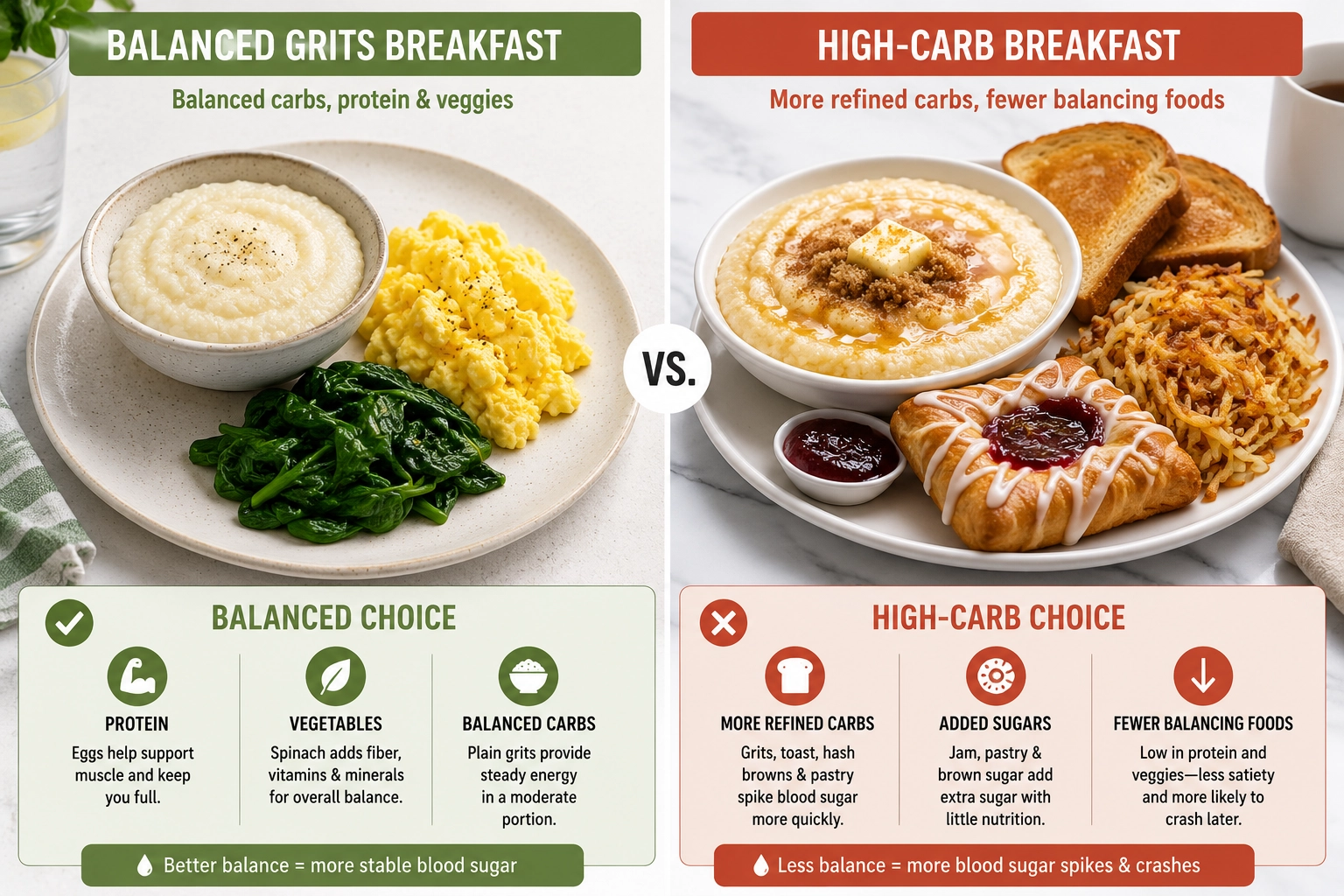
For example, a small bowl of plain grits with eggs and sautéed spinach is not the same as a large bowl of sweetened grits with syrup, butter, biscuits, and orange juice.
The first meal has more balance. The second meal combines several fast or refined carbohydrate sources at once.
Why Grits Can Affect Blood Sugar
Grits can affect blood sugar because they contain carbohydrates and are often relatively low in fiber compared with some other breakfast options, such as steel-cut oats or high-fiber whole grains.
This matters because fiber can help slow digestion and support a steadier post-meal response for some people. Protein and fat can also slow how quickly a meal is digested. That is why the same serving of grits may affect you differently depending on what you eat with it.
A bowl of grits by itself may leave some people hungry sooner or more likely to feel an energy dip later. A smaller portion of grits with eggs, vegetables, or another protein source may feel more satisfying.
The key point is not that grits are always wrong. The key point is that grits should be treated as the carbohydrate part of the meal.
Plain Grits vs. Loaded Grits
Not all grits are the same. The way they are prepared can make a big difference.
Plain Homemade Grits
Plain homemade grits are usually easier to control. You can decide how much to cook, how much to serve, and what to add.
This gives you more flexibility. You might use grits as a small side instead of the whole breakfast. You might pair them with eggs, vegetables, fish, tofu, or another protein-rich food.
Plain grits still contain carbohydrates, but they are easier to fit into a balanced meal than heavily sweetened or oversized portions.
Instant Grits
Instant grits are convenient, especially on busy mornings. But they can also be easy to eat quickly and may come in flavored versions with added sodium, sugar, or other ingredients.
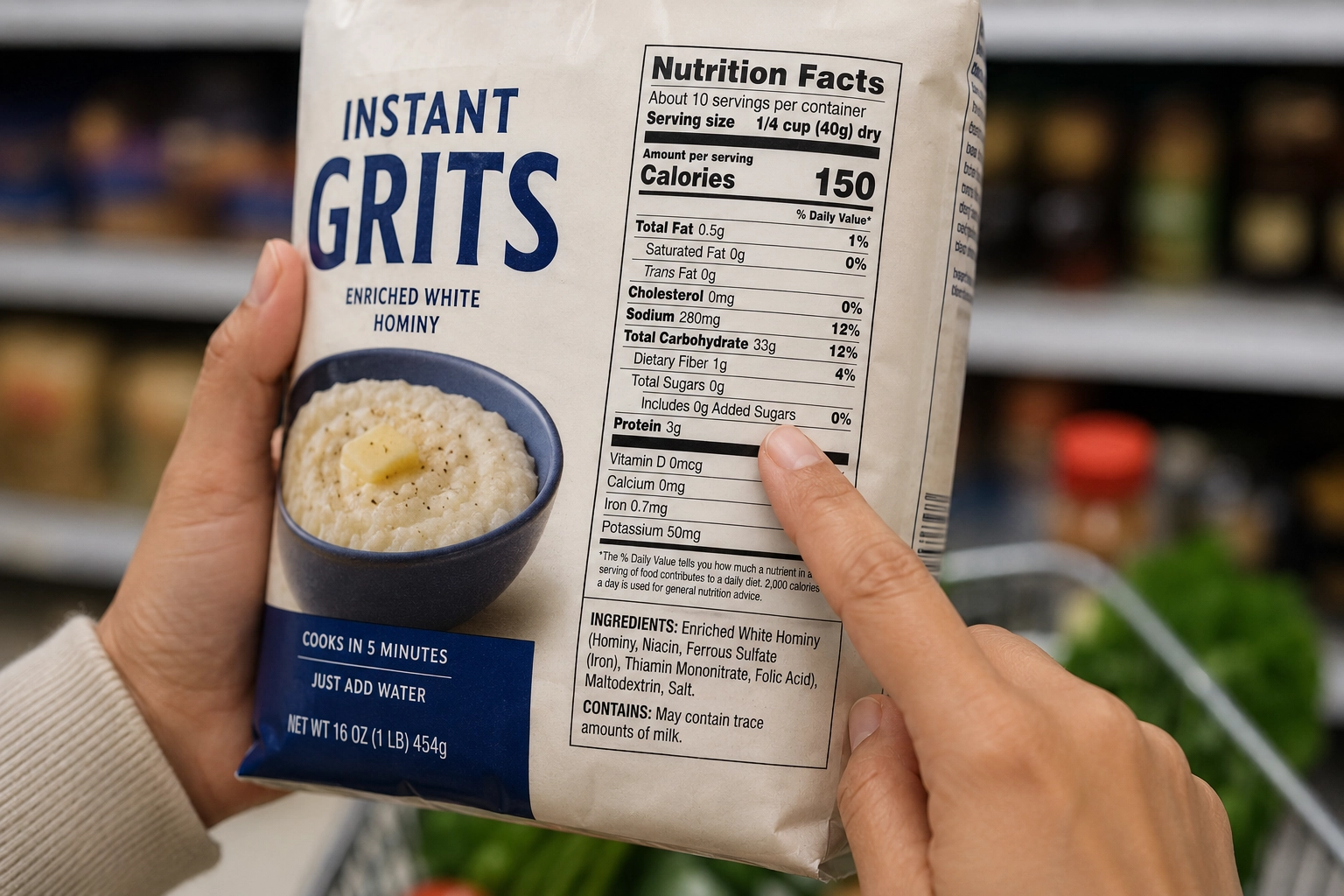
If you use instant grits, check the nutrition label. Look at:
- Serving size
- Total carbohydrates
- Added sugars
- Fiber
- Sodium
- Ingredients
Plain instant grits may be easier to work with than sweetened flavored packets.
Cheese Grits
Cheese grits are popular, but they are not automatically better for blood sugar just because cheese adds fat and protein.
Cheese may make the meal more filling, but it can also add saturated fat, sodium, and calories. If the portion of grits is still large, the carbohydrate load may still be high.
A small serving of cheese grits with vegetables and protein may be reasonable for some people. A large restaurant bowl with extra cheese, butter, cream, and salty meats may be more challenging.
Sweetened Grits
Sweetened grits are usually more difficult from a blood sugar perspective. Sugar, syrup, honey, sweetened condensed milk, or sweet toppings can add more fast-digesting carbohydrates.
This does not mean you must feel guilty if you enjoy sweet grits occasionally. But if your goal is steadier blood sugar, sweetened grits may not be the best everyday choice.
Restaurant Shrimp and Grits
Shrimp and grits can be confusing. Shrimp provides protein, which is helpful. But restaurant versions may also include a large portion of grits, butter, cheese, cream, bacon, sausage, or rich sauces.
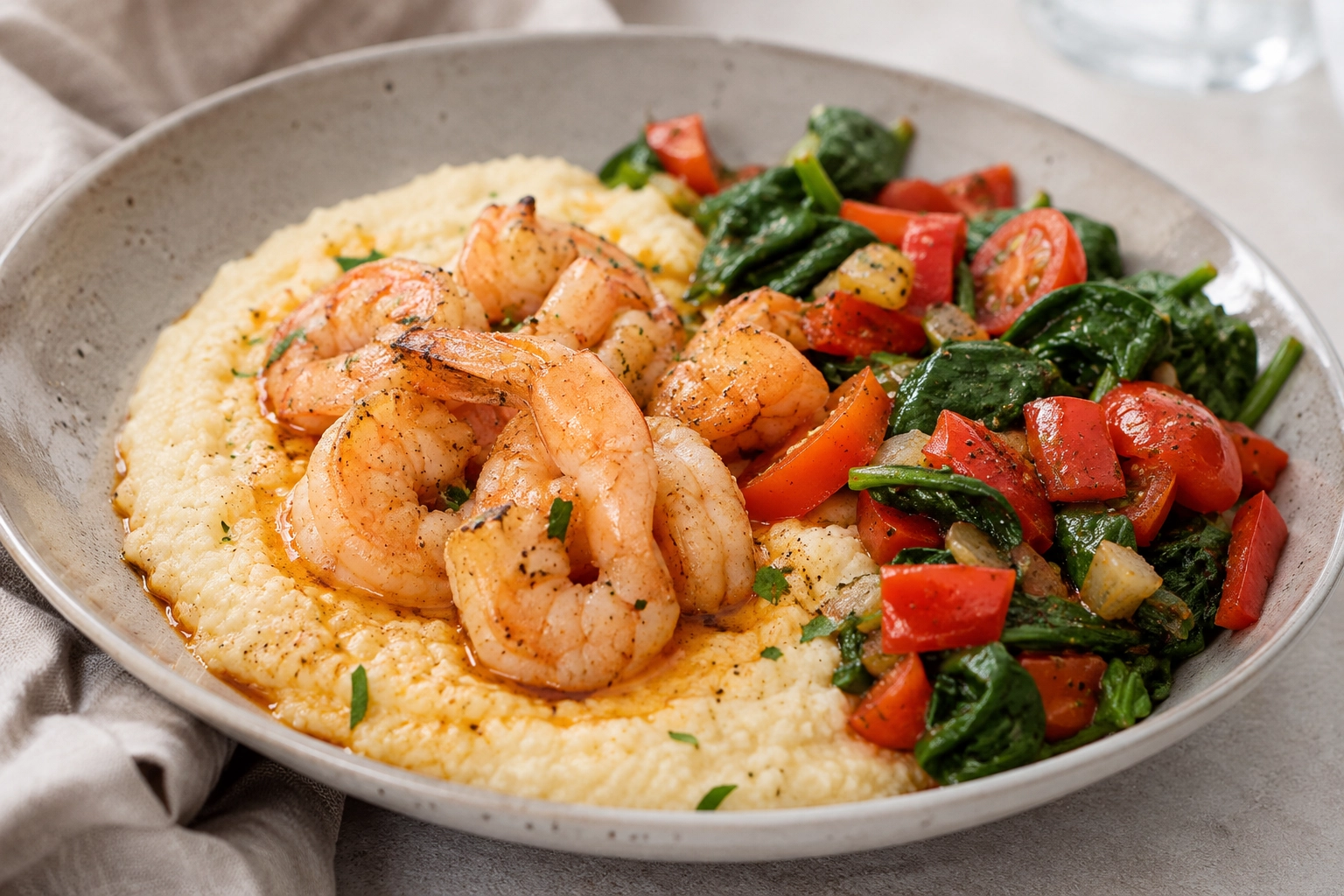
If you order shrimp and grits at a restaurant, the practical issue is often portion size and hidden ingredients. You might consider eating part of the grits, saving leftovers, or adding a non-starchy vegetable side if available.
The “Double Carb Breakfast” Problem
One of the most common breakfast mistakes is not eating grits. It is eating grits with several other carbohydrate-heavy foods at the same meal.
For example:
- Grits plus biscuits
- Grits plus toast
- Grits plus pancakes
- Grits plus orange juice
- Grits plus sweet coffee
- Grits plus jam or syrup
This can turn breakfast into a “double carb” or even “triple carb” meal.
A more balanced breakfast usually gives each food a role. If grits are the carbohydrate base, you may not need biscuits, juice, and sweetened coffee at the same time.
This simple shift can make the meal easier to manage without making breakfast feel overly restrictive.
How to Eat Grits in a More Blood-Sugar-Conscious Way
You do not need a complicated rulebook. Start with a few practical adjustments.
1. Treat Grits as the Carb Portion
Instead of thinking of grits as the whole breakfast, think of them as the carbohydrate part of the meal.
Then ask: what protein and fiber can I add?
For example:
- Grits + eggs + spinach
- Grits + shrimp + vegetables
- Grits + tofu scramble + peppers
- Grits + cottage cheese on the side + tomatoes
- Grits + turkey slices + sautéed mushrooms
This approach helps you build a meal instead of just filling a bowl.
2. Start With a Smaller Portion
A small side portion is very different from a large bowl.
You do not need to guess perfectly. You can start by checking the serving size on the package. If you are eating at a restaurant, assume the portion may be larger than a home serving.
Some people may find that reducing the portion and adding protein makes the breakfast more satisfying than eating a bigger bowl of grits alone.
3. Add Protein
Protein can support fullness and may help make the meal feel more balanced.
Breakfast protein ideas include:
- Eggs
- Greek yogurt on the side
- Cottage cheese
- Turkey slices
- Tofu scramble
- Shrimp
- Fish
- Lean chicken leftovers
The goal is not to “cancel out” the grits. Protein does not erase carbohydrates. But it can improve the overall balance of the meal.
4. Add Fiber-Rich Foods or Non-Starchy Vegetables
Vegetables may not be traditional in every grits breakfast, but they can work well in savory meals.
Try:
- Spinach
- Tomatoes
- Mushrooms
- Bell peppers
- Onions
- Zucchini
- Greens
- A small side salad for brunch
This can make the meal more filling and nutrient-rich.
5. Be Careful With Sweet Toppings
If you are trying to support steadier blood sugar, be cautious with:
- Sugar
- Syrup
- Honey
- Sweetened flavor packets
- Sweetened coffee creamers
- Sweet drinks on the side
You do not have to make the meal perfect. But removing one or two sweet additions can make a meaningful difference.
Grits vs. Other Breakfast Choices
It may help to compare grits with other common breakfast foods.
Grits vs. Oatmeal
Oatmeal, especially less processed oats, often contains more fiber than grits. That may make oatmeal a better option for some people who want a more filling, blood-sugar-conscious breakfast.
However, oatmeal can also become less balanced if it is loaded with sugar, syrup, sweetened dried fruit, or large portions of honey.
The better choice depends on the portion, toppings, and your personal response.
Grits vs. Biscuits or White Toast
A small serving of grits with eggs and vegetables may be more balanced than biscuits with jam and sweet tea.
Again, the point is not to label one food as always good or always bad. The full breakfast pattern matters.
Grits vs. Eggs-Only Breakfast
Eggs are low in carbohydrates, so they may have less direct effect on blood sugar than grits. But not everyone wants a very low-carb breakfast, and not everyone feels satisfied eating only eggs.
For some people, a small portion of grits with eggs and vegetables may feel more realistic and sustainable than completely removing familiar foods.
Grits vs. Popcorn
Grits and popcorn both come from corn, but they are eaten in different ways. Grits are usually a breakfast base, while popcorn is usually a snack.
A small serving of plain popcorn may fit differently into a day than a large bowl of grits at breakfast. If you are curious about corn-based snacks, you can also read Wakadam’s article on can diabetics eat popcorn.
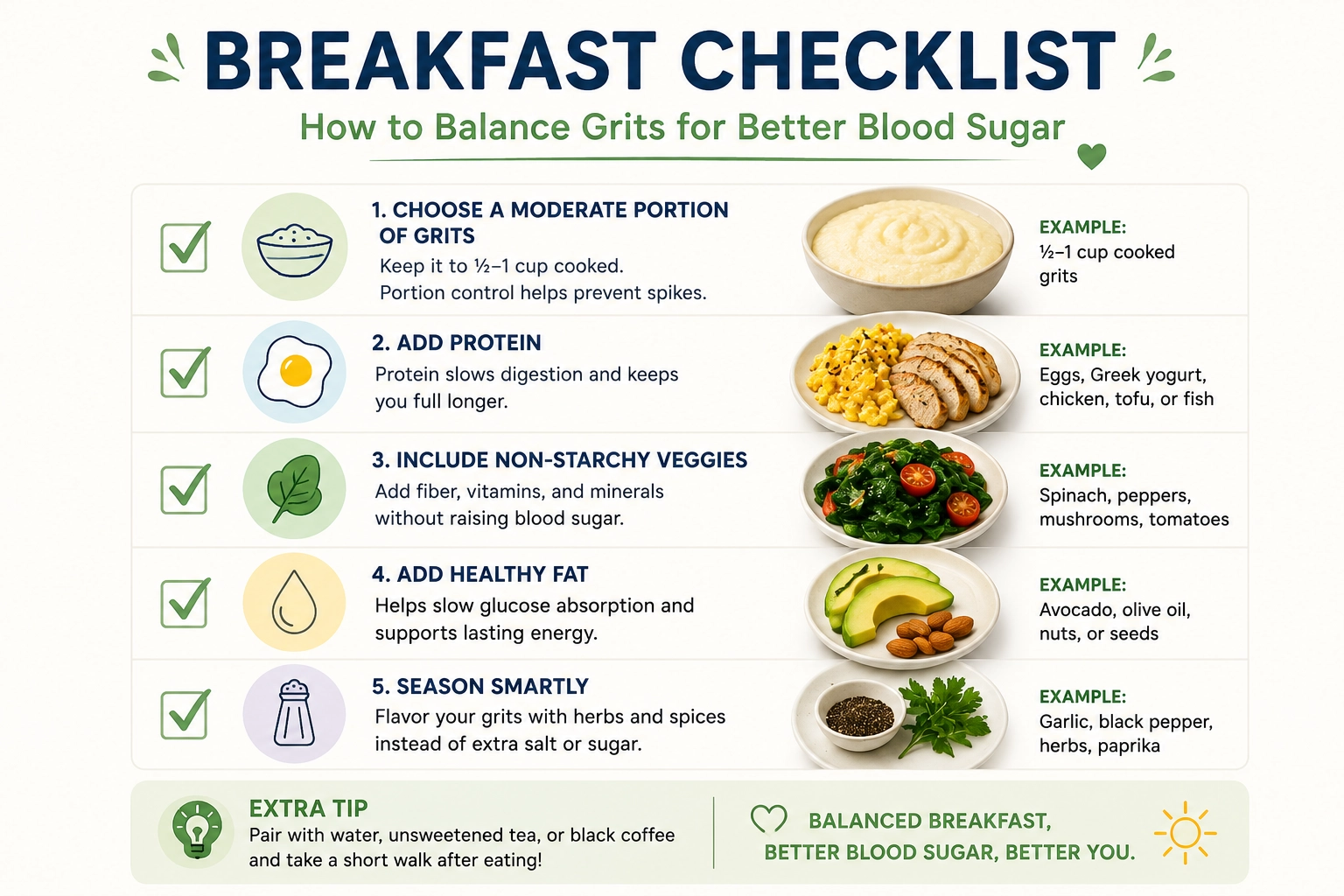
A Simple Grits Breakfast Balance Checklist
Before eating grits, ask yourself these questions:
- Am I eating a measured serving or a large bowl?
- Are the grits plain, instant, sweetened, or restaurant-style?
- Am I adding sugar, syrup, honey, or sweet toppings?
- Do I have a protein source with this meal?
- Do I have vegetables or another fiber-rich food?
- Am I also eating biscuits, toast, pancakes, juice, or sweet coffee?
- How do I feel one to three hours after eating?
- If I monitor glucose, what does my blood sugar log show?
This checklist is not about perfection. It is about noticing patterns.
Real-Life Breakfast Examples
Less Balanced Example
Imagine a breakfast with a large bowl of instant grits, sugar, butter, two biscuits, and orange juice.
This meal may be challenging for blood sugar because it includes several carbohydrate sources at once. It also has added sugar and little fiber. Some people may feel sleepy, hungry again soon, or notice a higher glucose reading after a meal like this.
More Balanced Example
Now imagine a smaller serving of plain grits with eggs, sautéed spinach, tomatoes, and unsweetened coffee or water.
This meal still includes carbohydrates from the grits, but it also has protein and vegetables. For some people, this may feel more filling and may support a steadier post-meal response.
Busy Morning Example
You only have five minutes before work, so you make instant grits.
A practical improvement could be choosing plain instant grits, using a reasonable serving, and adding a quick protein side such as boiled eggs, Greek yogurt, cottage cheese, or leftover lean protein. This is not a perfect gourmet breakfast, but it is more balanced than eating sweetened grits alone with a sugary drink.
How to Know If Grits Work for You
The most useful answer may come from your own body.
If you monitor your blood sugar, consider using a blood sugar log to track:
- What type of grits you ate
- The portion size
- What toppings you added
- What else you ate with the meal
- Your blood sugar response, if you check it
- How you felt afterward
This can help you compare patterns. For example, you may notice that a large bowl of sweetened grits leads to a different response than a smaller savory portion with eggs and vegetables.
You can also compare grits with other breakfasts from Wakadam’s diabetic breakfast ideas article.
If your readings are often outside the target range recommended by your healthcare professional, or if you feel unsure about what your numbers mean, review Wakadam’s normal blood sugar range chart and talk with your care team.
Low Glycemic Breakfast Alternatives to Consider
If grits do not work well for you, or if you want more variety, you might try other breakfast options.
Some ideas include:
- Eggs with vegetables
- Plain Greek yogurt with berries and nuts
- Oatmeal with chia seeds or flaxseed
- Cottage cheese with berries
- Tofu scramble with vegetables
- Whole-grain toast with avocado and egg
- Leftover lean protein with vegetables
- A breakfast salad with eggs or fish
“Low glycemic” does not mean perfect for everyone. But meals with more protein, fiber, and minimally processed ingredients may be easier for some people to fit into a blood-sugar-conscious routine.
When to Talk to a Healthcare Professional
Food advice can get confusing, especially when you are trying to manage blood sugar.
Consider speaking with a doctor, registered dietitian, or diabetes educator if:
- Your post-meal blood sugar readings are often higher than your target range
- You are unsure how many carbohydrates fit your meal plan
- You take insulin or medications that can cause low blood sugar
- You are pregnant or have gestational diabetes
- You have kidney disease, heart disease, or other medical conditions
- You feel overwhelmed by conflicting food advice
A healthcare professional can help you make decisions based on your medications, lab results, lifestyle, and personal goals.
FAQ
Can diabetics eat grits?
Some people with diabetes may be able to eat grits in controlled portions, especially when they are plain and paired with protein and fiber-rich foods. However, grits are a carbohydrate food, so portion size and personal blood sugar response matter.
Do grits raise blood sugar?
Grits can raise blood sugar because they contain carbohydrates. The size of the rise may depend on the portion, toppings, preparation method, and what else you eat with them.
Are grits good for diabetics?
Grits are not automatically good or bad for every person with diabetes. A small serving in a balanced meal may work for some people. A large bowl with sugar, syrup, biscuits, or juice may be more challenging.
Are instant grits okay for diabetes?
Instant grits are not automatically off-limits, but it is important to read the label. Check serving size, total carbohydrates, added sugar, sodium, and fiber. Plain versions are usually easier to balance than sweetened flavored packets.
Are cheese grits better for blood sugar?
Cheese adds fat and some protein, but it does not remove the carbohydrates from grits. Cheese grits may also be higher in calories, saturated fat, and sodium. Portion size still matters.
What can I eat with grits to make breakfast more balanced?
You can pair grits with protein and fiber-rich foods, such as eggs, shrimp, tofu scramble, Greek yogurt on the side, spinach, tomatoes, peppers, mushrooms, or other non-starchy vegetables.
How can I tell if grits affect my blood sugar too much?
If you monitor glucose, use a blood sugar log to compare different meals. Track the portion, toppings, sides, and your reading after eating. Also notice energy crashes, sleepiness, hunger, or cravings after breakfast.
Practical Takeaway
People with diabetes do not always need to avoid grits completely, but grits should be treated as a carbohydrate food.
The most blood-sugar-conscious approach is to keep the portion modest, choose plain grits when possible, avoid sweet toppings, and pair them with protein and fiber-rich foods. A small savory serving with eggs and vegetables is usually a very different meal from a large bowl with sugar, biscuits, and juice.
Instead of asking only, “Can diabetics eat grits?” ask, “How much am I eating, what am I adding, and how does my body respond?”
That question is more useful in real life.
You should also read:
Is Sourdough Bread Good for Diabetics? What to Know Before You Eat It
Sourdough bread has a strong “health halo.” It sounds traditional, natural, fermented, and more wholesome than regular white bread. So if you are trying to manage blood sugar, it is easy to wonder: is sourdough bread good for diabetics, or is it just another bread…
Continue reading...
Can You Eat Popcorn with Diabetes? A Practical Guide for Snack Time
Popcorn can feel like one of the most confusing snacks when you are trying to manage blood sugar. On one hand, it seems light, crunchy, and less greasy than potato chips. On the other hand, popcorn is still made from corn, which means it contains…
Continue reading...
Worst Cereals for Diabetics: What to Avoid and How to Choose Better
Cereal is one of the easiest breakfasts in the world. You pour it into a bowl, add milk, and you are done in less than two minutes. For busy mornings, that convenience is hard to beat. But if you are managing diabetes, prediabetes, insulin resistance,…
Continue reading...