Worst Cereals for Diabetics: What to Avoid and How to Choose Better
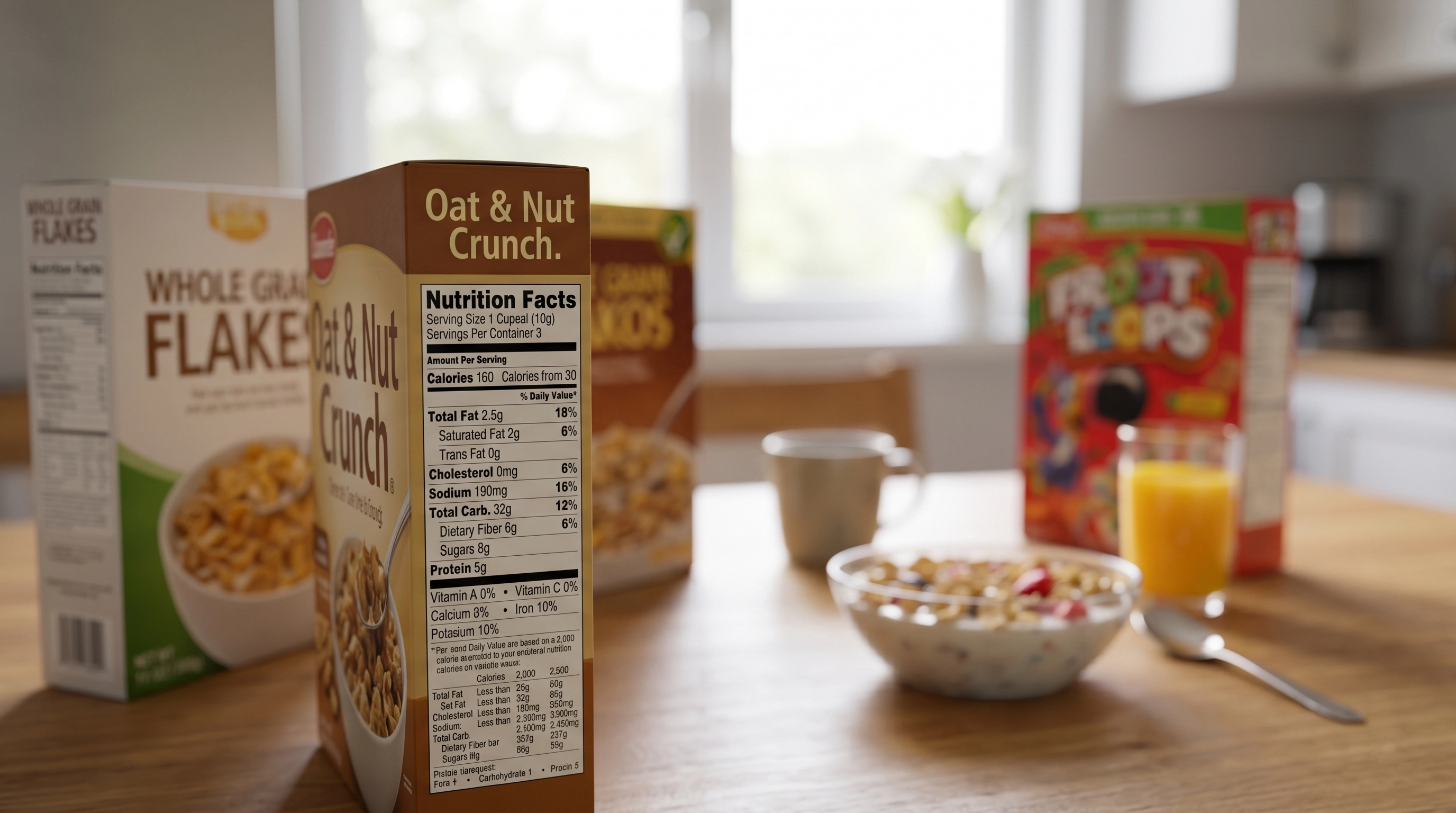
Cereal is one of the easiest breakfasts in the world. You pour it into a bowl, add milk, and you are done in less than two minutes. For busy mornings, that convenience is hard to beat.
But if you are managing diabetes, prediabetes, insulin resistance, or blood sugar swings, cereal can become confusing fast. Some boxes look like dessert. Others look healthy because they mention “whole grain,” “fiber,” “real fruit,” or “heart healthy” on the front. The problem is that front-of-box claims do not always tell you how that cereal may affect your blood sugar, hunger, or energy later in the morning.
This article is not about saying every person with diabetes must avoid cereal forever. It is about understanding the cereal patterns that are often harder to fit into a blood sugar-conscious breakfast.
The worst cereals for diabetics are usually not defined by one brand name. They often share the same pattern: refined grains, added sugar, low fiber, low protein, and serving sizes that are much smaller than what people actually pour.
Health disclaimer: This article is for general education only and is not medical advice. If you have diabetes, take medication, use insulin, or have specific nutrition needs, speak with your healthcare professional or registered dietitian before making major dietary changes.
Are Cereals Automatically Bad for Diabetics?
No, cereal is not automatically “bad.” Cereal is a category, not one single food.
Some cereals are mostly refined grain and sugar. Some are higher in fiber and lower in added sugar. Some can be made more balanced when paired with protein, healthy fats, or a smaller portion.
The real question is not simply:
A better question is:
“Does this cereal, in this portion, as part of this breakfast, support my blood sugar goals?”
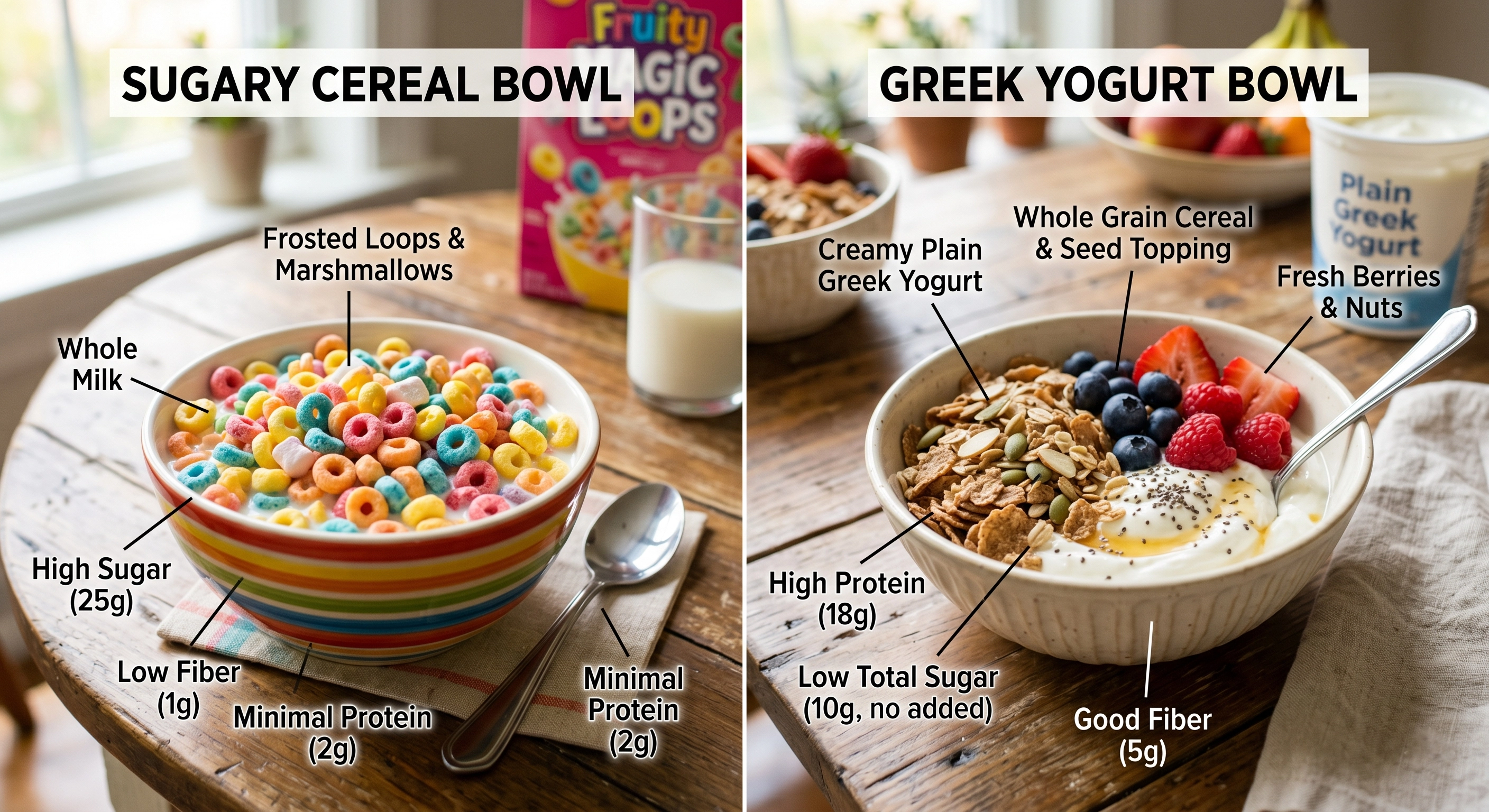
That question gives you more control. It also helps you avoid the trap of thinking one food is always safe or always forbidden.
Why Cereal Can Be Tricky for Blood Sugar
Cereal can be tricky because it is usually a carbohydrate-heavy food that is easy to overeat.
A label might list one serving as ¾ cup or 1 cup. But many people pour much more than that, especially into a large bowl. If your real portion is double the label serving, the carbohydrates, sugar, and calories are also doubled.
Cereal is also often low in protein. A bowl of cereal with milk may feel like breakfast, but for some people, it does not provide enough protein or fat to stay full. That can lead to hunger, cravings, or an energy dip later in the morning.
Milk also matters. Regular milk contains natural carbohydrate, and sweetened plant-based milks can add even more sugar. This does not mean milk is “bad,” but it does mean the whole bowl matters, not just the cereal.
What Makes a Cereal One of the Worst Choices for Blood Sugar?
Instead of memorizing a long list of brands, it is more useful to understand the warning signs.
1. High Added Sugar
Many cereals contain added sugar, even when they do not taste extremely sweet. Sugar can appear on the ingredient list under names like cane sugar, brown sugar, syrup, honey, molasses, malt syrup, or fruit juice concentrate.
Natural-sounding sweeteners still count. A cereal sweetened with honey or maple syrup may sound better than one made with white sugar, but it can still raise the sugar and carbohydrate load of the meal.
This does not mean you need a perfect zero-sugar cereal. But if sugar is near the top of the ingredient list, or if the cereal has several sweeteners, it may be harder to fit into a blood sugar-friendly breakfast.
2. Refined Grains as the Main Ingredient
Some cereals are made mostly from refined corn, rice, or wheat flour. These grains may digest more quickly for many people, especially when the cereal is low in fiber.
Examples include cereals based mainly on:
- Corn flour
- Rice flour
- Refined wheat flour
- Milled grain starches
A cereal does not have to be frosted or chocolate-flavored to be a concern. Some plain cereals are not very sweet but are still low in fiber and mostly refined starch.
3. Low Fiber
Fiber can help support fullness and may slow digestion. A cereal with very little fiber may leave some people hungry soon after breakfast.
This is why checking only sugar can be misleading. A cereal may look “not too bad” because it has moderate sugar, but if it is very low in fiber and protein, it may still not be very satisfying.
4. Low Protein
Most traditional cereals are not protein-rich. If your breakfast is mostly cereal and milk, you may not be getting enough protein to feel full for long.
For many people, adding a protein source can make breakfast more balanced. That might mean plain Greek yogurt, eggs on the side, cottage cheese, nuts, seeds, or another protein option that fits your preferences and health needs.
5. Sweet Clusters, Frosting, and Dried Fruit
Some cereals look healthier because they include oats, bran, raisins, cranberries, or granola clusters. But dried fruit and sweet clusters can add concentrated carbohydrates quickly.
Raisins, dried cranberries, banana chips, honey clusters, and yogurt-coated pieces can all increase the sugar and carb content of a bowl. These ingredients are not automatically forbidden, but they deserve attention.
6. Unrealistic Serving Sizes
This is one of the biggest cereal problems.
A cereal box may show nutrition facts for a small serving, but your real bowl may be two or three times that amount. Granola is a common example. The serving size may be small, but it is easy to pour much more because it looks like a normal cereal portion.
A useful experiment is to measure your cereal once. You do not have to measure forever. Just seeing what the label serving looks like in your usual bowl can be eye-opening.
Common Cereal Types That May Be Poor Choices
This section is not about banning every cereal in these categories. It is about knowing which types often deserve extra caution.
Frosted, Chocolate, or Candy-Like Cereals
These are the obvious ones. Frosted, chocolate, marshmallow, and dessert-flavored cereals are often high in added sugar and low in fiber or protein.
They may taste good, but they are usually closer to a sweet snack than a balanced breakfast. For someone managing blood sugar, they may be harder to fit into a normal morning routine without a noticeable glucose rise or hunger later.
Honey, Cinnamon-Sugar, or Sweetened “Crunch” Cereals
Some cereals do not look like candy, but the flavor names give clues: honey, cinnamon sugar, caramel, maple, frosted, or sweet crunch.
These cereals may sound more adult or wholesome, but they can still contain a lot of added sugar. The word “honey” on a box does not automatically make the cereal blood sugar-friendly.
Low-Fiber Corn or Rice Cereals
Some plain corn or rice cereals are not very sweet. That can make them seem like safer choices. But if they are made mostly from refined grain and have little fiber or protein, they may still digest quickly for some people.
This is an important misconception: “not sweet” does not always mean “better for blood sugar.”
Sweetened Granola
Granola often has a health halo. It may contain oats, nuts, seeds, or dried fruit. But many packaged granolas also contain added sweeteners and oils, and the serving size is often much smaller than people expect.
A full bowl of granola can become a dense breakfast very quickly. For some readers, granola may work better as a small topping over yogurt rather than the main part of the meal.
Raisin Bran and Dried-Fruit Cereals
Raisin bran is a good example of a cereal that can be confusing. It may contain bran and fiber, which can be helpful. But raisins and added sugar can increase the total carbohydrate load.
That does not mean every raisin bran cereal is terrible. It means you need to check the label, compare brands, and be realistic about your portion.
“Keto” or “Protein” Cereals
Some newer cereals are marketed as keto, high-protein, or low-carb. These may be useful for some people, but they are not automatically ideal.
Some contain sugar alcohols, isolated fibers, or highly processed ingredients that may affect digestion differently from person to person. If you try these cereals, pay attention to your hunger, digestion, taste satisfaction, and glucose response if you monitor it.
How to Read a Cereal Label for Blood Sugar
A cereal box can be confusing, but you do not need to become a nutrition scientist. Focus on a few practical checks.
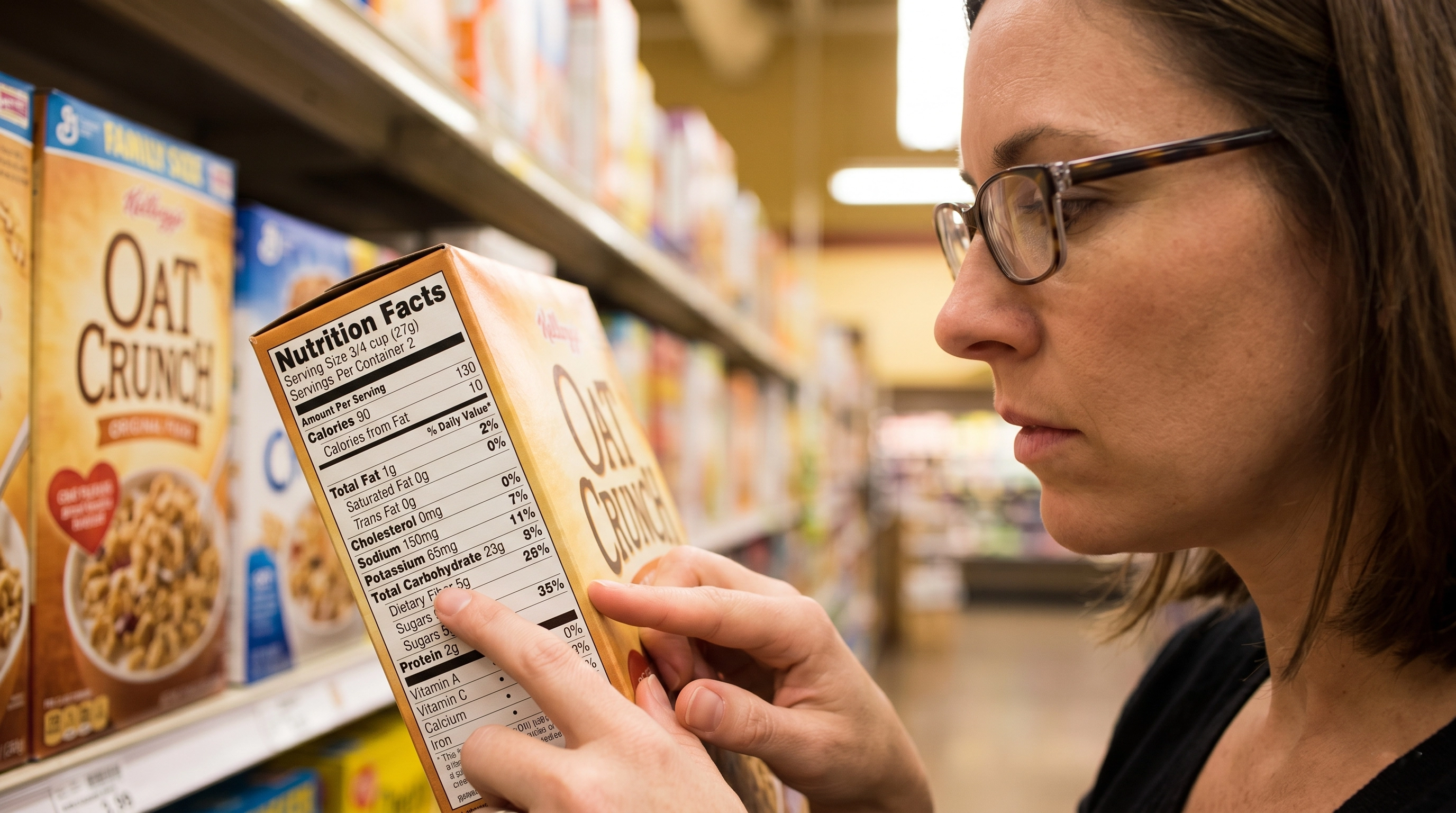
Start With Serving Size
Before looking at sugar or carbs, check the serving size.
Ask yourself:
“Is this the amount I actually eat?”
If the label says 1 cup but you usually eat 2 cups, multiply the numbers by two. This one step can change how you see the cereal.
Check Total Carbohydrates
Total carbohydrates matter because blood sugar is affected not only by sugar, but also by starches. A cereal can be low in added sugar but still high in total carbs.
This does not mean carbs are “bad.” It means the amount and type of carbohydrate should fit your personal goals and meal plan.
Look at Added Sugar
Added sugar is still important. In general, cereals with lower added sugar are usually a better starting point than heavily sweetened cereals.
Compare similar cereals side by side. You may find that two boxes that look almost the same have very different sugar amounts.
Look for Fiber
Fiber can support fullness and may help slow digestion. A higher-fiber cereal is often more useful than a cereal made mostly from refined starch.
However, fiber does not magically cancel out a large amount of added sugar. Look at the whole label, not just one number.
Look for Protein
If the cereal has very little protein, think about what you can add to the meal.
For example, a small portion of cereal with plain Greek yogurt may be more balanced than a large bowl of cereal with sweetened milk. Eggs, cottage cheese, nuts, or seeds can also help depending on your preferences.
Read the Ingredient List
The first few ingredients matter most. If the first ingredient is a refined grain and sugar appears near the top, that cereal may not be the best everyday choice for blood sugar-conscious eating.
Look for cereals that start with whole grains or bran, and be cautious when you see multiple sweeteners in the list.
The Cereal Check Framework
Use this simple framework when shopping or comparing cereals.
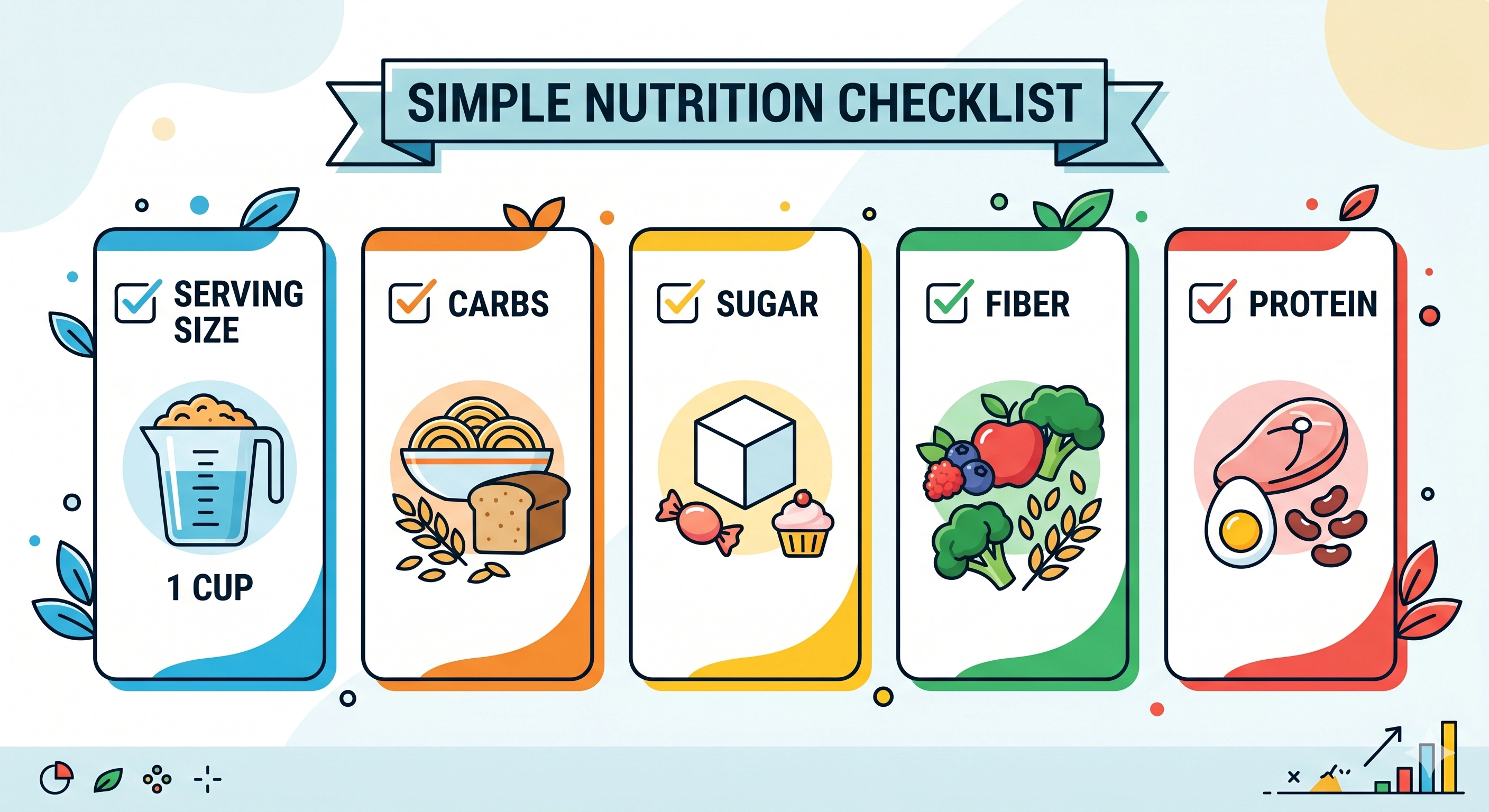
1. Is the First Ingredient a Whole Grain?
Look for ingredients like whole oats, whole wheat, wheat bran, oat bran, or similar whole grain ingredients.
2. Is Added Sugar Reasonable?
You do not need perfection, but the lower the added sugar, the easier the cereal may be to fit into a balanced breakfast.
3. Does It Have Meaningful Fiber?
A cereal with more fiber may support fullness better than a low-fiber refined cereal.
4. Does the Meal Include Protein?
If the cereal is low in protein, add protein from another food. Do not expect cereal alone to do everything.
5. Is the Portion Realistic?
Measure your usual pour once. Compare it with the serving size on the label.
This framework is more useful than memorizing a list of “good” and “bad” cereals because it helps you judge any box in the store.
How to Make Cereal More Blood Sugar-Friendly
You may not need to give up cereal completely. Some people do better by changing how they eat it.
Pair It With Protein
Instead of eating cereal by itself, try pairing it with protein.
Examples include:
- Plain Greek yogurt
- Cottage cheese
- Eggs on the side
- Nuts or seeds
- Unsweetened protein-rich yogurt alternatives, if suitable
This may help the meal feel more satisfying.
Add Fiber and Healthy Fats
Chia seeds, ground flaxseed, walnuts, almonds, or berries can make breakfast more balanced. Portions still matter, especially with nuts and seeds because they are calorie-dense.
Use Cereal as a Topping
This is one of the most practical strategies.
Instead of eating a full bowl of cereal, use a smaller amount as a crunchy topping over plain Greek yogurt, cottage cheese, or a yogurt bowl with berries.
You still get the crunch, but cereal is no longer the main part of the meal.
Choose Unsweetened or Lower-Sugar Options
Small improvements can matter. Switching from a sweetened cereal to a lower-sugar, higher-fiber option may support better breakfast habits over time.
The goal is not to create a perfect diet. The goal is to make breakfast easier to manage in real life.
Pay Attention to Your Own Response
People respond differently. One person may tolerate a small bowl of higher-fiber cereal well, while another may notice hunger or higher glucose afterward.
If you use a glucose meter or continuous glucose monitor, your own patterns can be helpful. If you do not monitor glucose, pay attention to energy, hunger, cravings, and how soon you feel hungry after breakfast.
Real-Life Example: Two Breakfast Bowls
Imagine two breakfast bowls.
Bowl A: Sweet Cereal With Milk
This bowl includes a large serving of frosted cereal with milk. It tastes good and is quick, but it is mostly refined carbohydrate and added sugar, with little fiber or protein.
Some people may feel hungry again within a couple of hours. Others may notice an energy crash or higher glucose reading if they monitor blood sugar.
Bowl B: Yogurt Bowl With Crunch
This bowl includes plain Greek yogurt, a smaller amount of high-fiber cereal, chia seeds, and a few berries.
It still has crunch and sweetness, but it also has more protein and fiber. For many people, this type of breakfast may feel more satisfying and balanced.
This example is not a promise that one meal will produce a specific blood sugar result. It simply shows how changing the structure of the meal can make a difference.
Better Cereal Patterns to Look For
Instead of searching for one perfect cereal, look for better patterns.
A better cereal choice often has:
- Whole grain or bran as the first ingredient
- Lower added sugar
- More fiber
- A realistic serving size
- Ingredients you understand
- A plan to pair it with protein
Plain oats, steel-cut oats, unsweetened muesli, some bran-based cereals, and higher-fiber lower-sugar cereals may be useful options for some people. But portion size and toppings still matter.
Oatmeal, for example, can be a good choice for many people, especially when it is less processed and paired with protein or healthy fat. But a large bowl of sweetened instant oatmeal with sugar-heavy toppings may not be much better than sweet cereal.
Common Mistakes to Avoid
Mistake 1: Trusting the Front of the Box
Words like “whole grain,” “natural,” or “made with real fruit” can be helpful clues, but they are not enough. Always check the nutrition label and ingredient list.
Mistake 2: Only Checking Sugar
Sugar matters, but total carbohydrates also matter. Starches can affect blood sugar too.
Mistake 3: Ignoring Serving Size
A cereal may look reasonable per serving, but your actual bowl may contain two or three servings.
Mistake 4: Assuming Granola Is Always Healthy
Granola can be nutritious, but it can also be sugar-dense and calorie-dense. Treat it as a food to check carefully, not automatically as a “safe” choice.
Mistake 5: Forgetting About Milk
Milk adds carbohydrates. Sweetened plant-based milks can add even more. Consider the full bowl, not just the cereal.
Mistake 6: Eating Cereal Alone
A low-protein cereal breakfast may not keep you full. Adding protein can make the meal more balanced.
When to Talk to a Healthcare Professional
Talk with a healthcare professional, registered dietitian, or diabetes educator if:
- Your blood sugar is often high after breakfast
- You use insulin or diabetes medication
- You are unsure how many carbohydrates fit your personal plan
- You have kidney disease, digestive conditions, or other health needs
- You are making major diet changes and want personal guidance
General food advice can be helpful, but diabetes nutrition is not one-size-fits-all.
FAQ
What are the worst cereals for diabetics?
The worst cereals for diabetics are often those high in added sugar, low in fiber, low in protein, and made mostly from refined grains. Frosted cereals, chocolate cereals, marshmallow cereals, sweetened granola, and low-fiber refined cereals are common examples.
Are corn flakes bad for diabetics?
Corn flakes are not usually high in sugar, but many versions are low in fiber and made from refined corn. For some people, that can make them less satisfying and harder to fit into a blood sugar-friendly breakfast. Portion size and protein pairing matter.
Is raisin bran okay for diabetics?
It depends on the brand, portion, and your personal response. Raisin bran may contain fiber, but raisins and added sugar can increase total carbohydrates. Check the label carefully.
Is granola good for blood sugar?
Granola can be tricky. Some versions contain oats, nuts, and seeds, but many also contain added sugar, dried fruit, and dense clusters. A small amount as a topping may work better than a large bowl.
Should diabetics avoid cereal completely?
Not always. Some people choose to avoid cereal because they feel better with other breakfasts. Others may fit a carefully chosen cereal into a balanced meal. The key is label reading, portion awareness, and pairing cereal with protein or fiber.
Is oatmeal better than boxed cereal?
Oatmeal can be a better option for many people, especially plain oats or steel-cut oats. But sweetened instant oatmeal with sugary toppings can still be high in carbohydrates. Portion and toppings matter.
What can I add to cereal to make it more balanced?
You can add protein and fiber, such as plain Greek yogurt, chia seeds, flaxseed, nuts, seeds, or berries. You can also eat eggs or another protein source on the side.
Practical Takeaway
Before buying cereal, ask yourself:
- Is the first ingredient a whole grain or bran?
- Is the added sugar low compared with similar cereals?
- Does it have meaningful fiber?
- Will I add protein to this meal?
- Is the serving size realistic?
- Am I choosing this because the label is truly better, or because the box looks healthy?
The goal is not to fear cereal. The goal is to understand what is in your bowl and build a breakfast that supports steadier energy, better fullness, and your personal blood sugar goals.
You should also read:

Can Skinny People Get Diabetes? What Thin and Normal-Weight People Should Know
Many people think of diabetes as something that only happens to people who are overweight. So if you are thin, active-looking, or have always had a smaller body, it can feel confusing to even ask the question: can skinny people get diabetes? The simple answer…
Continue reading...
Is Feeling Sleepy After Eating a Sign of Diabetes? What It May Mean
Feeling sleepy after eating can be frustrating, especially when it happens in the middle of the day. You eat lunch, return to work, and suddenly your body feels heavy. Your eyes want to close. Your focus disappears. Then a worrying thought appears: “Is feeling sleepy…
Continue reading...
Blood Sugar Support in Real Life: What Actually Helps Day to Day?
If you have ever felt tired after a meal, craved something sweet in the afternoon, or felt confused by blood sugar numbers, the phrase “blood sugar support” can sound both helpful and vague. Some people use it to talk about food choices. Others use it…
Continue reading...