Can You Eat Cereal with Diabetes? A Practical Guide to Choosing a Better Bowl
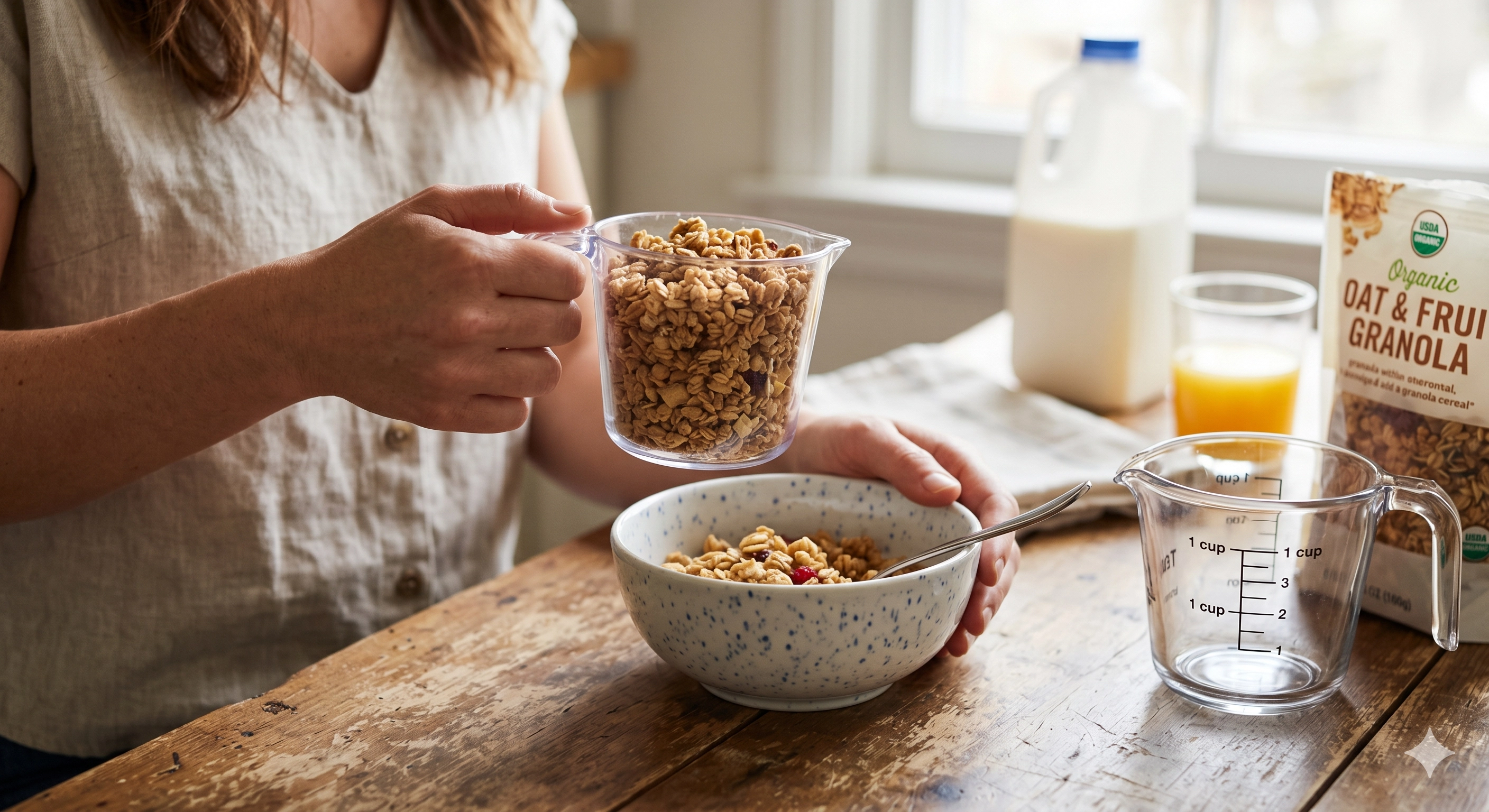
For many people, cereal is not just breakfast. It is the easiest breakfast.
You pour it into a bowl, add milk, and you are done in less than two minutes. That is exactly why cereal is so popular — and also why it can feel confusing if you are trying to manage blood sugar, prediabetes, insulin resistance, cravings, or mid-morning energy crashes.
Some cereals look healthy on the front of the box. They may say “whole grain,” “natural,” “high fiber,” or “heart healthy.” But when you turn the box around, the label may tell a different story: added sugar, refined grains, small serving sizes, and very little protein.
So, is cereal completely off-limits? Not necessarily.
The better question is not “Is cereal good or bad?” but:
How do you choose a cereal that fits your blood sugar goals, your appetite, and your real morning routine?
This guide will help you compare cereal for diabetics and blood-sugar-conscious eaters in a practical way, without turning breakfast into a complicated science project.
Health disclaimer: This article is for general education only and is not medical advice. If you have diabetes, use insulin or glucose-lowering medication, are pregnant, or have a medical condition that affects your diet, talk with a qualified healthcare professional or registered dietitian for personalized guidance.
Can People with Diabetes Eat Cereal?
Cereal is not automatically “bad,” and people with diabetes do not all need to eat the same breakfast. What matters most is the type of cereal, the portion size, what you eat with it, and how your own body responds.
Cereal is usually a carbohydrate-based food. Carbohydrates are not the enemy, but they do have a direct effect on blood sugar. Some cereals are mostly refined starch and added sugar, while others contain more fiber, whole grains, nuts, or seeds.
That difference matters.
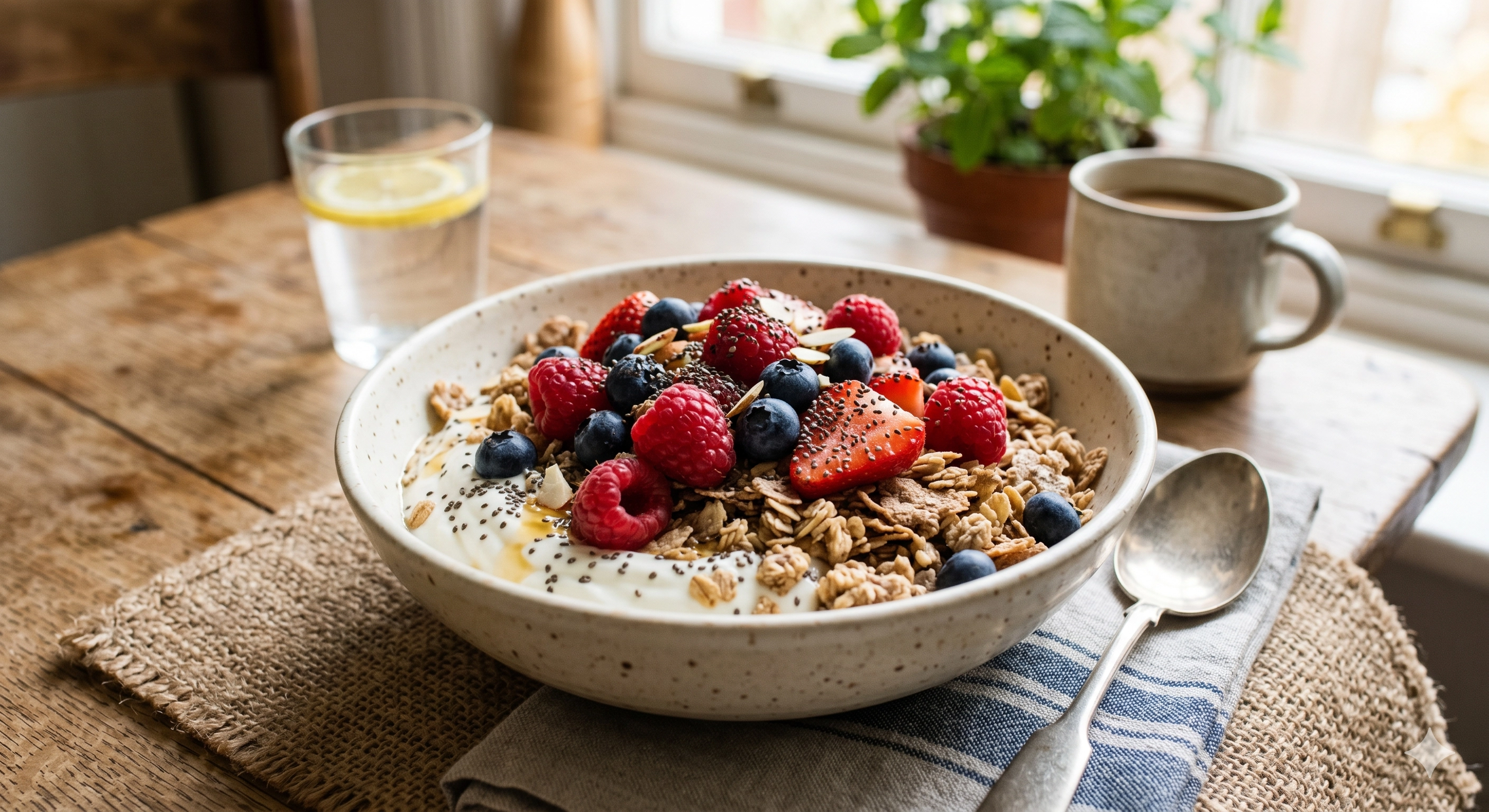
A small bowl of high-fiber cereal with unsweetened Greek yogurt and berries is very different from a large bowl of frosted cereal with sweetened milk. Both are called “cereal,” but they are not the same meal.
Why Cereal Can Be Tricky for Blood Sugar
Cereal can be tricky because it is easy to underestimate.
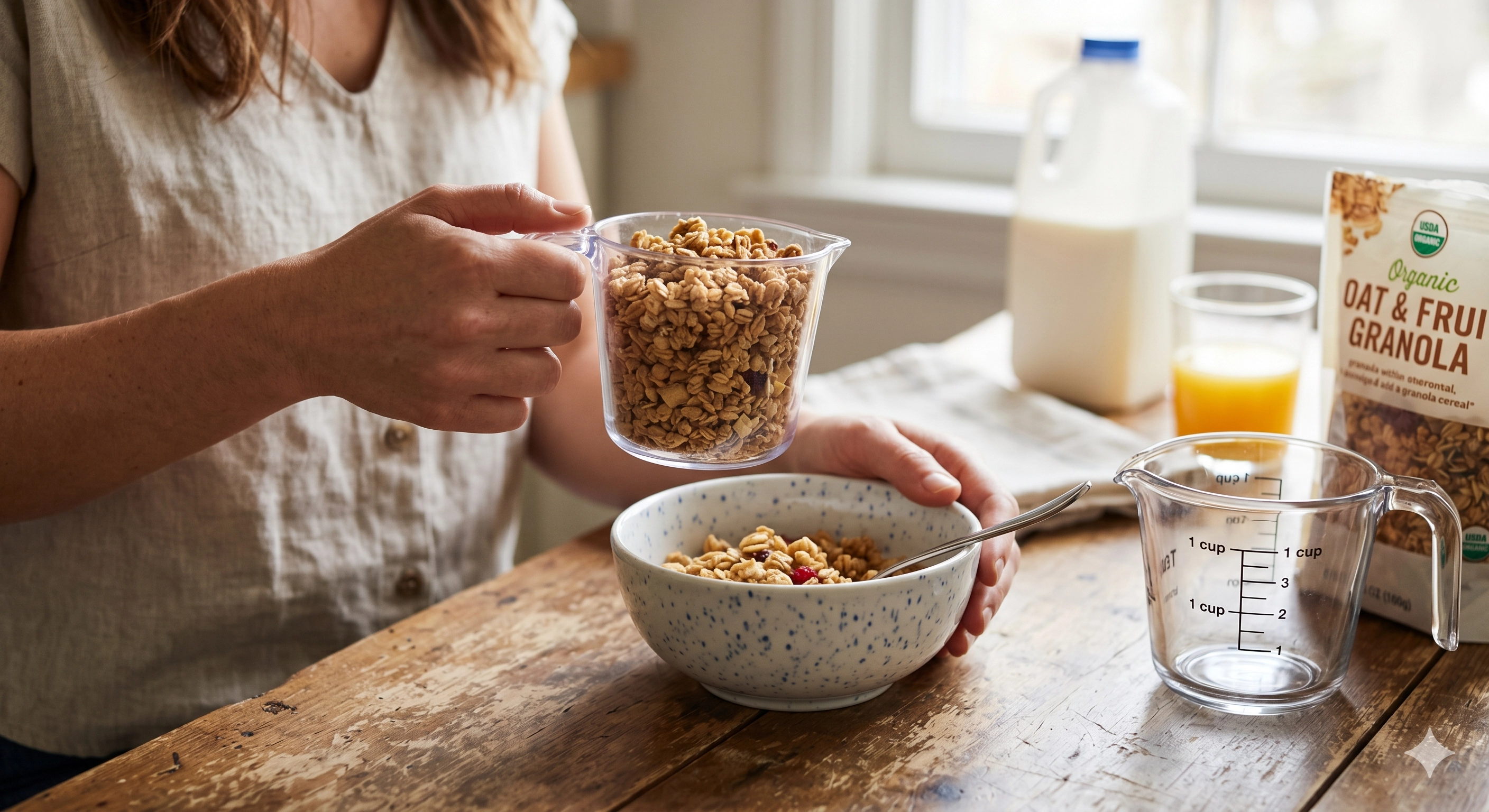
Many people pour cereal by eye. The serving size on the nutrition label might be ¾ cup or 1 cup, but the bowl at home may hold two or three servings without looking excessive.
That means the real breakfast may contain much more carbohydrate and added sugar than expected.
Another issue is that cereal often lacks protein and healthy fat. A bowl of cereal alone may digest quickly for some people, leaving them hungry again by 10 a.m. This can lead to extra snacking, cravings, or an energy dip later in the morning.
The goal is not to fear cereal. The goal is to build a better bowl.
The Cereal Balance Test: How to Compare Better Options
Instead of choosing cereal by the front of the box, use a simple framework:
The Cereal Balance Test
- Carbohydrate load
- Fiber content
- Added sugar
- Protein and fat pairing
- Real serving size
- Personal response
This framework is more useful than memorizing one “best cereal,” because products vary by country, brand, and recipe. A label-reading habit travels with you.
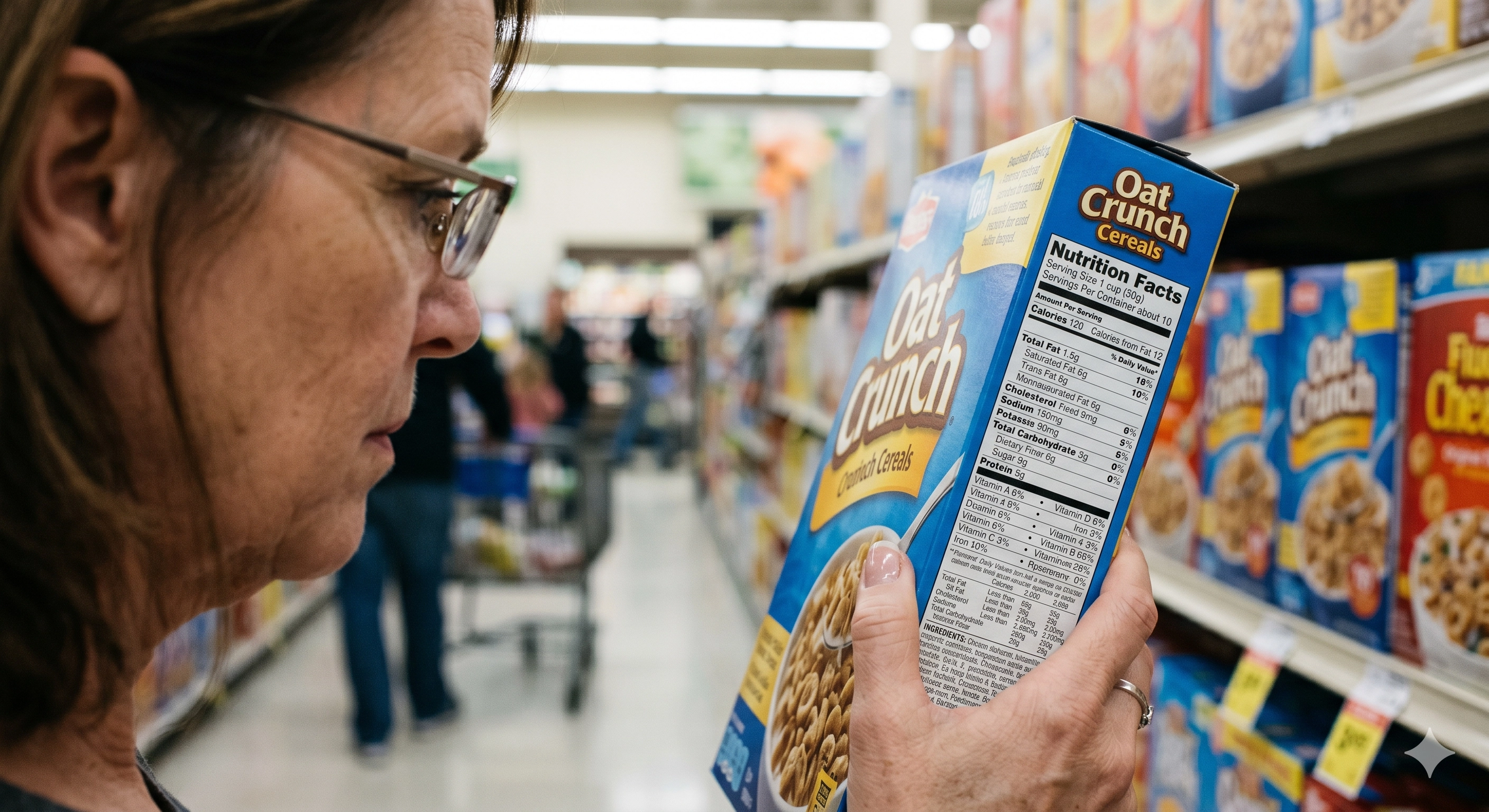
1. Start with the Real Serving Size
Before looking at anything else, check the serving size.
This is one of the biggest cereal mistakes. A cereal may look reasonable on the label, but only because the listed serving is small. Granola is a common example. The serving size may be much smaller than what people normally pour into a bowl.
Try this simple test at home:
Measure your usual cereal portion once. Do not change your habit at first. Pour what you normally eat, then measure it with a cup.
Many people discover that their “one bowl” is actually two servings.
This does not mean you have done something wrong. It just gives you better information.
2. Look at Total Carbohydrates
Because cereal is usually grain-based, total carbohydrates matter.
Some people focus only on sugar, but total carbs can still be important. A cereal may be low in added sugar but still high in refined starch. That can still affect blood sugar, depending on the person and the portion.
This is why “low sugar” is not the same as “automatically blood-sugar-friendly.”
A better approach is to check:
- How many total carbohydrates are in one serving?
- How much do you actually eat?
- Are those carbs coming with fiber, protein, or mostly refined starch?
You do not need to turn breakfast into math every day, but checking labels can help you spot big differences between cereals.
3. Choose More Fiber When Possible
Fiber is one of the most helpful things to look for in cereal.
Higher-fiber cereals may support slower digestion and better fullness for some people. They are often a better starting point than low-fiber cereals made mostly from refined grains and sugar.
Good signs include ingredients such as:
- Wheat bran
- Oat bran
- Whole oats
- Whole wheat
- Barley
- Psyllium fiber
- Flaxseed
- Chia seeds
- Nuts and seeds
A cereal does not need to be perfect. But if two cereals look similar and one has much more fiber with less added sugar, that one may be a better choice for blood-sugar-conscious eating.
4. Watch Added Sugar
Added sugar is one of the easiest things to miss because cereal boxes often use healthy-sounding language.
A cereal can say “whole grain” and still contain plenty of added sugar. A cereal can say “natural” and still be sweetened. A cereal can be marketed to adults and still be closer to dessert than breakfast.
Look for sugar-related ingredients such as:
- Sugar
- Cane sugar
- Brown sugar
- Honey
- Maple syrup
- Corn syrup
- Rice syrup
- Molasses
- Fruit juice concentrate
This does not mean a cereal must have zero sweetness. Some people may prefer a lightly sweet cereal because it helps them stick with a better overall breakfast habit. But a heavily sweetened cereal is usually not the best everyday choice for stable energy.
5. Check the First Ingredients
The first few ingredients tell you what the cereal is mostly made from.
Better starting points often have whole grains, bran, oats, nuts, or seeds near the top of the ingredient list.
Less ideal signs include refined flour, sugar, syrup, or candy-like ingredients near the beginning.
A practical rule:
Do not trust the front of the box until the back of the box agrees.
The front is marketing. The nutrition label and ingredient list are where the real comparison begins.
Better Cereal Options: A Practical Comparison
This is not a strict “good food vs bad food” list. Think of it as a comparison of better starting points and cereals that deserve more caution.
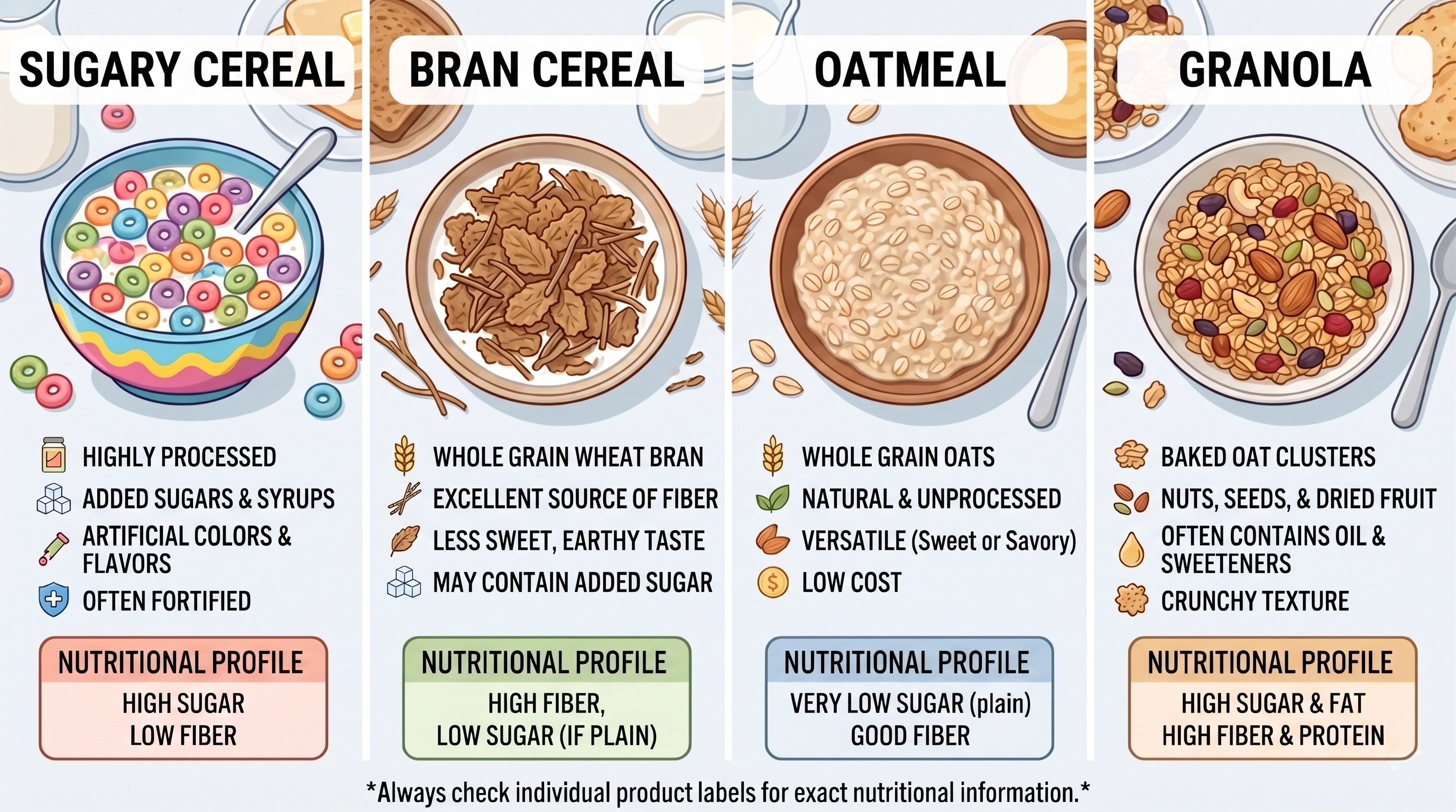
Better Starting Points
Unsweetened bran cereal
Bran cereal is often higher in fiber, which may support fullness and more gradual digestion. The main thing is to choose versions without a lot of added sugar.
This can be a strong option for people who want a simple boxed cereal but also want more fiber.
Plain shredded wheat
Plain shredded wheat is usually simple and made from whole wheat. It is not sweet by itself, so some people may find it boring. But it can work well with berries, cinnamon, nuts, or yogurt.
The key is to choose plain versions rather than frosted versions.
High-fiber whole grain cereal
Some whole grain cereals are designed to be higher in fiber. These may be a reasonable choice if the added sugar is not too high and the portion is realistic.
Always compare labels, because “whole grain” alone does not guarantee a good choice.
Plain oatmeal
Oatmeal is not boxed cereal in the usual sense, but many people compare it with breakfast cereal.
Plain oats may be a better fit for some people because they are less processed than many sweetened cereals and contain fiber. Steel-cut oats or old-fashioned oats are often more filling than sweetened instant oatmeal.
The caution: flavored instant oatmeal packets can contain added sugar, so check the label.
Low-sugar muesli
Muesli can be a good option when it is made with oats, nuts, seeds, and little or no added sugar. It often has more texture and fat from nuts or seeds, which may help with fullness.
But not all muesli is low sugar. Some versions include dried fruit or sweeteners, so the label still matters.
Use Caution With These Cereals
Granola
Granola has a healthy image, but it can be tricky.
It may contain oats, nuts, and seeds, which are useful ingredients. But it can also be calorie-dense, sweetened, and easy to overeat. A small serving of granola may look tiny in a bowl.
A better way to use granola is as a topping, not the whole breakfast. For example, sprinkle a small amount over plain Greek yogurt instead of filling a large bowl with it.
Protein cereal
Protein cereal sounds ideal, but it still needs label checking.
Some protein cereals are useful, especially if they are also lower in added sugar and higher in fiber. Others may rely on refined starches, sweeteners, or marketing claims.
Protein is helpful, but it does not cancel out the rest of the label.
Keto cereal
Keto cereal may be lower in net carbs, but it is not automatically better for everyone.
Some products are expensive, highly processed, or contain sugar alcohols and fibers that may bother digestion for some people. Others may be useful depending on personal goals.
The main point: “keto” is a label, not a guarantee.
Flavored instant oatmeal
Oatmeal has a healthy reputation, but flavored packets can be sweetened. If you like instant oats, look for plain versions and add your own flavor with cinnamon, nuts, seeds, or a small amount of fruit.
Often Less Ideal for Everyday Blood Sugar Goals
Some cereals are more like dessert than breakfast. These include:
- Frosted cereals
- Chocolate cereals
- Marshmallow cereals
- Honey-coated cereals
- Candy-like cereals
- Many cereals marketed mainly to children
This does not mean you can never eat them. But they are usually not the best everyday choice if your goal is steadier energy and better blood sugar habits.
The Better Bowl Formula
A better cereal breakfast is not only about the cereal. It is also about what you pair with it.
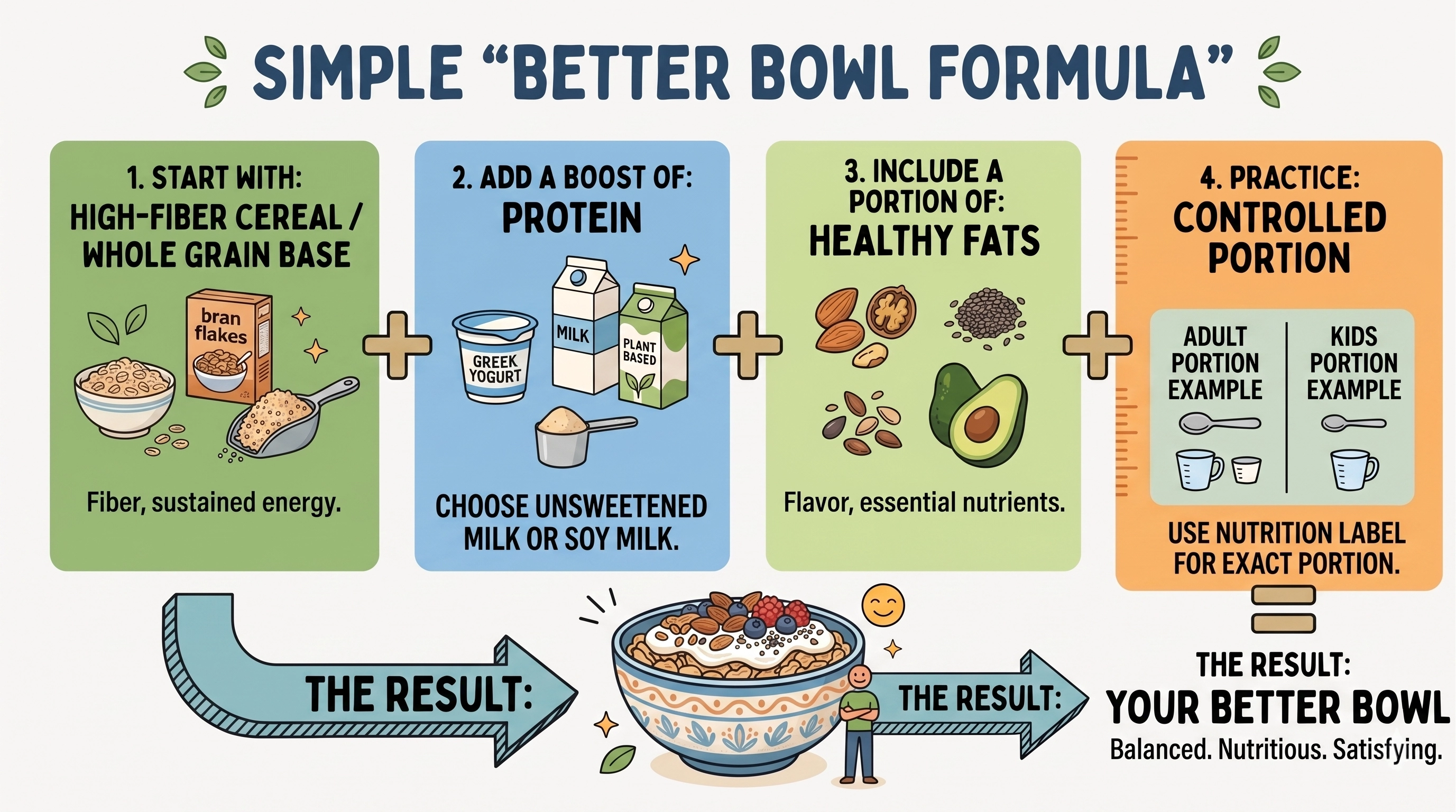
Use this formula:
Cereal + protein + healthy fat + controlled portion
Here are a few examples.
Example 1: High-fiber cereal + Greek yogurt + chia seeds
This gives you fiber from the cereal, protein from the yogurt, and extra fiber and fat from chia seeds.
This may be more filling than cereal with milk alone.
Example 2: Plain oatmeal + peanut butter + cinnamon
Plain oatmeal gives a simple base. Peanut butter adds fat and some protein. Cinnamon adds flavor without needing much sugar.
Some people may also add a small portion of berries.
Example 3: Shredded wheat + milk + walnuts
Plain shredded wheat can taste plain on its own. Walnuts add texture, fat, and more staying power.
Example 4: Bran cereal + unsweetened yogurt + berries
This can work well for someone who wants a quick breakfast but also wants fiber and protein.
Example 5: Small granola topping + Greek yogurt
Instead of eating a large bowl of granola, use it as crunch on top of yogurt. This keeps the flavor and texture but makes the portion easier to manage.
Real-Life Scenarios
Scenario 1: The busy office worker
Imagine someone who leaves for work at 7:30 a.m. and does not have time to cook eggs, vegetables, or a full breakfast.
For this person, cereal may be useful because it is fast. The goal is not to create a perfect breakfast. The goal is to improve the easy breakfast they already eat.
A realistic option might be:
- High-fiber cereal
- Unsweetened Greek yogurt or milk
- A spoonful of chia seeds or nuts
- A small serving of berries
That is still quick, but it is more balanced than a large bowl of sweet cereal alone.
Scenario 2: The person who gets hungry at 10 a.m.
Some people eat cereal at 7 a.m. and feel hungry again two hours later.
This may happen because the meal is mostly fast-digesting carbohydrate and not enough protein, fat, or fiber.
Instead of simply eating a bigger bowl, they could test a different structure:
- Smaller portion of cereal
- More protein from Greek yogurt or milk
- Nuts, seeds, or nut butter
- A boiled egg on the side, if that fits their diet
The goal is satiety, not just fewer calories.
Scenario 3: The parent buying cereal for the family
A parent may want one cereal that works for both children and adults. This can be difficult because children often prefer sweeter cereals.
One practical compromise is to buy a plain or lower-sugar cereal and let family members add their own toppings. For example:
- Plain shredded wheat with berries
- Bran cereal with banana slices
- Plain oats with cinnamon
- A small sprinkle of sweeter cereal over a plain base
This reduces the “all or nothing” feeling.
Scenario 4: The person who loves sweet cereal
If someone loves sweet cereal, telling them to “never eat it again” may not help.
A more realistic approach is to use sweet cereal as a topping rather than the main bowl. For example:
- Plain Greek yogurt
- High-fiber cereal
- Small sprinkle of favorite sweet cereal for crunch
This keeps the familiar flavor while changing the overall meal.
Common Mistakes When Choosing Cereal
Mistake 1: Trusting the front of the box
Words like “whole grain,” “natural,” and “light” can be helpful clues, but they are not enough.
Always check the nutrition label and ingredient list.
Mistake 2: Ignoring portion size
This may be the biggest issue with cereal.
A cereal may look reasonable per serving, but if your bowl contains two or three servings, the real carb amount changes quickly.
Mistake 3: Thinking granola is always healthier
Granola can be nutritious, but it can also be sweetened and calorie-dense. Use it carefully, especially if you tend to pour large portions.
Mistake 4: Choosing only by calories
Low calorie does not always mean satisfying. A low-calorie cereal with little fiber or protein may leave you hungry soon after breakfast.
Mistake 5: Eating cereal alone
Cereal by itself may not keep some people full. Pairing it with protein and healthy fat can make the meal more balanced.
How to Read a Cereal Label in 60 Seconds
When you are in the supermarket, use this quick method.
Step 1: Check the serving size
Ask: “Would I actually eat this amount?”
If not, mentally adjust the numbers.
Step 2: Look at total carbohydrates
This helps you understand the overall carb load of the cereal.
Step 3: Check fiber
Higher fiber is often a better sign, especially when it comes from whole grains, bran, oats, nuts, or seeds.
Step 4: Check added sugar
Lower added sugar is usually a better fit for blood-sugar-conscious eating.
Step 5: Read the first ingredients
Look for whole grains, oats, bran, nuts, or seeds near the top. Be cautious if sugar or syrup appears early.
Practical Takeaway
Cereal can fit into a blood-sugar-conscious diet for some people, but the details matter.
A better cereal choice usually has:
- A realistic serving size
- More fiber
- Less added sugar
- Whole grains, bran, oats, nuts, or seeds
- A protein or healthy fat pairing
- A personal response that feels steady and satisfying
The best cereal for diabetics is not one magic brand. It is the cereal that fits your nutrition needs, your portion size, your morning routine, and your body’s response.
Instead of asking, “Is cereal allowed?” ask:
How can I build a better bowl?
FAQ
Is cereal bad for diabetics?
Cereal is not automatically bad for people with diabetes, but many cereals are high in refined carbohydrates and added sugar. Better choices often include more fiber, less added sugar, and a realistic serving size. Pairing cereal with protein or healthy fat may also help some people feel fuller.
What cereal is best for diabetics?
There is no single best cereal for everyone. Better starting points often include unsweetened bran cereal, plain shredded wheat, high-fiber whole grain cereal, plain oatmeal, or low-sugar muesli. The best choice depends on the label, portion size, and personal response.
Is oatmeal better than boxed cereal?
Plain oatmeal may be a better fit for some people because it is usually less processed than many sweetened boxed cereals and contains fiber. However, flavored instant oatmeal can contain added sugar, so it is still important to check the label.
Can diabetics eat granola?
Some people may include granola in their diet, but portion size matters. Granola can be calorie-dense and may contain added sugar. Using a small amount as a topping over plain yogurt may be more practical than eating a full bowl.
Is low-sugar cereal enough?
Not always. A cereal can be low in sugar but still low in fiber and protein. It is better to look at the full label, including total carbohydrates, fiber, ingredients, and serving size.
What milk is best with cereal for blood sugar?
This depends on the person. Unsweetened dairy milk, unsweetened soy milk, or other unsweetened options may work for some people. Be cautious with flavored milks or sweetened plant-based milks, which may contain added sugar.
Should I avoid cereal if I have prediabetes?
Not necessarily. Some people with prediabetes may still include cereal by choosing higher-fiber, lower-sugar options, controlling portions, and pairing cereal with protein or healthy fat. For personalized guidance, it is best to speak with a healthcare professional or registered dietitian.
Why do I feel hungry soon after eating cereal?
You may be eating a cereal that is low in protein, fat, or fiber, or your portion may be mostly fast-digesting carbohydrate. Try comparing labels and building a more balanced bowl with Greek yogurt, nuts, seeds, or another protein source.
You should also read:
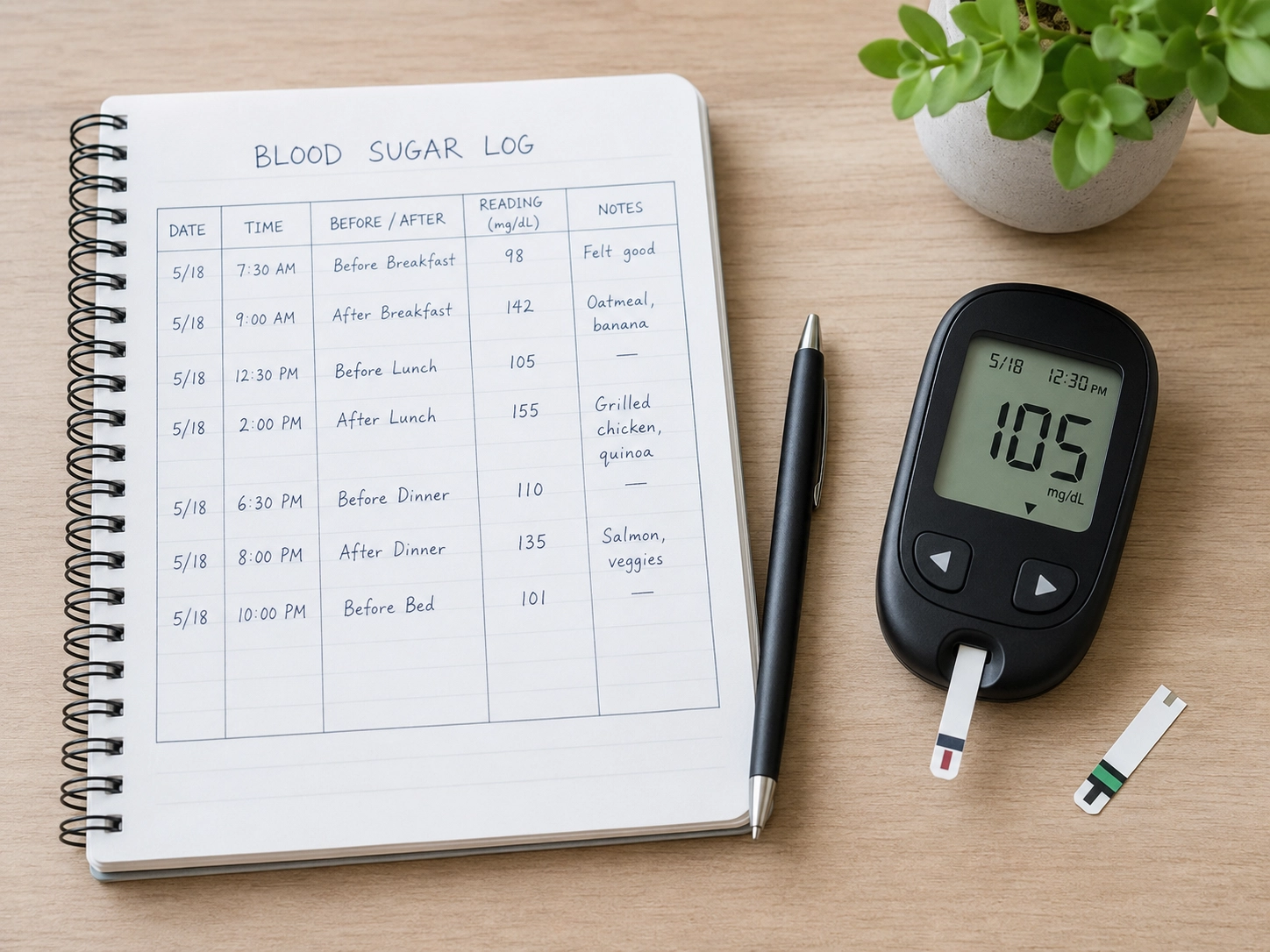
How to Use a Blood Sugar Log Without Feeling Overwhelmed
Checking your blood sugar can feel simple at first: test, see a number, write it down. But after a few days, many people realize the hard part is not getting the number. The hard part is understanding what the number means. Why was your morning…
Continue reading...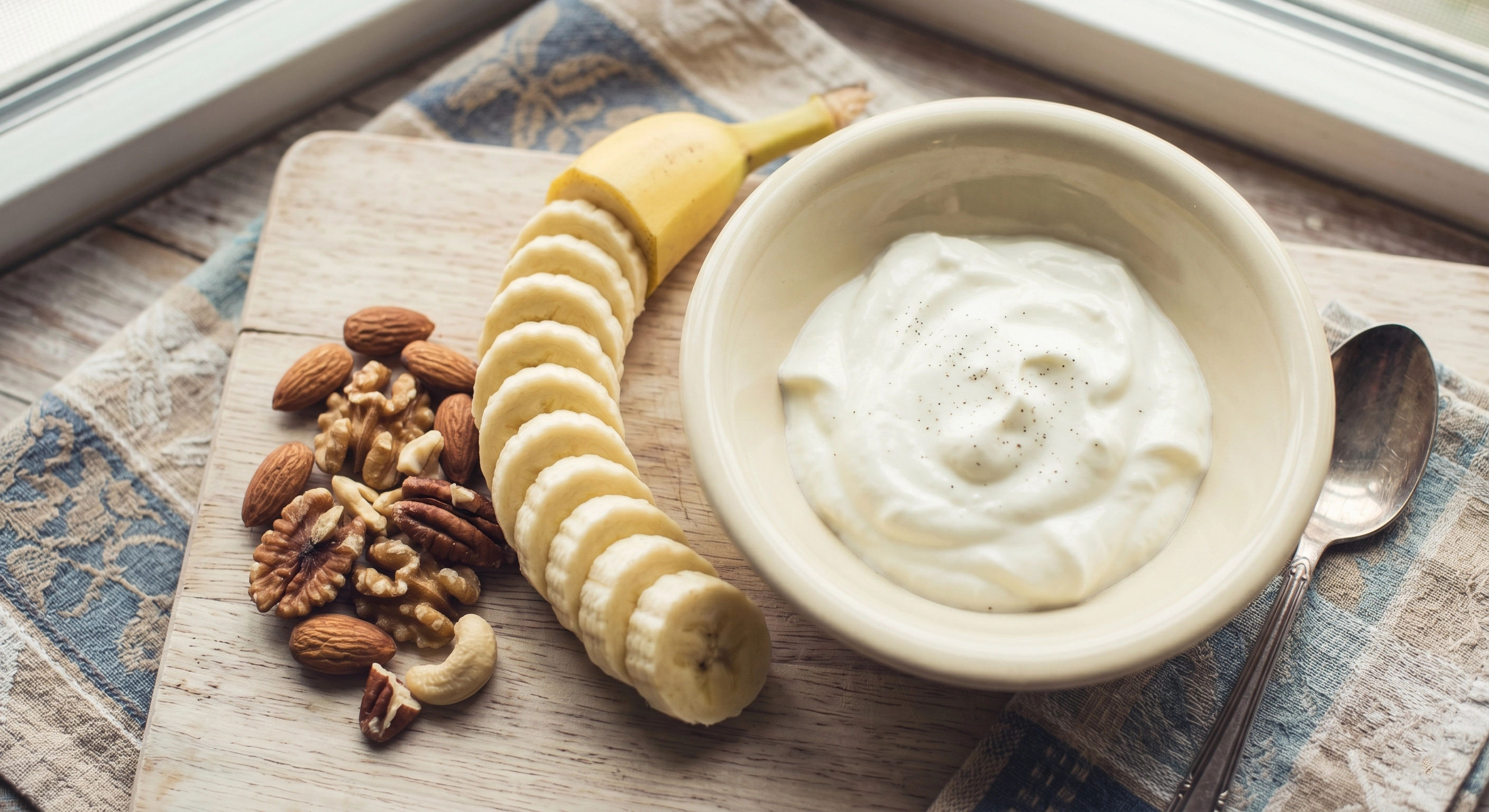
Can Banana Be Eaten in Diabetes? A Practical Guide to Portion, Ripeness, and Blood Sugar
Bananas are one of those everyday foods that can feel confusing if you are watching your blood sugar. On one hand, a banana is a whole fruit. It is simple, affordable, portable, and naturally sweet. On the other hand, you may have heard that bananas…
Continue reading...
Can You Eat Watermelon with Diabetes? A Practical Guide Without Food Fear
Watermelon is one of those foods that can feel confusing if you are watching your blood sugar. It is fresh, light, and mostly water. At the same time, it tastes very sweet. So it is natural to wonder: can diabetics eat watermelon, or is it…
Continue reading...