Diabetic Desserts: How to Enjoy Sweet Treats Without the All-or-Nothing Mindset

Dessert can feel complicated when you are trying to manage blood sugar.
Maybe you used to enjoy a slice of cake after dinner, a cookie with coffee, or ice cream on the weekend. Then, after a diabetes or prediabetes diagnosis — or after seeing high blood sugar numbers — dessert suddenly starts to feel like a problem.
Some people respond by avoiding sweets completely. Others search for “diabetic desserts” and find long lists of sugar-free treats, low-carb recipes, and products that promise to be “guilt-free.” But real life is rarely that simple.
Dessert is not only about sugar. It is also about cravings, comfort, family meals, birthdays, stress, habits, and the feeling of being able to enjoy food like everyone else.
The goal of this guide is not to give you a perfect dessert rule or tell you that one food is safe for everyone. Instead, it will help you understand how to think about desserts in a more practical way — so you can make choices that may support steadier blood sugar without feeling trapped in an all-or-nothing mindset.
Health disclaimer: This article is for general educational purposes only and is not medical advice. If you have diabetes, prediabetes, take insulin or blood-sugar-lowering medication, or have another medical condition, talk with a qualified healthcare professional for guidance that fits your situation.
Dessert Is Not Just About Sugar
When people think about diabetic desserts, they often focus only on sugar. That makes sense, because sugar can affect blood glucose. But sugar is not the only thing that matters.
Many desserts are made from a combination of sugar, refined flour, fat, and large portions. A cookie, muffin, slice of pie, or piece of cake may contain added sugar, but it may also contain refined starches that break down into glucose during digestion.
This is why a dessert can still affect blood sugar even if it does not taste extremely sweet.
For example, a large “not too sweet” pastry may still contain refined flour and a high amount of total carbohydrates. On the other hand, a small portion of Greek yogurt with berries and nuts may taste sweet enough to satisfy a craving while also providing protein, fiber, and fat.
The difference is not only the sweetness. It is the whole dessert structure.
What Makes a Dessert Harder on Blood Sugar?
There is no single answer that applies to every person. Blood sugar response can vary depending on the individual, the portion size, the meal before it, activity level, medication, sleep, stress, and other factors.
Still, some dessert patterns are more likely to be challenging.
Large portions
A small dessert and a large dessert are not the same experience for your body.
A few bites of cake after a balanced meal may affect someone differently than a huge slice eaten on an empty stomach. Portion size can turn a reasonable treat into a much heavier carbohydrate load.
This does not mean you must measure every bite forever. But it does mean that “how much” matters just as much as “what kind.”
Mostly sugar and refined flour
Desserts made mostly from sugar and refined flour may be less blood-sugar friendly because they are usually low in fiber and protein. Examples include many cakes, cookies, pastries, doughnuts, sweet rolls, and pies.
That does not mean these foods are forbidden for everyone. But they may be better treated as occasional foods rather than everyday snacks.
Liquid or very soft desserts
Sweet drinks, milkshakes, sweet coffee drinks, large bowls of pudding, and soft desserts can be easy to consume quickly. They may also feel less filling than a dessert that requires chewing and contains more texture.
For some people, this can make it easier to overeat without feeling satisfied.
Eating dessert when very hungry
Dessert can be harder to manage when you are already overly hungry.
Imagine skipping lunch, working all afternoon, then seeing cookies in the kitchen at night. At that point, the craving is not only about dessert. Your body may be asking for energy, and a sweet food becomes the easiest option.
In this situation, the better long-term solution may not be finding a “perfect diabetic cookie.” It may be eating more balanced meals earlier in the day.
The Problem With “Sugar-Free” Diabetic Desserts
Sugar-free desserts can be useful for some people, but they are not automatically blood-sugar friendly.
This is one of the biggest misunderstandings around diabetic desserts.
Sugar-free does not always mean low-carb
A sugar-free cookie can still contain flour. A sugar-free cake can still contain starch. A sugar-free pudding can still have calories and carbohydrates.
The front label may say “sugar-free,” but the nutrition label tells a fuller story. For blood sugar, total carbohydrates, serving size, fiber, and ingredients all matter.
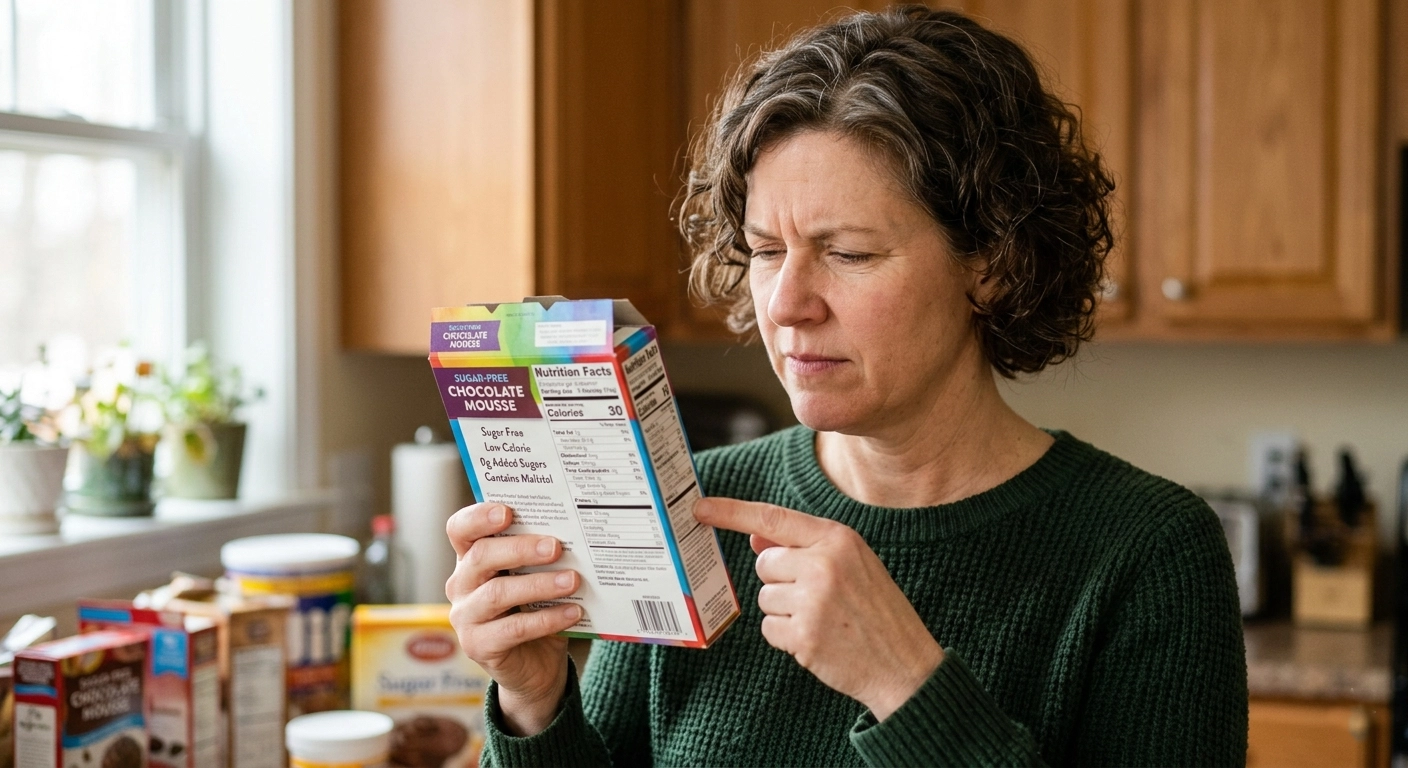
This does not mean sugar-free products are bad. It means they should not be treated as unlimited foods.
Sugar alcohols may bother digestion
Some sugar-free desserts use sugar alcohols such as maltitol, sorbitol, xylitol, or erythritol. These ingredients may help reduce added sugar, but some people may experience gas, bloating, or digestive discomfort, especially with larger amounts.
People can respond differently, so it is worth paying attention to how your body feels.
The “health halo” can lead to overeating
A dessert labeled “diabetic-friendly,” “keto,” “low sugar,” or “sugar-free” can create a health halo. In other words, the label makes the food seem safer or healthier than it really is.
That can lead to eating more than planned.
For example, someone may eat six sugar-free cookies because they believe they “do not count.” But if those cookies still contain carbohydrates and calories, the total amount still matters.
A Better Way to Think About Dessert: The S.W.E.E.T. Framework
Instead of asking, “Is this dessert allowed?” it may be more helpful to ask, “How can I make this dessert decision more balanced?”
Use the S.W.E.E.T. framework:
S — Serving size
Start with the portion.
A dessert does not have to be huge to be enjoyable. Sometimes a small serving eaten slowly is more satisfying than a large serving eaten with guilt.
Examples:
- One small square of dark chocolate instead of a full bar
- A small bowl of berries with yogurt instead of a large dessert bowl
- A mini serving at a party instead of a full-size slice
- Sharing a dessert at a restaurant
Serving size is not about punishment. It is about making dessert fit into real life.
W — Whole-food ingredients
A dessert may be more balanced when it includes less-refined ingredients such as fruit, nuts, seeds, plain yogurt, cottage cheese, oats, or chia seeds.
These ingredients do not make a dessert “free,” but they can add texture, nutrients, and satisfaction.
For example, baked apple with cinnamon and walnuts is very different from apple pie with a thick crust and a large scoop of ice cream. Both may taste sweet, but the structure is not the same.
E — Enough protein, fiber, or fat
Protein, fiber, and fat can make desserts more satisfying. They may also slow digestion compared with eating sugar or refined starch by itself.
This is why Greek yogurt with berries may feel more balanced than candy. Chia pudding may feel more filling than sweetened pudding. Apple slices with peanut butter may keep you satisfied longer than apple juice.
The goal is not to make dessert “perfect.” The goal is to avoid desserts that are mostly fast-digesting carbohydrates with little staying power.
E — Enjoyment
A dessert should still feel like dessert.
This matters because overly restrictive “diet desserts” can backfire. If you eat something that technically fits a rule but does not satisfy you at all, you may keep searching for more food afterward.
A tiny low-sugar snack that leaves you frustrated may not be as helpful as a small portion of something you truly enjoy.
Satisfaction is part of the decision.
T — Timing
Timing can matter.
Some people may find that eating dessert after a balanced meal works better than eating sweets alone on an empty stomach. A meal that includes protein, fiber, and healthy fat may help the dessert feel more controlled and satisfying.
This does not mean dessert after dinner is always the right choice for everyone. It simply means dessert does not exist in isolation. What you ate before it matters too.
Practical Dessert Ideas for Real Life
This section is not a prescription or a promise that every option will work for everyone. Think of these as starting points for more balanced dessert choices.
Greek yogurt with berries and cinnamon
Plain Greek yogurt provides protein, while berries add natural sweetness and fiber. Cinnamon can add a dessert-like flavor without needing much added sugar.
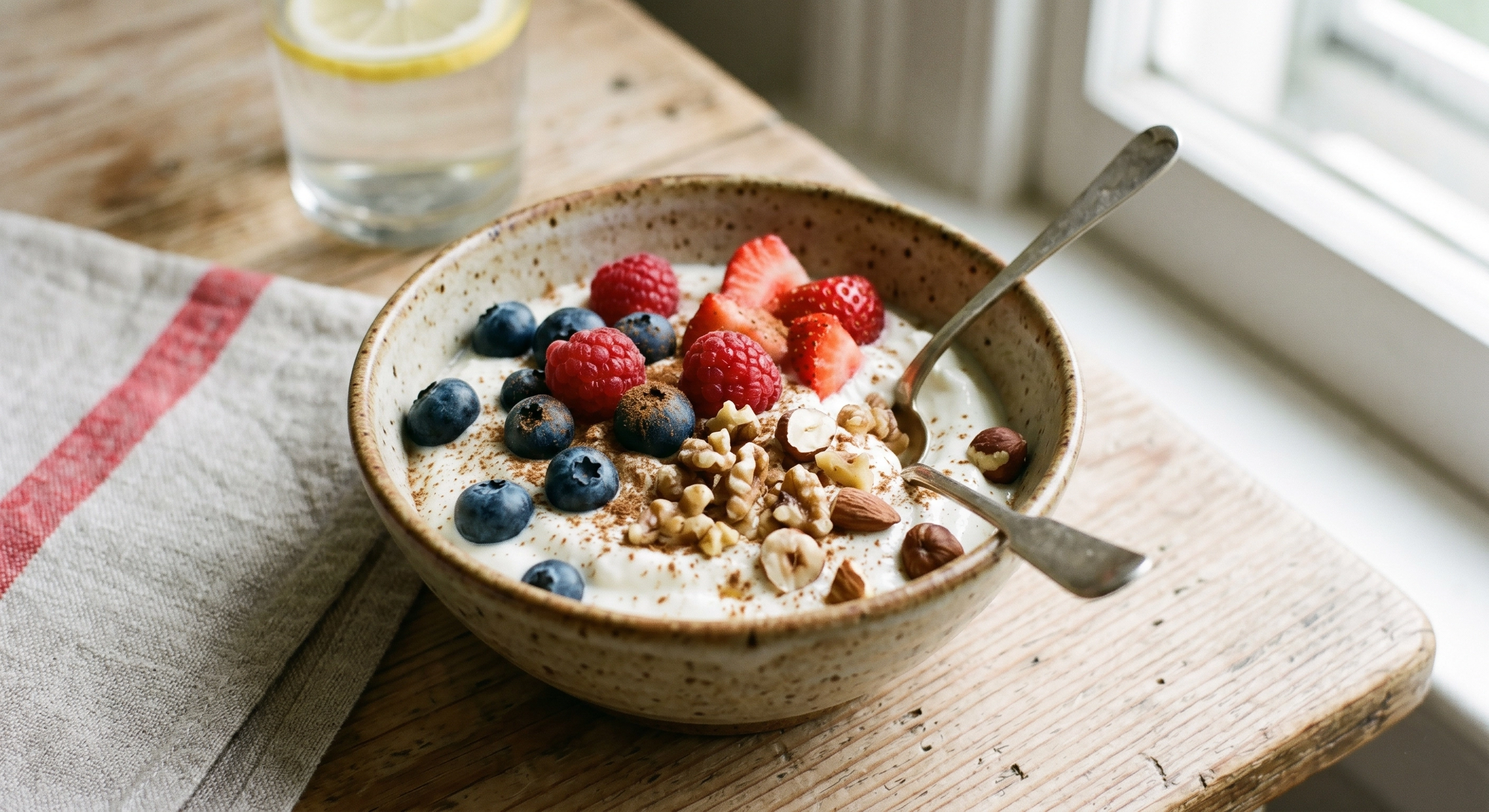
To make it feel more special, add a few chopped nuts or a small sprinkle of unsweetened cocoa.
Chia pudding
Chia seeds absorb liquid and create a pudding-like texture. They also provide fiber and fat. You can make chia pudding with unsweetened milk or unsweetened plant-based milk, then add vanilla, cinnamon, berries, or a small amount of sweetener if needed.
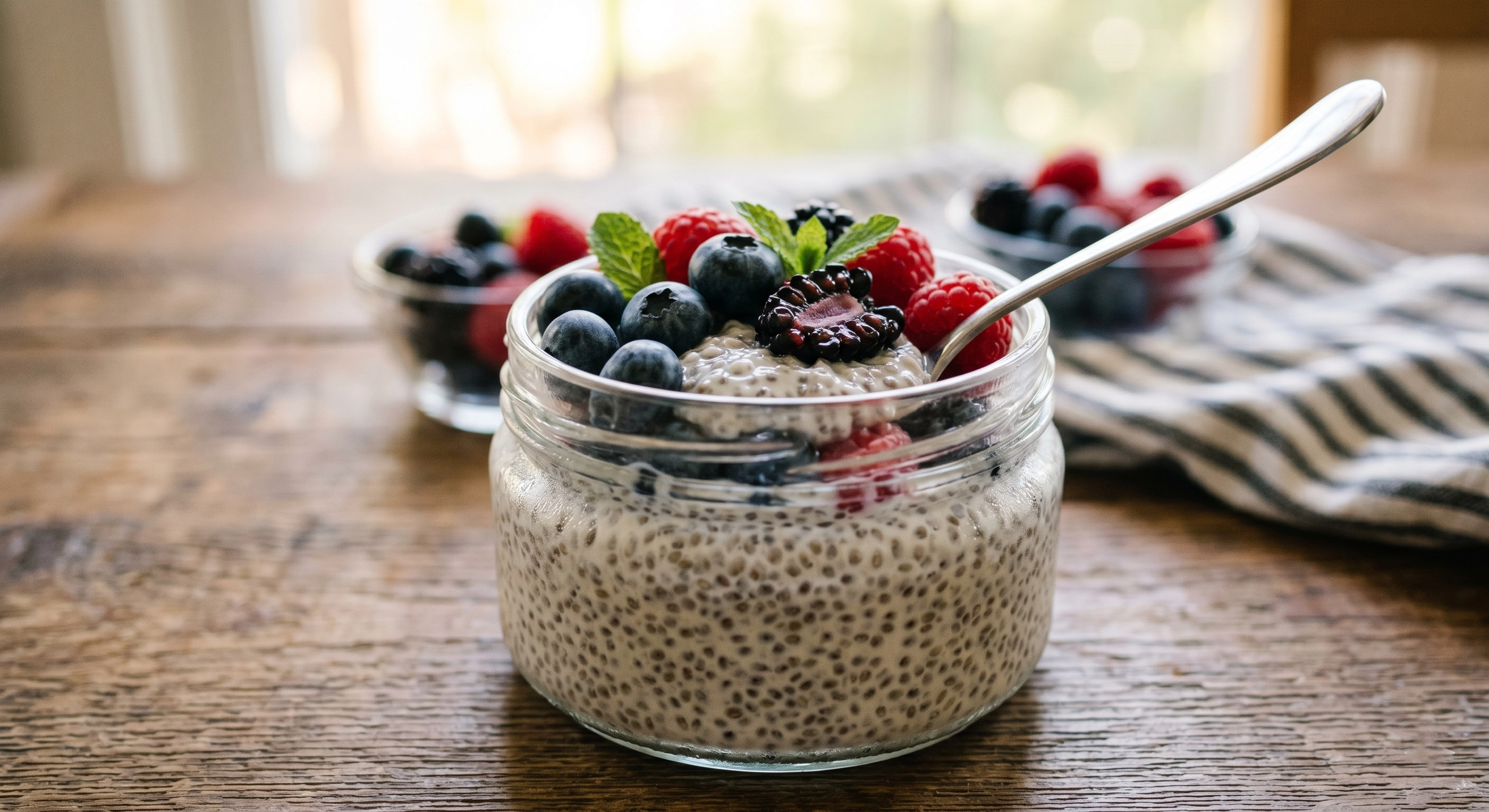
This can work well for people who want something creamy but more filling than traditional pudding.
Baked apple with cinnamon and walnuts
A baked apple can feel warm and comforting, especially in colder weather. Adding walnuts gives crunch and fat, while cinnamon adds sweetness without making the dessert rely only on sugar.
Portion still matters, especially if you add honey, syrup, or dried fruit.
Cottage cheese with berries
This may not sound like dessert at first, but cottage cheese with berries, cinnamon, vanilla, or a few crushed nuts can be surprisingly satisfying for some people.
It is simple, quick, and higher in protein than many sweet snacks.
Dark chocolate with nuts
A small amount of dark chocolate paired with nuts can satisfy a chocolate craving without turning into a large dessert. Choose a portion intentionally instead of eating from the whole package.
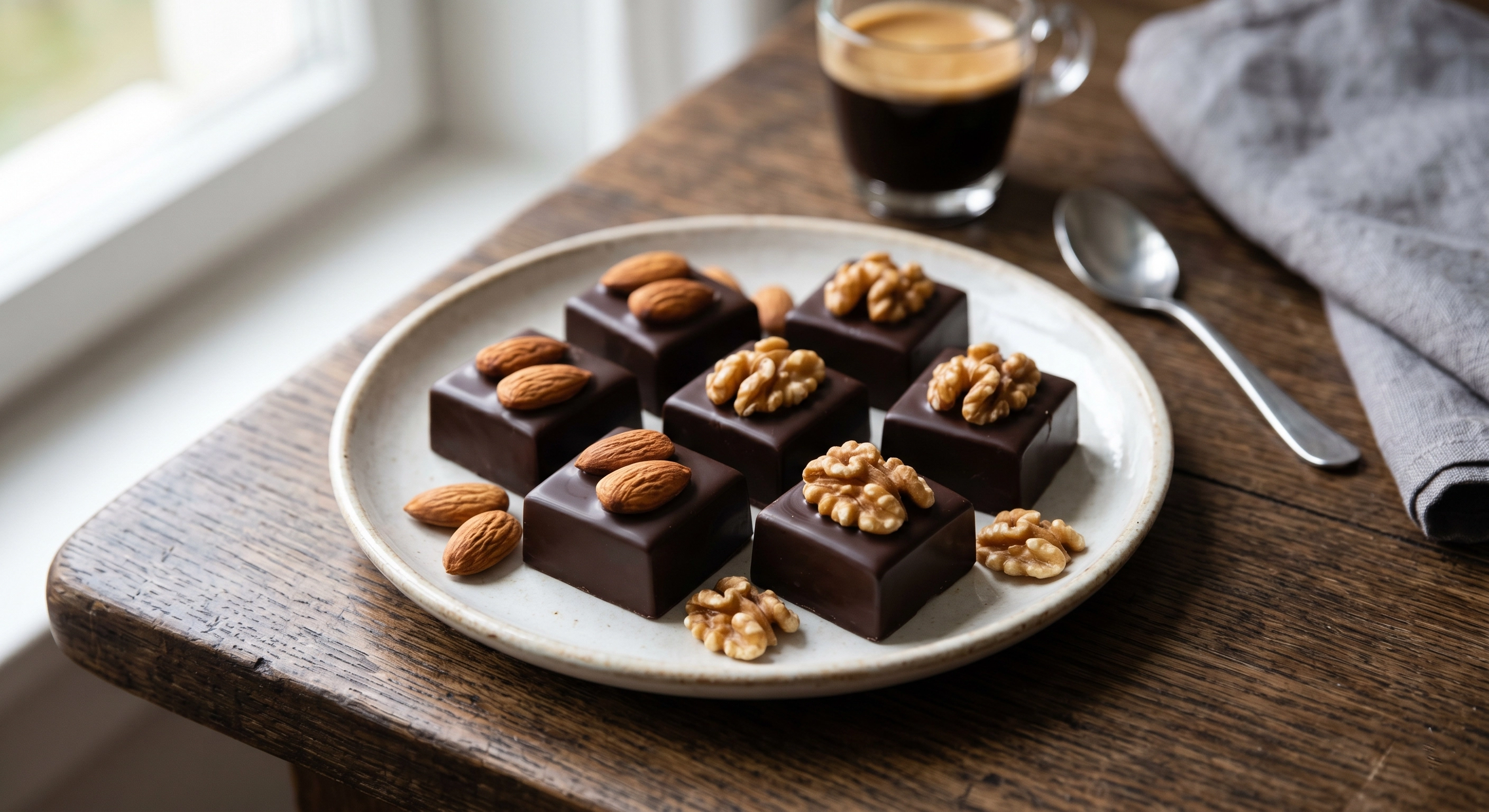
For example, put one or two small squares on a plate with a few almonds or walnuts.
Frozen berries with plain yogurt
Frozen berries can feel almost like sorbet when mixed with yogurt. This is a useful option when you want something cold and sweet but do not want a large bowl of ice cream.
Avocado cocoa mousse
Blended avocado, unsweetened cocoa, vanilla, and a small amount of sweetener can create a creamy dessert. This option contains fat and texture, so it may feel more satisfying than a thin sweet pudding.
However, it can still be calorie-dense, so portion size matters.
Real-Life Dessert Scenarios
The best dessert choice depends on the situation. Here are a few common examples.
Scenario 1: The after-dinner craving
You finish dinner and want something sweet. Usually, you reach for cookies and eat them while standing in the kitchen.
A more intentional option might be a small bowl of Greek yogurt with berries and cinnamon. You sit down, eat it slowly, and treat it like a real dessert.
The change is not only the food. It is also the behavior: portioning, slowing down, and choosing something more balanced.
Scenario 2: The birthday party
You are at a birthday party. Everyone is eating cake, and you feel torn between joining in and avoiding it completely.
A realistic approach may be choosing a small slice, eating it slowly, and moving on without guilt. You do not need to turn one slice into a full day of “I already failed, so I might as well keep going.”
This mindset matters. All-or-nothing thinking can make long-term habits harder.
Scenario 3: The late-night snack spiral
You crave sweets almost every night. You keep searching for diabetic desserts, but nothing feels satisfying.
In this case, dessert may not be the real problem. You may be under-eating earlier, skipping meals, not getting enough protein, or using sweets to cope with stress and fatigue.
A better plan may include building more balanced meals during the day, keeping simple dessert options ready, and noticing whether cravings are stronger after poor sleep or stressful days.
How to Choose Store-Bought Desserts
Store-bought desserts can be convenient, but labels can be confusing.
Here are a few things to check.
Serving size
Look at the serving size first. A package may look like one serving but actually contain two or three.
If the nutrition label says 12 grams of sugar per serving, but you eat three servings, the actual amount is much higher.
Total carbohydrates
For blood sugar, total carbohydrates matter. This includes sugar, starch, and fiber.
A product can be low in added sugar but still high in total carbohydrates.
Added sugars
Added sugars are worth watching because they can add up quickly. Lower added sugar does not automatically make a dessert ideal, but it is still useful information.
Fiber and protein
Desserts with more fiber or protein may be more filling. This does not make them unlimited, but it can make them more satisfying than desserts that are mostly sugar and refined flour.
Sugar alcohols
If a dessert contains sugar alcohols, pay attention to how much you eat and how your digestion responds. Some people tolerate them well, while others do not.
Ingredient list
The ingredient list can reveal whether a dessert is mostly refined flour, sweeteners, oils, and additives, or whether it includes more recognizable ingredients like nuts, seeds, fruit, yogurt, or cocoa.
Common Mistakes With Diabetic Desserts
Mistake 1: Thinking dessert must be completely forbidden
For many people, completely banning dessert creates more stress and stronger cravings. A more realistic approach is learning how to include sweet foods thoughtfully.
That may mean smaller portions, better timing, or choosing desserts with more protein, fiber, or fat.
Mistake 2: Thinking sugar-free means unlimited
Sugar-free desserts can still contain carbohydrates, calories, and ingredients that affect digestion. They can be helpful in some situations, but they are not a free pass to eat without awareness.
Mistake 3: Fearing all fruit
Whole fruit contains natural sugar, but it also provides fiber, water, vitamins, and texture. Many people find whole fruit more satisfying than fruit juice or candy.
Portion size and pairing still matter. For example, berries with yogurt or apple slices with peanut butter may feel more balanced than eating a large bowl of fruit alone.
Mistake 4: Only looking at sugar
Sugar is important, but refined flour, portion size, total carbohydrates, and eating context also matter.
A dessert with less sugar can still be high in starch. A small dessert after a balanced meal can be different from a large dessert eaten alone.
Mistake 5: Eating a dessert you do not even enjoy
Sometimes people eat a “healthy” dessert, feel unsatisfied, then continue snacking.
A better question is: “What small dessert would actually satisfy me?” Enjoyment can help prevent the feeling of constantly chasing more food.
When to Talk With a Healthcare Professional
It is a good idea to ask for personalized guidance if:
- You have diabetes and are unsure how dessert fits into your meal plan
- You use insulin or blood-sugar-lowering medication
- You often experience high or low blood sugar after meals
- You have kidney disease, digestive issues, or another health condition
- You are pregnant or managing gestational diabetes
- You feel anxious or out of control around sweets
A healthcare professional or registered dietitian can help you understand your personal needs, medication considerations, and blood sugar patterns.
Practical Takeaway
Dessert does not have to be feared, but it should be chosen with awareness.
A better dessert choice is usually not just about removing sugar. It is about the whole decision: portion size, ingredients, protein, fiber, fat, timing, and satisfaction.
The most useful question is not, “Can I eat this or not?”
A better question is:
“How can I make this dessert more realistic, satisfying, and balanced for my life?”
Some days, that may mean Greek yogurt with berries. Other days, it may mean a small slice of birthday cake eaten without guilt. What matters is building a pattern you can live with — not chasing perfect rules.
FAQ
Can diabetics eat dessert?
Many people with diabetes can include dessert sometimes, but it depends on the person, portion size, ingredients, medication, activity level, and blood sugar response. It is best to ask a healthcare professional for personalized guidance.
What are some easy diabetic desserts?
Simple options may include Greek yogurt with berries, chia pudding, baked apple with cinnamon and walnuts, cottage cheese with berries, small portions of dark chocolate with nuts, or frozen berries with plain yogurt.
These are not “free foods,” but they may be more balanced than many traditional desserts.
Are sugar-free desserts good for diabetics?
Sugar-free desserts may be helpful for some people, but they are not automatically blood-sugar friendly. Some still contain refined flour, starches, calories, or sugar alcohols. Always check serving size and total carbohydrates.
Is ice cream okay for diabetics?
Some people may be able to include a small portion of ice cream occasionally, depending on their overall meal plan and blood sugar response. Portion size matters, and eating ice cream straight from the container can make it easy to overeat.
Is fruit better than cake for blood sugar?
Whole fruit is often a more nutrient-rich choice than cake because it contains fiber, water, and vitamins. However, portion size still matters. Pairing fruit with protein or fat, such as yogurt or nuts, may make it more satisfying for some people.
Can diabetics eat chocolate?
Some people with diabetes may include small portions of chocolate, especially darker chocolate with less added sugar. However, chocolate still contains calories and may contain sugar, so portion size is important.
What should I look for on a dessert label?
Start with serving size, total carbohydrates, added sugars, fiber, protein, sugar alcohols, and the ingredient list. Do not rely only on front-label claims like “sugar-free” or “diabetic-friendly.”
How often can someone with diabetes eat dessert?
There is no one-size-fits-all answer. It depends on the person’s health goals, blood sugar patterns, medication, activity level, and overall diet. For many people, dessert works best as an intentional occasional choice rather than an automatic daily habit.
You should also read:
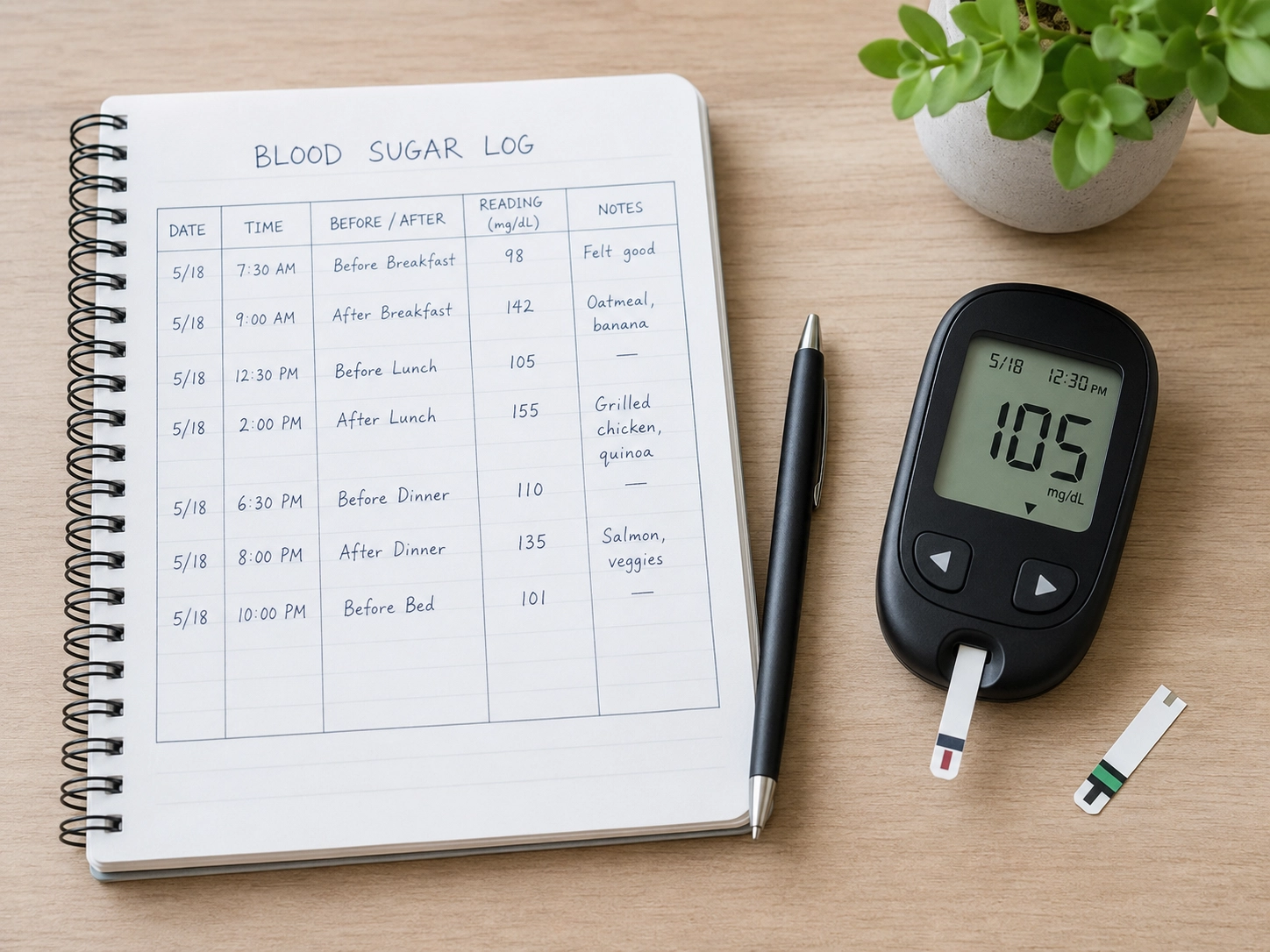
How to Use a Blood Sugar Log Without Feeling Overwhelmed
Checking your blood sugar can feel simple at first: test, see a number, write it down. But after a few days, many people realize the hard part is not getting the number. The hard part is understanding what the number means. Why was your morning…
Continue reading...
Can You Eat Watermelon with Diabetes? A Practical Guide Without Food Fear
Watermelon is one of those foods that can feel confusing if you are watching your blood sugar. It is fresh, light, and mostly water. At the same time, it tastes very sweet. So it is natural to wonder: can diabetics eat watermelon, or is it…
Continue reading...
Is Sourdough Bread Good for Diabetics? What to Know Before You Eat It
Sourdough bread has a strong “health halo.” It sounds traditional, natural, fermented, and more wholesome than regular white bread. So if you are trying to manage blood sugar, it is easy to wonder: is sourdough bread good for diabetics, or is it just another bread…
Continue reading...