Can You Eat Popcorn with Diabetes? A Practical Guide for Snack Time

Popcorn can feel like one of the most confusing snacks when you are trying to manage blood sugar.
On one hand, it seems light, crunchy, and less greasy than potato chips. On the other hand, popcorn is still made from corn, which means it contains carbohydrates. So the real question is not just, “Can diabetics eat popcorn?” A better question is:
What kind of popcorn, how much, and in what situation?
For many people with diabetes or blood sugar concerns, popcorn may fit into a balanced eating pattern when the portion is controlled and the toppings are simple. But a small bowl of air-popped popcorn is very different from a large bucket of movie theater popcorn, caramel corn, or a buttery microwave bag eaten straight from the package.
This guide will help you think about popcorn in a practical way, without turning it into either a “forbidden food” or a “free food.”
Can Diabetics Eat Popcorn?
Yes, some people with diabetes can eat popcorn as part of a balanced diet. The key is portion size, preparation, toppings, and how popcorn fits into the rest of the day.
Popcorn is a whole grain, and plain popcorn contains some fiber. It can also be lower in calorie density than many fried snacks when it is air-popped and lightly seasoned. The American Diabetes Association lists air-popped or light microwave popcorn as a snack idea and notes that about 3 cups has around 15 grams of carbohydrate. The CDC also explains that, for diabetes meal planning, 1 carbohydrate serving is generally about 15 grams of carbs.
But popcorn is not carb-free. It contains starch, and starch breaks down into glucose during digestion. That means popcorn can still affect blood sugar, especially if the portion is large or if it comes with sugar, caramel, chocolate, or heavy butter toppings.
A useful way to think about popcorn is this:
Popcorn is not automatically bad. But it is not unlimited either.
Why Popcorn Can Be a Reasonable Snack
Plain popcorn can be a reasonable snack for some people because it gives you a lot of volume for a relatively modest portion of carbohydrates, especially compared with many dense snacks.
For example, a small bowl of air-popped popcorn may feel more satisfying than a few crackers because you get more pieces to eat. That can matter when you want something crunchy and snack-like, not just a tiny bite of food.
Popcorn also has a simple advantage: it can be prepared at home with very little added fat, sugar, or sodium. You can season it in many ways without turning it into dessert.

Some blood sugar-conscious seasoning ideas include:
| Black pepper | Smoked paprika | Chili powder |
| Garlic powder | Nutritional yeas | Cinnamon |
| Herbs such as rosemary or oregano | A small sprinkle of parmesan |
These toppings can add flavor without needing caramel, candy, or heavy butter.
Why Popcorn Can Still Raise Blood Sugar
The biggest misunderstanding is thinking popcorn is “safe” simply because it feels light.
Popcorn is still a carbohydrate food. If you eat a small bowl, the impact may be modest for some people. If you eat a full large microwave bag, a giant movie theater bucket, or sweet popcorn covered in caramel, the situation changes.
This is where many people get caught.
They do not plan to eat a huge portion. They just open a bag, sit down in front of a movie, and keep reaching in. Because popcorn is easy to eat quickly, the portion can grow without much awareness.
A snack that started as “just a little popcorn” can become several servings before the movie is halfway through.
The 3P Popcorn Rule: Portion, Preparation, and Pairing
Instead of asking whether popcorn is good or bad, use a more practical question:
Does this popcorn pass the 3P test?
The 3Ps are:
- Portion
- Preparation
- Pairing
This simple framework can help you decide whether popcorn makes sense for your snack situation.
1. Portion: How Much Popcorn Makes Sense?
Portion is usually the most important part.
A small bowl of plain popcorn is not the same as eating from a large bag. Popcorn is easy to overeat because it is light, crunchy, and often eaten while distracted.
A practical serving for many people may be around 3 cups of plain air-popped or light popcorn, which is often discussed as roughly one carbohydrate serving. But your personal needs may be different depending on your meal plan, medication, activity level, and blood sugar response.
The easiest habit is simple:
Do not eat popcorn straight from the bag.
Put a portion into a bowl, close the bag, and put the rest away. This small step can make a big difference because it turns popcorn from a “mindless snack” into a planned snack.
Real-life example: Movie night at home
Imagine you are watching a movie at home. You open a large microwave bag and tell yourself you will only eat a little. But the bag stays next to you, and your hand keeps going back while your attention is on the screen.
By the end of the movie, you may have eaten far more than you intended.
A better version:
You pop the popcorn, place a reasonable portion into a bowl, add a simple seasoning, and put the rest away before the movie starts. You still enjoy the snack, but the portion is clearer.
That is not about being strict. It is about making the easy choice visible before you start eating.
2. Preparation: The Type of Popcorn Matters
The word “popcorn” can describe very different snacks.
Plain air-popped popcorn, movie theater popcorn, kettle corn, caramel popcorn, and cheese-coated popcorn may all start with corn, but they are not the same from a blood sugar or overall nutrition perspective.
Better everyday options
For regular snack situations, better choices usually include:
- Air-popped popcorn
- Plain homemade popcorn with a small amount of oil
- Light microwave popcorn
- Popcorn with herbs, spices, or a small amount of cheese
- Unsweetened popcorn without candy or chocolate mix-ins
These options let popcorn stay closer to a simple whole grain snack.
Options to be more careful with
Some popcorn choices are better treated as occasional snacks:
- Caramel popcorn
- Kettle corn
- Chocolate-covered popcorn
- Popcorn mixed with candy
- Movie theater popcorn with heavy butter
- Large microwave bags with lots of added fat and salt
- Sweet dessert-style popcorn
The issue is not only sugar. Added fats, sodium, and portion size can also matter, especially for people who are also watching weight, blood pressure, cholesterol, or heart health.
Movie theater popcorn is different
Movie theater popcorn deserves its own mention because it is easy to underestimate.
The portion is often much larger than what you would serve at home. It may also contain a lot of added fat and sodium, especially if you add buttery topping.
That does not mean you can never have it. But it is better to treat it as an occasional choice, not the same as a small bowl of air-popped popcorn at home.
A practical approach may be to choose the smallest size, share it, skip extra butter, or decide before the movie how much you want to eat.
3. Pairing: Make Snack Time More Balanced
Popcorn is mostly carbohydrate. For some people, eating it alone may not keep them full for long. This can lead to more snacking soon afterward.
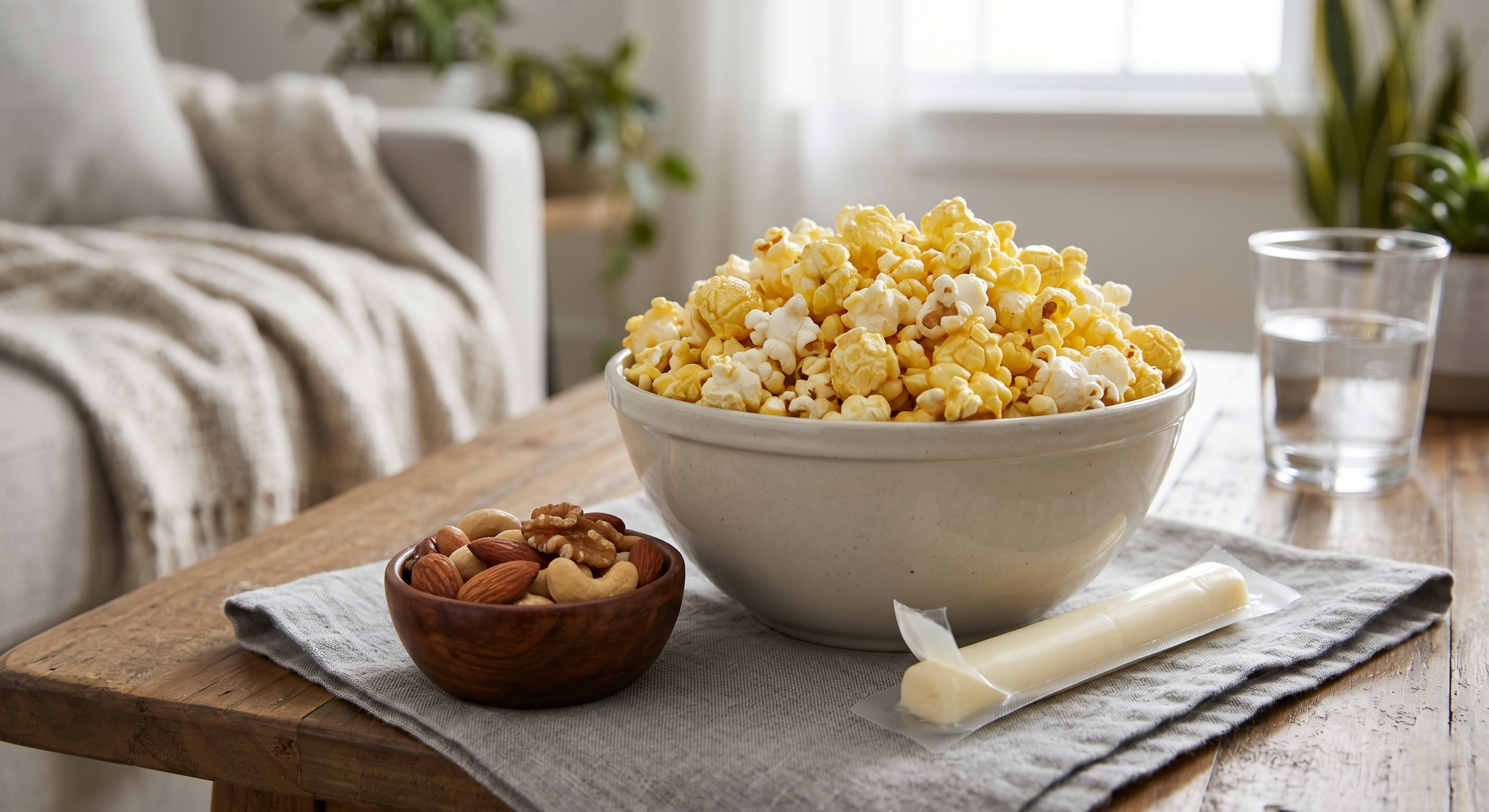
Pairing popcorn with a small source of protein or fat may help some people feel more satisfied. It may also make the snack feel more complete.
Examples:
- Popcorn with a boiled egg
- Popcorn with a cheese stick
- Popcorn with a small handful of nuts
- Popcorn after a balanced meal instead of when extremely hungry
- Popcorn alongside plain Greek yogurt if you want something more filling
This does not mean you need to turn every snack into a full meal. It simply means popcorn may work better when it is not the only thing you rely on during a hungry moment.
Real-life example: Afternoon snack at work
You feel hungry at 3 p.m. and want something crunchy. If you eat only popcorn, you may feel satisfied for 20 minutes and then start looking for something sweet.
A better option might be a small bowl of popcorn with a cheese stick or a few nuts. The popcorn gives crunch, while the protein or fat can support fullness.
Again, this is not a blood sugar guarantee. It is a practical way to build a more satisfying snack.
Popcorn vs Other Common Snacks
Sometimes the question is not “Is popcorn perfect?” but “Is popcorn a better choice than what I usually eat?”
That is a more realistic way to think about everyday food.
Popcorn vs Potato Chips
Compared with potato chips, plain air-popped popcorn may give you more volume and crunch for less added fat. Chips are often easy to overeat because they are salty, oily, and dense.
But this comparison only works if the popcorn is plain or lightly seasoned. If the popcorn is covered in butter, caramel, or cheese coating, the advantage may disappear.
Popcorn vs Crackers
Crackers can vary a lot. Some are made with refined flour and have very little fiber. Others are whole grain and more filling.
Plain popcorn may offer more volume than many crackers, which can help if you like to snack slowly. But crackers may be easier to portion if they come in small packs.
The better choice depends on the label, portion, and what you eat with it.
Popcorn vs Sweets
Plain popcorn and sweet popcorn are not the same.
Caramel popcorn, kettle corn, and chocolate-drizzled popcorn are closer to dessert snacks. They may still be enjoyable occasionally, but they should not be treated like plain popcorn.
This is one of the biggest label traps. A package can say “popcorn,” but the coating can change the snack completely.
Common Mistakes When Eating Popcorn with Diabetes
Mistake 1: Thinking Popcorn Is Carb-Free
Popcorn may feel light, but it still contains carbohydrates. If you count carbs or follow a meal plan, popcorn needs to be included.
The goal is not to fear carbs. Carbohydrates are part of many healthy eating patterns. The key is portion size, food quality, and balance.
Mistake 2: Eating Straight from the Bag
This is probably the most common popcorn mistake.
Large bags make it hard to know how much you have eaten. Even if the nutrition label shows one serving, the bag may contain multiple servings.
A simple fix: pour your portion into a bowl first.
Mistake 3: Treating Caramel Popcorn Like Plain Popcorn
Caramel popcorn is not just “popcorn with flavor.” It is popcorn with added sugar.
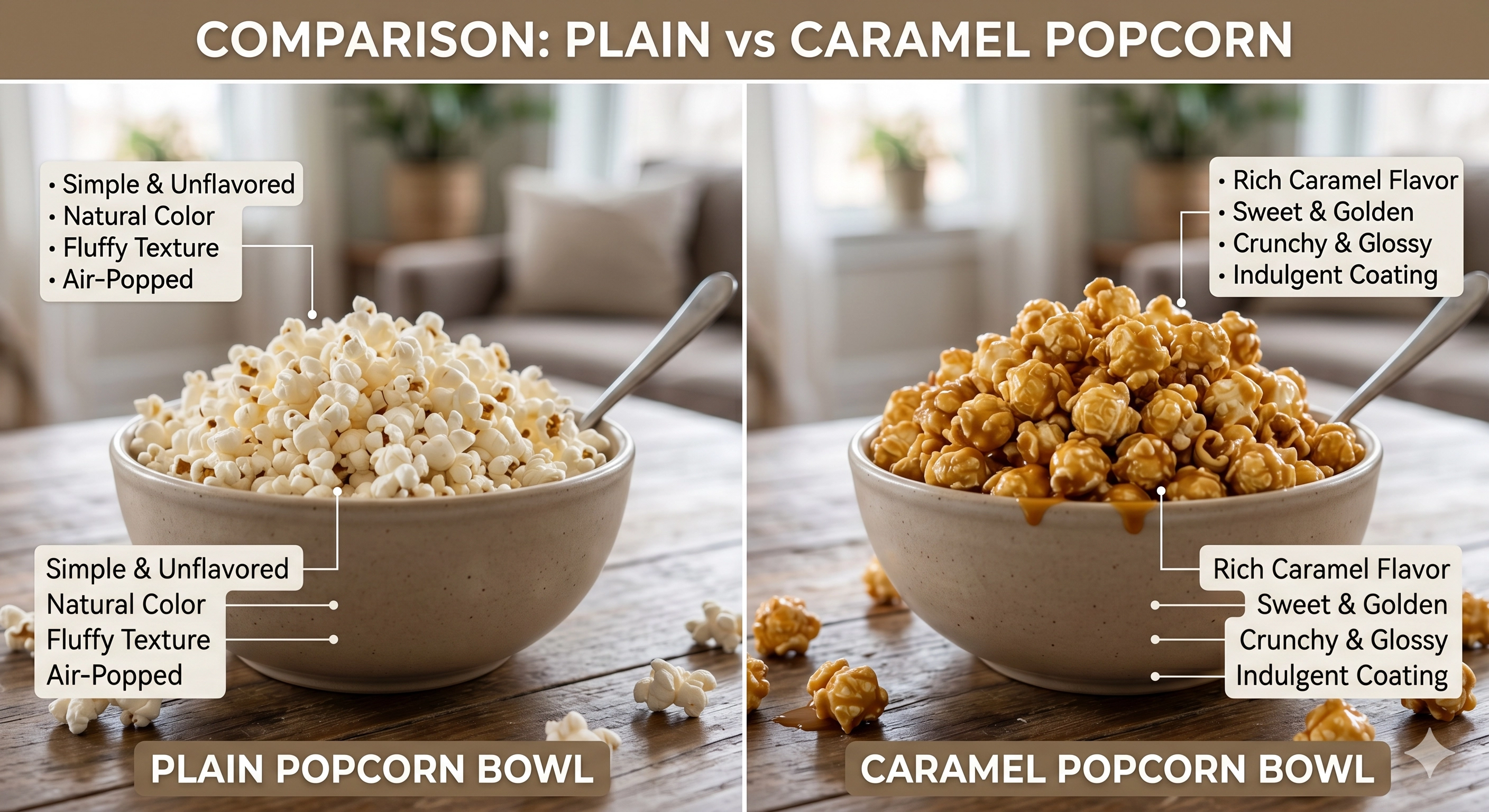
The same idea applies to kettle corn, chocolate popcorn, and dessert popcorn mixes. They may be enjoyable, but they belong in a different category from plain air-popped popcorn.
Mistake 4: Only Looking at Sugar
Some people check only the sugar line on the nutrition label. But for blood sugar, total carbohydrates matter too.
Also check:
| Serving size | Fiber | Added sugar |
| Servings per bag | Sodium | Saturated fat |
| Total carbohydrates |
A popcorn product with “low sugar” on the front may still have a large amount of carbohydrates if the portion is big.
Mistake 5: Eating Popcorn When You Are Extremely Hungry
Popcorn may not be enough if you are very hungry. In that situation, you may eat too much because your body wants a real meal, not a light snack.
If you are genuinely hungry, a more balanced snack or meal may work better.
For example, popcorn plus protein may be more satisfying than popcorn alone. Or you may need a small meal with vegetables, protein, and a controlled carbohydrate source.
How to Decide If Popcorn Works for You
Because people respond differently to foods, the best answer is personal. Some people may find that a small bowl of plain popcorn fits well. Others may notice that even a moderate portion affects their blood sugar more than expected.
Use this quick decision guide.
Ask yourself before eating popcorn
- Is this plain, lightly seasoned, or sweetened?
- Am I eating from a bowl or from the bag?
- Is this one portion or several portions?
- Am I eating because I am mildly hungry, bored, stressed, or very hungry?
- Would pairing it with protein or fat help me feel more satisfied?
- Does this fit my carb goals or meal plan?
- Do I know how my blood sugar usually responds to popcorn?
If you monitor your blood sugar, you may find it helpful to notice your own pattern after eating popcorn. This is not about obsessing over every bite. It is about learning which snacks work better for your body.
Better Ways to Flavor Popcorn
Many people avoid plain popcorn because they think it is boring. But you can add flavor without turning it into a sugary snack.
Try:
- Cinnamon and a tiny pinch of salt
- Garlic powder and black pepper
- Smoked paprika
- Chili powder and lime zest
- Nutritional yeast for a cheesy flavor
- Italian herbs
- A small sprinkle of parmesan
- Curry powder
- Onion powder
Be careful with bottled or packaged seasonings because some are high in sodium or added sugar. A little can be fine, but it is worth checking the label.
When Popcorn May Not Be the Best Snack
Popcorn may not be the best choice for everyone or every situation.
You may want to choose something else if:
- You tend to overeat popcorn easily
- You are very hungry and need something more filling
- You are trying to reduce sodium and only have salty microwave popcorn
- You want a snack with more protein
- Sweet popcorn triggers more sugar cravings for you
- Your blood sugar readings show that popcorn does not work well for your body
That does not mean popcorn is “bad.” It means snack choices should fit your real habits, not just a nutrition fact on paper.
When to Talk to a Healthcare Professional
Consider talking with a healthcare professional, registered dietitian, or diabetes educator if:
- You are unsure how many carbs to eat per snack
- You take insulin or medication that can cause low blood sugar
- You often see blood sugar spikes after snacks
- You are trying to lose weight and snack portions are difficult
- You have kidney, heart, blood pressure, or cholesterol concerns
- You need a personalized meal plan
General food advice can be helpful, but diabetes nutrition is not the same for everyone.
Practical Takeaway
Popcorn can fit into a blood sugar-conscious eating pattern for some people, but the details matter.
Use the 3P Popcorn Rule:
- Portion: Serve a small bowl instead of eating from the bag.
- Preparation: Choose air-popped, plain, or lightly seasoned popcorn more often than buttery, caramel, or movie theater versions.
- Pairing: Add protein or healthy fat if popcorn alone does not keep you full.
A small bowl of plain popcorn is very different from a large bucket of buttered movie theater popcorn or a bag of caramel corn. The goal is not to avoid popcorn forever. The goal is to enjoy it in a way that fits your body, your meal plan, and your real life.
FAQ
Can diabetics eat popcorn every day?
Some people with diabetes may be able to include plain, portion-controlled popcorn regularly, but it depends on their overall diet, carb goals, and blood sugar response. If popcorn leads to overeating or frequent blood sugar spikes, it may be better as an occasional snack.
Does popcorn raise blood sugar?
Popcorn can raise blood sugar because it contains carbohydrates. The amount depends on the portion, preparation, toppings, and your individual response. Plain air-popped popcorn in a small serving is different from caramel popcorn or a large buttered movie theater bucket.
Is air-popped popcorn better for diabetes?
Air-popped popcorn is often a better choice because it is usually lower in added fat, sodium, and calories than many packaged or movie theater versions. It still contains carbohydrates, so portion size still matters.
How much popcorn can a person with diabetes eat?
A common practical portion is a small bowl, often around 3 cups of air-popped or light popcorn, which is commonly discussed as about one carbohydrate serving. However, the right portion can vary. People using insulin, taking glucose-lowering medication, or following a specific meal plan should ask their healthcare provider or dietitian for personalized guidance.
Is microwave popcorn okay for diabetics?
Microwave popcorn can be okay for some people, but it depends on the product. Look at the serving size, total carbohydrates, saturated fat, sodium, and added sugar. Light microwave popcorn may be a better choice than extra-butter or sweet varieties.
Is movie theater popcorn bad for diabetics?
Movie theater popcorn is not automatically forbidden, but it is often served in very large portions and may contain a lot of added fat and sodium. A smaller size, shared portion, or skipping extra butter may be more reasonable for some people.
Is kettle corn okay for diabetes?
Kettle corn usually contains added sugar, so it is different from plain popcorn. Some people may still choose to eat a small portion occasionally, but it should not be treated the same as air-popped popcorn.
What can I put on popcorn instead of butter or sugar?
You can try cinnamon, black pepper, garlic powder, smoked paprika, chili powder, nutritional yeast, herbs, or a small sprinkle of parmesan. These can add flavor without turning popcorn into a sugary snack.
Is popcorn better than chips for diabetics?
Plain air-popped popcorn may be a better everyday choice than many fried chips because it can offer more volume and less added fat. But the comparison depends on the portion and toppings. Buttery, cheesy, or caramel popcorn may not be better than chips.
Should I check my blood sugar after eating popcorn?
If you monitor your blood sugar, checking your response to popcorn may help you understand how your body handles it. This can be especially useful if you are unsure about portion size or if snacks often affect your readings.
Health disclaimer: This article is for general education only and is not a substitute for personalized medical advice. If you have diabetes, use insulin, take glucose-lowering medication, or follow a specific meal plan, talk with your healthcare provider or registered dietitian about snack portions that are right for you.
You should also read:
Can Diabetics Eat Dill Pickles? A Practical Guide to This Salty Snack
When you are trying to manage blood sugar, snack choices can feel confusing. Chips are crunchy but high in refined carbs. Cookies are easy to overeat. Crackers may seem harmless, but they can add up quickly. Then you see a jar of dill pickles in…
Continue reading...
Can Banana Be Eaten in Diabetes? A Practical Guide to Portion, Ripeness, and Blood Sugar
Bananas are one of those everyday foods that can feel confusing if you are watching your blood sugar. On one hand, a banana is a whole fruit. It is simple, affordable, portable, and naturally sweet. On the other hand, you may have heard that bananas…
Continue reading...
Can You Eat Watermelon with Diabetes? A Practical Guide Without Food Fear
Watermelon is one of those foods that can feel confusing if you are watching your blood sugar. It is fresh, light, and mostly water. At the same time, it tastes very sweet. So it is natural to wonder: can diabetics eat watermelon, or is it…
Continue reading...