Can Diabetics Eat Dill Pickles? A Practical Guide to This Salty Snack
When you are trying to manage blood sugar, snack choices can feel confusing. Chips are crunchy but high in refined carbs. Cookies are easy to overeat. Crackers may seem harmless, but they can add up quickly. Then you see a jar of dill pickles in the fridge and wonder: are dill pickles good for diabetics?
The practical answer is: plain dill pickles can fit into a diabetes-conscious diet for some people because they are usually low in carbohydrates. But they are not automatically a “free food,” and they are not the right choice for everyone.
The main thing to understand is the trade-off. Dill pickles are usually low in carbs, which may make them less likely to raise blood sugar compared with many snack foods. But they are often high in sodium, and some pickle varieties contain added sugar. Portion size, label details, and your personal health needs all matter.
This guide explains how to think about dill pickles and diabetes in real life, without turning one food into a miracle or a forbidden item.
Are Dill Pickles Good for Diabetics?
For many people with diabetes or blood sugar concerns, plain dill pickles may be a reasonable snack option in small portions. They are typically made from cucumbers, vinegar or brine, salt, dill, garlic, and other seasonings. Because cucumbers are naturally low in carbohydrates, plain dill pickles are usually low in carbs too.
That matters because carbohydrates have a direct effect on blood glucose after eating. The CDC explains that carbs raise blood sugar more than proteins or fats, although the amount and type of carbohydrate, portion size, and what you eat with it all matter.
So compared with chips, sweet crackers, candy, or pastries, a few dill pickle slices may have a smaller blood sugar impact for many people.
But that does not mean pickles are ideal for everyone.
The biggest concern with dill pickles is usually sodium. Pickles are preserved in salty brine, and even a small serving can contain a noticeable amount of sodium. For someone who has high blood pressure, kidney disease, heart disease, or a sodium limit from a healthcare professional, this matters.
A better answer is:
Dill pickles may be a good low-carb snack for some diabetics, but only when the portion is reasonable, the label is low in added sugar, and the sodium fits the person’s overall eating plan.
Dill Pickles and Blood Sugar: What Usually Matters Most
When people ask about dill pickles and diabetes, they often focus on sugar. That makes sense, but it is only part of the picture.
Plain dill pickles are usually low in carbohydrates
Most plain dill pickles contain only a small amount of carbohydrate per serving. This is why some people include them as part of a lower-carb snack plate.
For example, if someone usually eats potato chips at night, switching to a few dill pickle slices may reduce the amount of refined carbohydrate in that snack. That does not make pickles a blood sugar treatment, but it may be a smarter snack swap in some situations.
The important word is plain.
A plain dill pickle is very different from a sweet pickle. Sweet pickles, bread-and-butter pickles, and some flavored pickle products may contain added sugar. The CDC notes that sugars and starches raise blood sugar, while fiber does not have the same effect.
That means you should not assume every pickle jar is the same.
Added sugar can change the answer
Some pickles taste sweet because sugar is part of the brine. Bread-and-butter pickles, sweet gherkins, and some spicy-sweet pickle chips can have more carbohydrates than regular dill pickles.
This is where the nutrition label matters. Look at:
- Serving size
- Total carbohydrates
- Added sugars
- Sodium
- Ingredients list
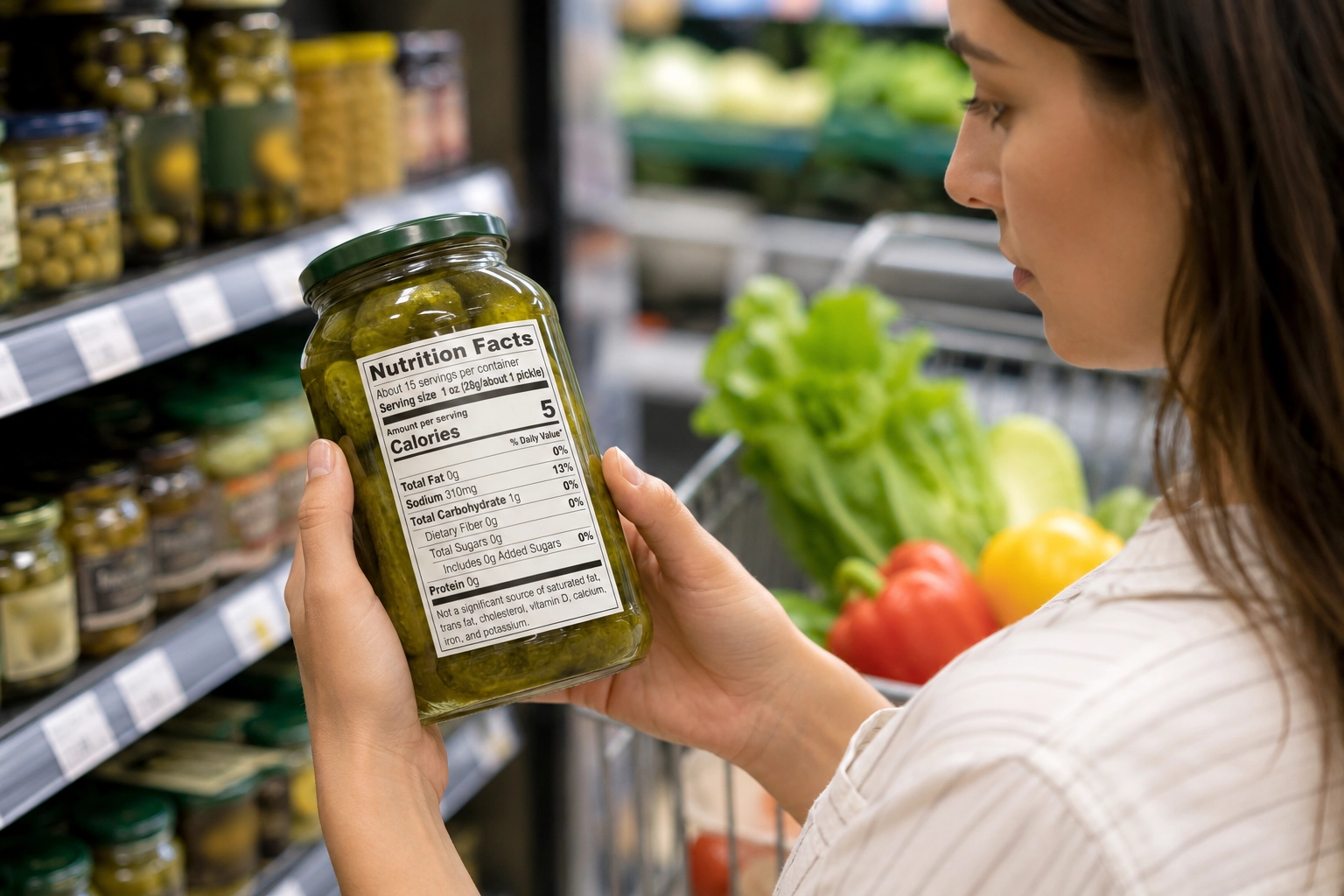
The American Diabetes Association recommends using nutrition labels to understand total carbohydrates, added sugar, sodium, and serving sizes. Their label-reading guidance also points out that sodium and added sugar are nutrients many people may want to limit.
A pickle product can say “made with cucumbers” and still contain sugar. Another jar may say “dill” but have a larger serving size than you expect. The front of the jar is marketing. The nutrition label is where the useful details are.
Pickles do not lower blood sugar
One common mistake is thinking that because a food is low in carbs, it must lower blood sugar. That is not how it works.
Plain dill pickles may have little effect on blood sugar for many people because they are low in carbohydrates. But that is different from saying they lower blood sugar or treat diabetes.
Do not use pickles, pickle juice, vinegar, or any snack as a replacement for medication, medical care, or a diabetes meal plan. If you notice unusual blood sugar patterns, talk with your healthcare team.
The Sodium Issue: The Main Reason to Be Careful
If dill pickles have one major downside, it is sodium.
Pickles are salty because salt helps preserve them and gives them their familiar flavor. That salty crunch is exactly why many people like them. But it is also why they can become a problem if eaten too often or in large amounts.
Low carb does not automatically mean healthy
This is one of the most important points in the article.
A food can be low in carbs and still not be ideal in unlimited portions. Bacon, processed meats, salty snacks, and some packaged foods may be low in carbohydrates, but that does not automatically make them good daily choices.
Dill pickles are similar. From a blood sugar perspective, plain dill pickles may look attractive. From a sodium perspective, they deserve more caution.
People with diabetes are often also paying attention to heart health, blood pressure, kidney health, and weight. A snack choice should not be judged only by carbohydrates.
Who should be especially cautious?
You should be more careful with dill pickles if you:
- Have high blood pressure
- Have kidney disease
- Have heart disease
- Have been told to limit sodium
- Eat many processed or salty foods already
- Notice swelling, fluid retention, or other symptoms your doctor has asked you to monitor
This does not mean everyone in these groups must avoid pickles completely. It means they should not treat pickles as an unlimited snack and should ask a healthcare professional how salty foods fit into their plan.
How to Choose Better Pickles for Diabetes-Conscious Eating
If you want to include pickles, the goal is not to find a “perfect” pickle. The goal is to choose one that fits your needs better.
Read the label before deciding
A simple label check can prevent many mistakes.
Look for:
Total carbohydrates: Plain dill pickles are often low, but check the serving size.
Added sugars: Choose options with little or no added sugar when blood sugar is the concern.
Sodium: Compare brands. Some jars are much saltier than others.
Serving size: One spear, a few slices, or one ounce may be the listed serving. If you eat three servings, multiply the numbers.
Ingredients: Watch for sugar, corn syrup, or sweet brines if you are trying to avoid added sugar.
Choose plain dill more often than sweet pickles
If your main concern is blood sugar, plain dill pickles are usually a better fit than sweet pickles. Sweet pickles may still be possible in small amounts for some people, but they require more label awareness.
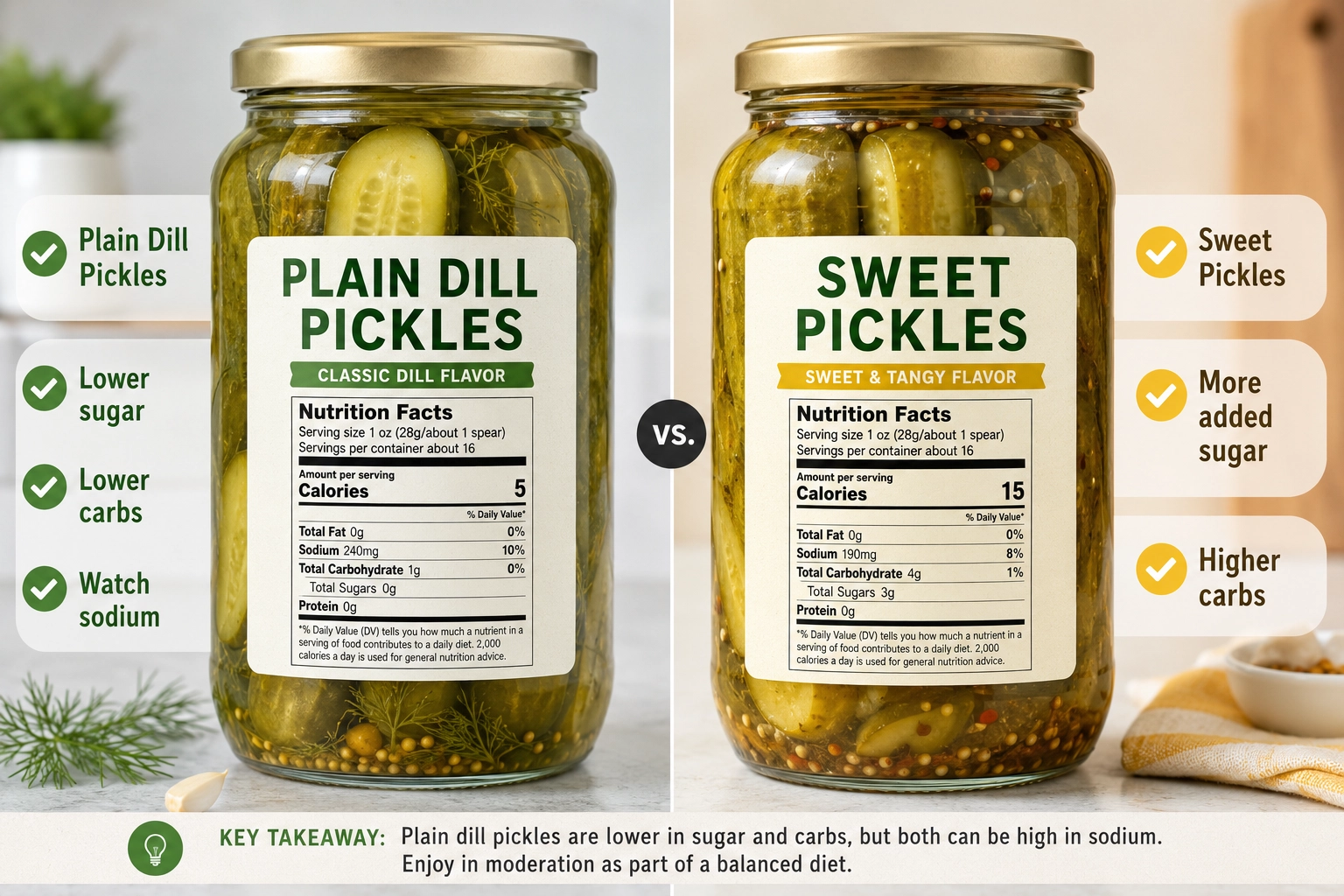
A useful comparison:
- Plain dill pickle: usually low carb, often high sodium
- Sweet pickle: may be higher in sugar and carbs, often high sodium too
- Low-sodium dill pickle: may be a better option for some people watching salt, but still check the full label
Consider lower-sodium options
Reduced-sodium or lower-sodium pickles can be helpful for some people. The taste may be different, and not every brand will be low enough for your needs. But if you enjoy pickles often, comparing sodium levels is worth the effort.
You can also use pickles as a flavor ingredient instead of eating many spears at once. For example, chopped dill pickle in tuna salad gives flavor without requiring a large serving.
How Many Dill Pickles Can Someone With Diabetes Eat?
There is no universal number that works for everyone.
A person’s ideal portion depends on their overall diet, sodium needs, blood pressure, kidney health, medications, and personal blood sugar response.
Instead of asking, “How many pickles are allowed?” it may be more helpful to ask:
- How much sodium is in one serving?
- Am I eating one serving or several?
- Did I choose plain dill or sweet pickles?
- What else am I eating with them?
- Does this fit my healthcare team’s advice?
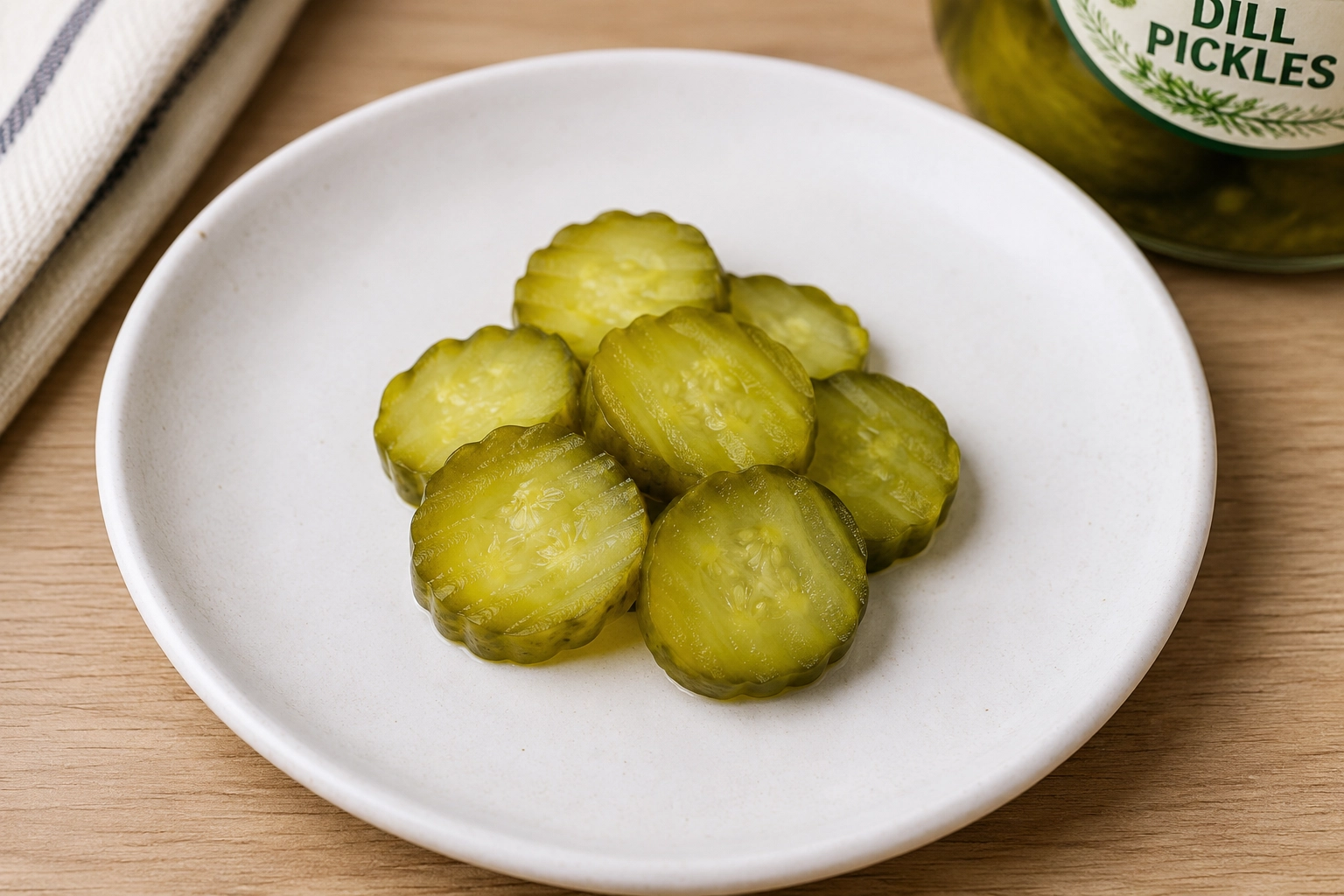
For many people, a few slices or one small spear may make more sense than eating straight from the jar. The “straight from the jar” habit is where portions can get blurry.
If you monitor your blood sugar, you may also find it useful to track your response. A blood sugar log can help you notice patterns after snacks and meals. This is especially helpful because two people can respond differently to the same food depending on the rest of the meal, activity level, sleep, stress, and medication timing.
Smart Ways to Eat Dill Pickles as a Snack
Dill pickles are crunchy and flavorful, but they are not very filling by themselves. They are low in protein, low in fat, and not especially rich in fiber. That means you may feel satisfied for a few minutes and then want another snack soon after.
A better approach is to use pickles as part of a more balanced snack.
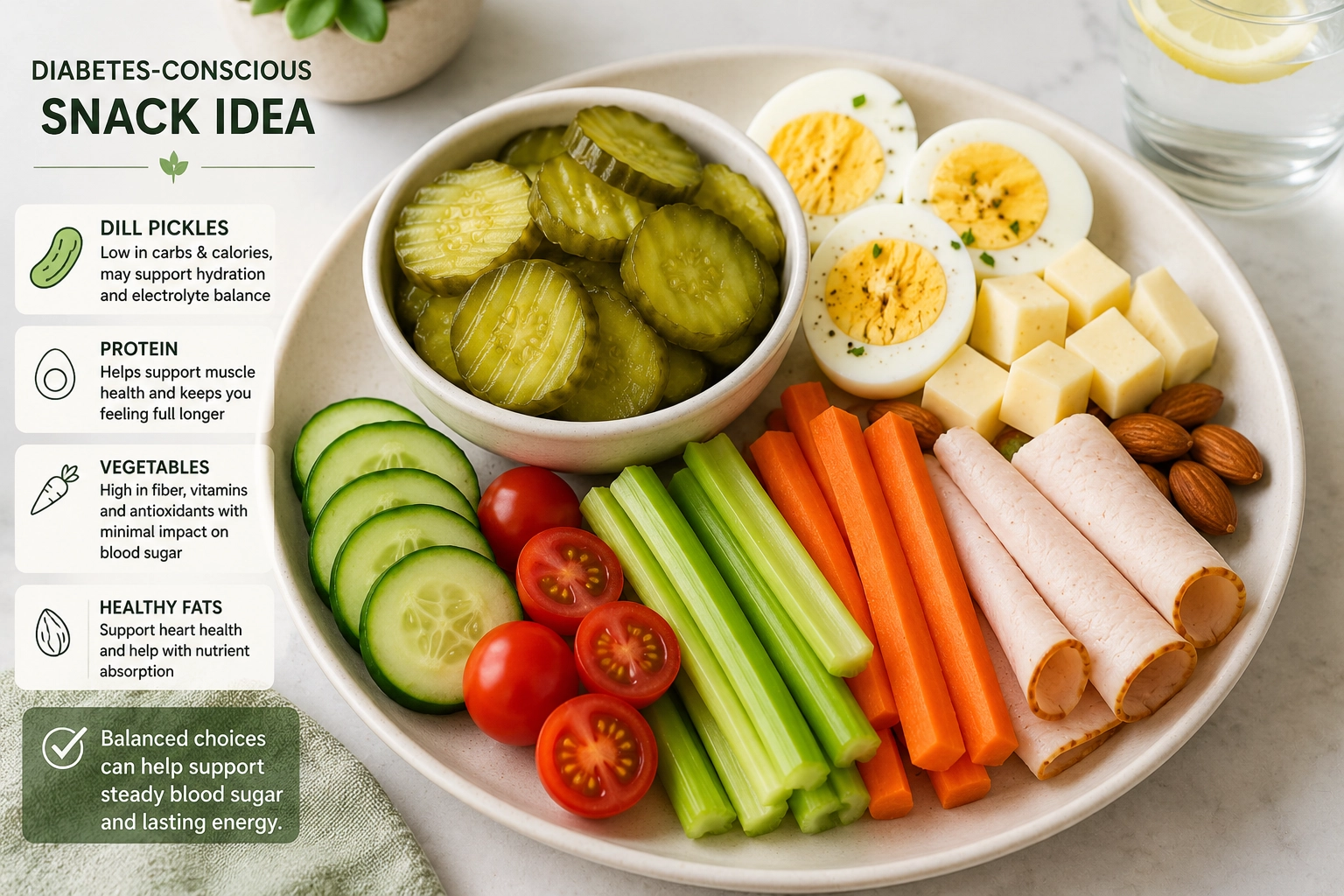
Pair pickles with protein
Protein can help make a snack more satisfying. It also changes the overall snack from “salty crunch” to something that feels more like real food.
Examples:
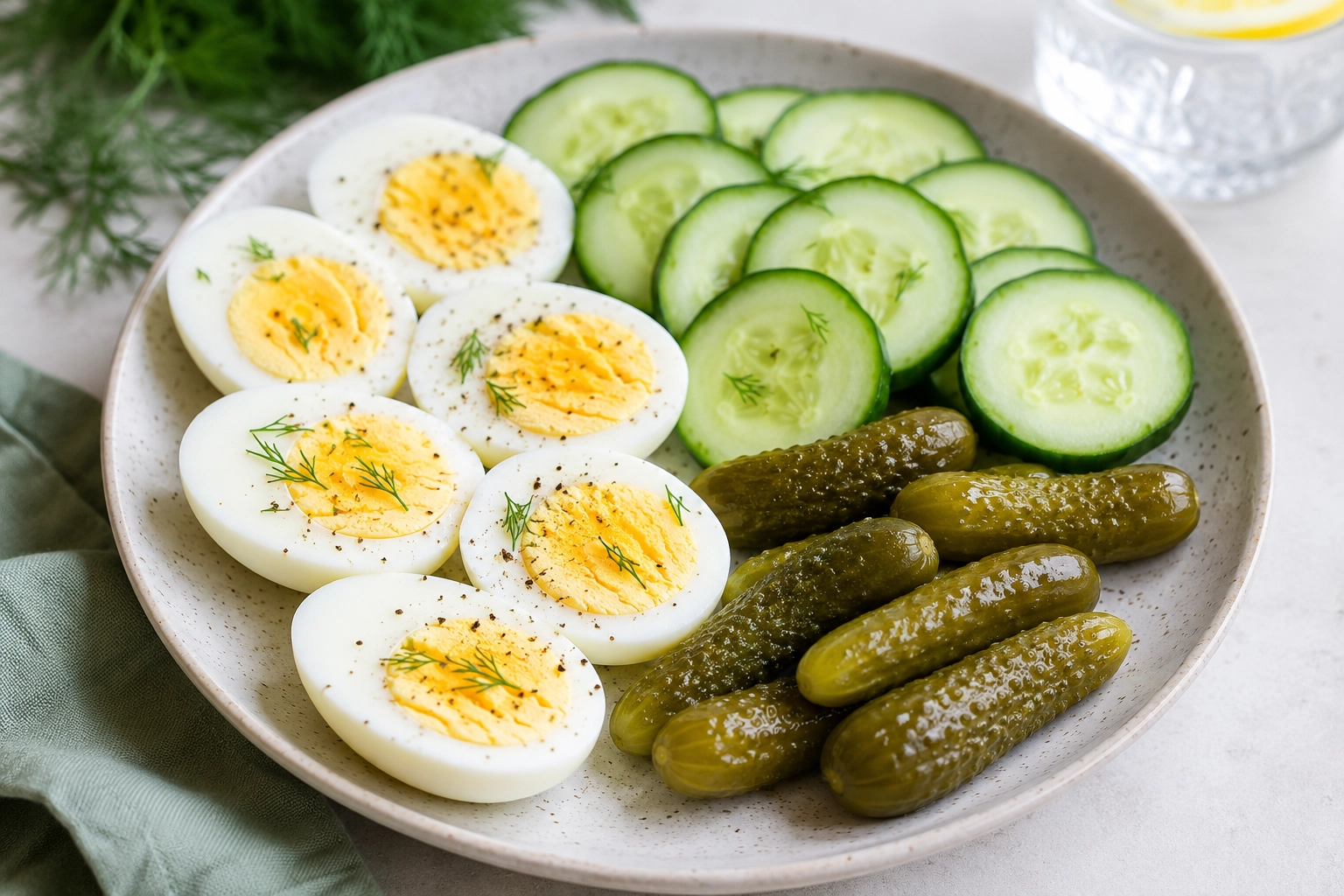
- Dill pickle slices with a boiled egg
- Pickle spears with tuna salad
- Chopped pickles in chicken salad
- Pickles with turkey or chicken lettuce roll-ups
- Pickles with cottage cheese, if it fits your diet
- Pickle slices with a small portion of cheese, if appropriate for you
The CDC notes that eating carbs with protein, fat, or fiber can slow how quickly blood sugar rises. Pickles themselves are not a major carb source, but the same idea is useful for snack planning: build snacks that are more balanced and satisfying, not just low in carbs.
Use pickles for flavor, not volume
Pickles are excellent as a flavor booster.
Try adding chopped dill pickles to:
- Tuna salad
- Egg salad
- Chicken salad
- A lettuce wrap
- A low-carb snack plate
- A bowl with lean protein and vegetables
This gives you the tangy flavor without needing to eat a large amount.
Watch the foods that come with the pickles
A pickle on a burger does not make the whole meal blood-sugar-friendly.
The bun, fries, sugary drink, sauces, and portion size usually matter much more than the pickle. This is why context matters. A few pickle slices with a boiled egg is very different from pickles eaten alongside a large fast-food meal.
When thinking about pickles for diabetics, look at the whole snack or meal, not just the pickle.
Pickles vs Other Low-Carb Snacks for Diabetics
Pickles can be useful, but they are not the only option.
Where pickles can help
Dill pickles may be helpful because they are:
- Crunchy
- Flavorful
- Usually low in carbs
- Easy to keep in the fridge
- Lower in calories than many snack foods
- A possible replacement for chips when you want something salty
Where pickles are limited
They also have limits:
- Often high in sodium
- Not very filling alone
- Low in protein
- Low in fiber
- Easy to overeat
- Not ideal for everyone with blood pressure or kidney concerns
For a more balanced snack, some people may do better with options such as boiled eggs, plain Greek yogurt, nuts in measured portions, cottage cheese, tuna cucumber bites, or vegetables with hummus.
Dill pickles can still have a place. They just work better as one part of a snack instead of the whole snack.
Common Mistakes With Pickles and Diabetes
Mistake 1: Thinking all pickles are the same
Dill pickles, sweet pickles, bread-and-butter pickles, spicy pickles, fermented pickles, and refrigerated pickles can all have different nutrition profiles.
Always check the label.
Mistake 2: Ignoring sodium
Many people focus only on sugar and carbohydrates. But sodium can matter a lot, especially if you have blood pressure, kidney, or heart health concerns.
Low carb does not cancel out high sodium.
Mistake 3: Eating pickles without noticing portions
A few pickle slices and half a jar are not the same thing. If you snack straight from the jar, it is easy to lose track.
Put a small portion on a plate instead.
Mistake 4: Assuming pickles lower blood sugar
Dill pickles may be low in carbs, but they are not a diabetes treatment. Be careful with claims online that make pickle juice or vinegar sound like a blood sugar cure.
Mistake 5: Checking only “sugar” and ignoring total carbs
The total carbohydrate line is important because starches and sugars both affect blood sugar. The CDC explains that sugars and starches raise blood sugar, while fiber is different.
For packaged foods, total carbs, added sugars, serving size, and sodium all matter.
A Simple Pickle Decision Framework: C-S-P
When deciding whether dill pickles fit your snack routine, use this simple framework.
C = Carbs
Ask:
- Is this plain dill or sweetened?
- How many total carbs are in one serving?
- Does it contain added sugar?
- Am I eating one serving or more?
Plain dill pickles usually do well in this category. Sweet pickles need more caution.
S = Sodium
Ask:
- How much sodium is in one serving?
- Is this a reduced-sodium option?
- Do I have a reason to limit sodium?
- How salty is the rest of my day?
This is where dill pickles often require the most attention.
P = Portion and Pairing
Ask:
- Am I eating a small portion?
- Am I eating straight from the jar?
- Am I pairing pickles with protein or a balanced snack?
- Am I eating them with chips, fries, white bread, or other high-carb foods?
This step brings the decision back to real life. A pickle is not eaten in a nutrition textbook. It is eaten with other foods, habits, cravings, and portions.
When to Talk to a Healthcare Professional
Ask your healthcare professional or a registered dietitian for guidance if you:
- Have diabetes and kidney disease
- Have high blood pressure
- Have heart disease
- Have been told to follow a low-sodium diet
- Are unsure how salty foods fit into your meal plan
- Notice unusual blood sugar readings after meals or snacks
- Take medication that requires careful diet planning
This is especially important if you are trying to make big diet changes. General food advice can help you ask better questions, but it cannot replace personalized medical guidance.
Practical Takeaway
Dill pickles can be a reasonable low-carb snack for some people with diabetes, but they are not automatically healthy in unlimited amounts.
The best way to think about them is simple:
- Plain dill pickles are usually better than sweet pickles for blood sugar.
- Sodium is the main thing to watch.
- Small portions are smarter than eating from the jar.
- Pickles work better with protein than alone.
- They should not be used as a blood sugar remedy.
If you enjoy dill pickles, you probably do not need to fear them. Just treat them like a salty, low-carb snack with limits — not a magic food and not a free pass.
FAQ
Are dill pickles good for diabetics?
Plain dill pickles may fit into a diabetes-conscious diet for some people because they are usually low in carbohydrates. However, they can be high in sodium, so portion size and personal health needs matter.
Can diabetics eat pickles?
Some people with diabetes can eat pickles in modest portions, especially plain dill pickles with little or no added sugar. People who need to limit sodium should be more careful.
Do dill pickles raise blood sugar?
Plain dill pickles are usually low in carbs, so they may have a smaller blood sugar impact than higher-carb snacks. Sweet pickles or bread-and-butter pickles may contain more sugar and carbs.
Are sweet pickles okay for diabetics?
Sweet pickles may contain added sugar, so they require more label checking and portion awareness. They are not automatically forbidden, but plain dill pickles are usually a better choice when blood sugar is the main concern.
Are pickles better than chips for diabetics?
In terms of carbohydrates, plain dill pickles are often lower than chips. But chips and pickles have different issues. Chips are usually higher in refined carbs and calories, while pickles are often high in sodium.
Can diabetics drink pickle juice?
Pickle juice should not be used as a blood sugar remedy. It can be very high in sodium, and people with blood pressure, kidney, or heart concerns should be especially cautious.
Are low-sodium pickles better?
Low-sodium pickles may be a better option for people watching salt intake, but you should still check the full nutrition label. Some products may still contain more sodium than expected.
What is the best way to eat pickles as a snack?
A small portion of plain dill pickles paired with protein, such as boiled eggs, tuna salad, chicken salad, or a lettuce wrap, may be more satisfying than eating pickles alone.
Health Disclaimer: This article is for general education only and is not a substitute for medical advice. If you have diabetes, kidney disease, high blood pressure, heart disease, or a prescribed sodium limit, ask your healthcare professional how pickles and other salty foods fit into your eating plan.
You should also read:

Can You Eat Watermelon with Diabetes? A Practical Guide Without Food Fear
Watermelon is one of those foods that can feel confusing if you are watching your blood sugar. It is fresh, light, and mostly water. At the same time, it tastes very sweet. So it is natural to wonder: can diabetics eat watermelon, or is it…
Continue reading...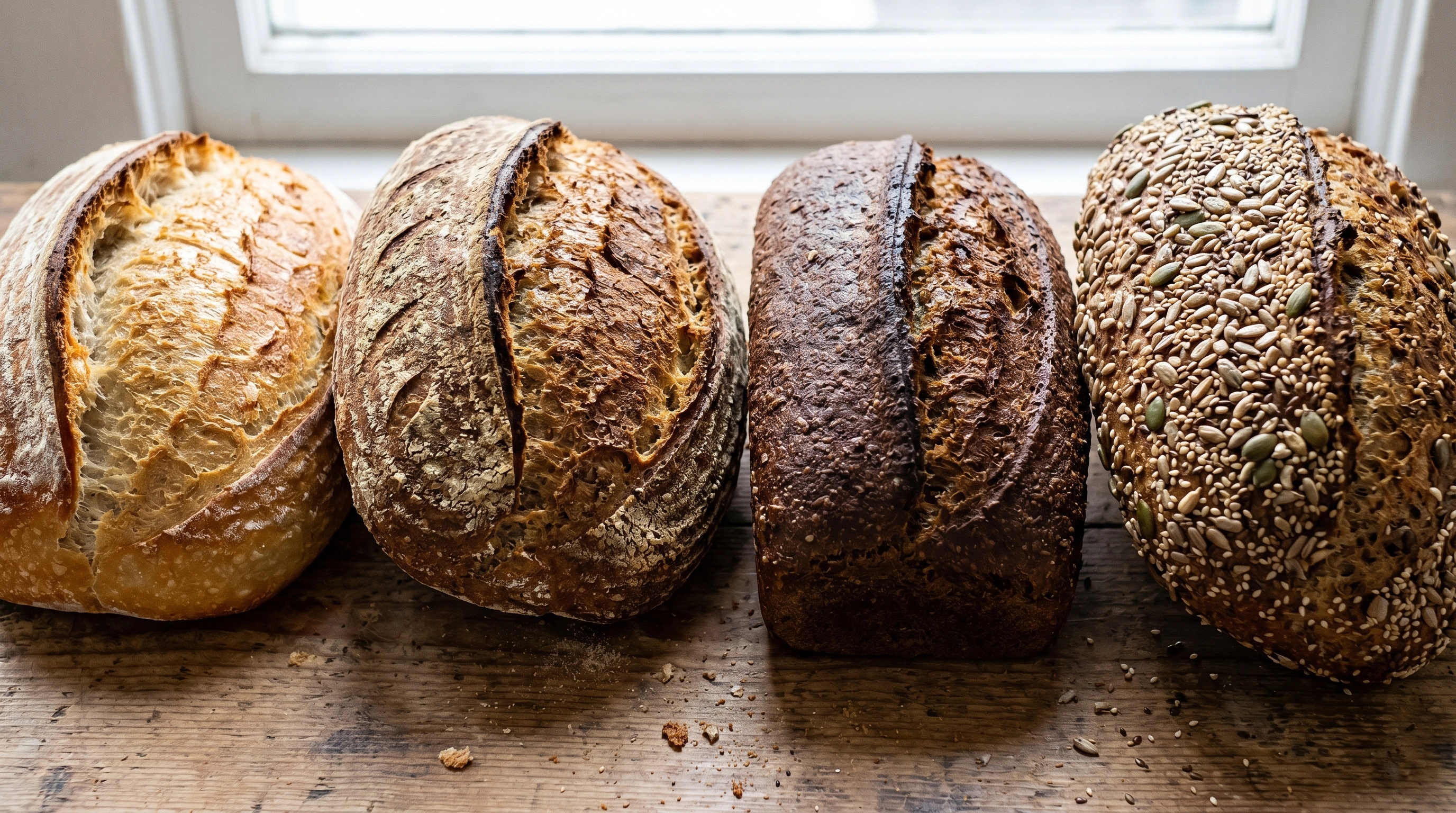
Is Sourdough Bread Good for Diabetics? What to Know Before You Eat It
Sourdough bread has a strong “health halo.” It sounds traditional, natural, fermented, and more wholesome than regular white bread. So if you are trying to manage blood sugar, it is easy to wonder: is sourdough bread good for diabetics, or is it just another bread…
Continue reading...
Can You Eat Popcorn with Diabetes? A Practical Guide for Snack Time
Popcorn can feel like one of the most confusing snacks when you are trying to manage blood sugar. On one hand, it seems light, crunchy, and less greasy than potato chips. On the other hand, popcorn is still made from corn, which means it contains…
Continue reading...