When the Monitor Says 500 and You Don't Have Insurance: A Guide for Terrified Partners

If one day your blood glucose meter gives you inconsistent readings, numbers that differ from the usual levels you're used to, you might start to wonder whether something is wrong with the device. This article explores one such scenario.
Two hours after dinner, the screen flashes 399 mg/dL. An hour later, it climbs to 463 mg/dL. Thirty minutes after that, it hits 523 mg/dL. Your heart drops into your stomach. You look at your partner, expecting them to be collapsed or crying out in pain, but they just shrug and say, "I feel normal." Then, the heaviest, darkest thought hits you: We don't have health insurance. What do we do?
If you are sitting in your living room right now, holding a glucometer, watching the numbers climb into the 400s or 500s, and freezing because of the fear of medical debt, take a deep breath. You are not alone. Thousands of partners and caregivers face this exact, agonizing crossroads. But this is a medical emergency, and action is required. Here is a compassionate, strictly factual look at what is happening, why it cannot wait, and how to navigate the healthcare system when you feel financially trapped.
The Terrifying Reality of the Upward Trend
When you test your own blood sugar, it likely sits comfortably around 100 mg/dL. That is how a body with fully functioning insulin regulation works.
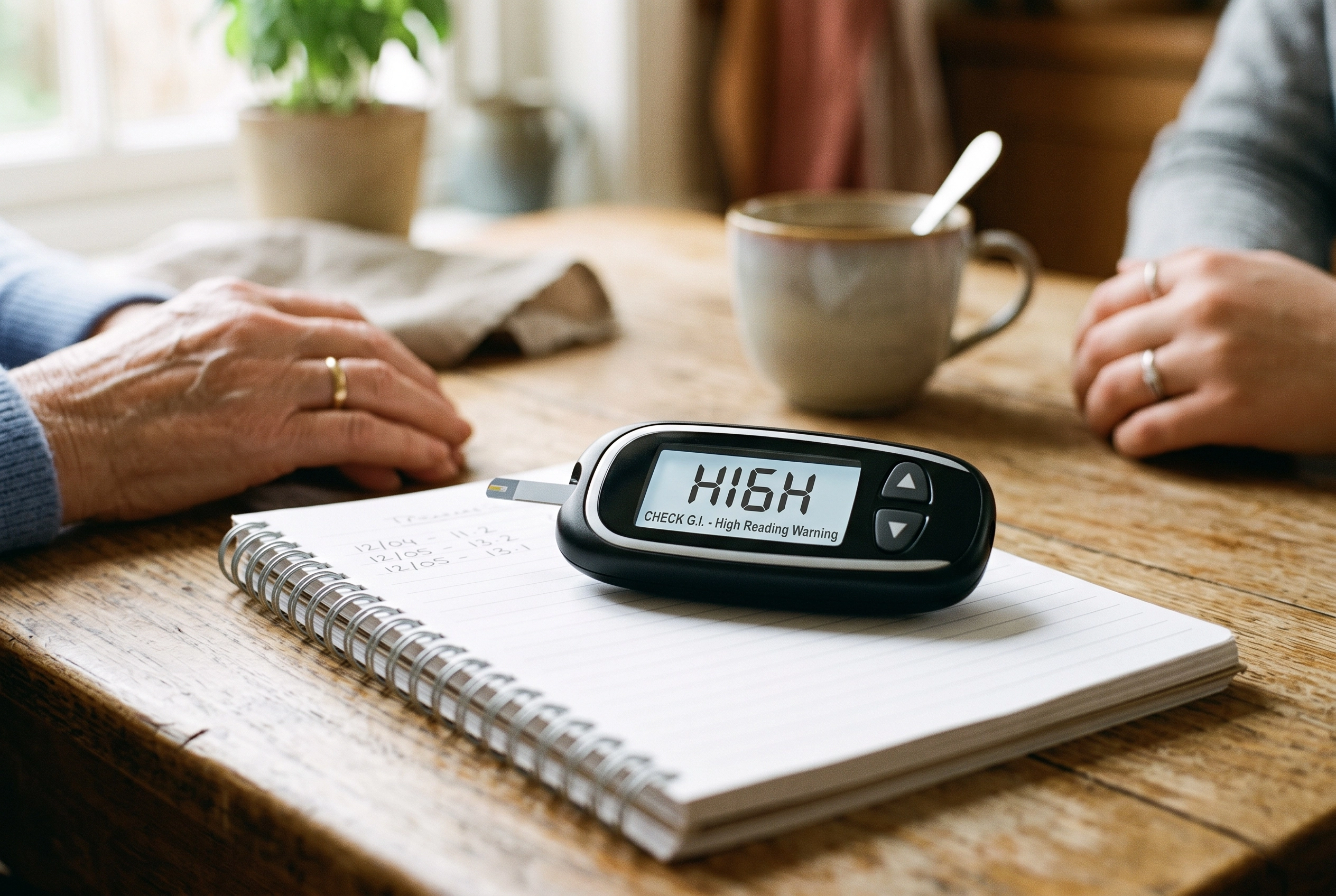
When someone's blood sugar goes from 399 to 463 to 523 in a matter of hours, it is a glaring red alert. It means the body has lost its ability to shuttle glucose (sugar) out of the bloodstream and into the cells where it belongs. The system isn't just struggling; it is completely overwhelmed.
In a healthy scenario, eating food raises blood sugar, and the pancreas releases insulin to bring it back down. When numbers rapidly climb past 400, it indicates that insulin is either completely absent or fiercely resisted by the body's cells.
The "He Feels Fine" Paradox: Why Extreme Highs Hide in Plain Sight
One of the most maddening aspects of this situation and the reason so many people delay going to the hospital is the person experiencing the 523 mg/dL reading insisting they "feel fine."
How can a person feel fine when their blood is practically turning to syrup? The answer lies in chronic adaptation.
When blood sugar rises slowly over weeks, months, or years, the brain and body adjust to a new, dangerous baseline. They stop sounding the acute alarm bells. However, "feeling fine" is an illusion. You might notice they are actually dealing with subtle, persistent symptoms that they have simply gotten used to:
Waking up with headaches every night.
An unquenchable, intense thirst.
Trips to the bathroom to pee every hour, including throughout the night.
These are not quirks of aging; they are the desperate distress signals of a body in crisis.
The Biological Deep-Dive: What 500 mg/dL Does to the Body
To understand why a hospital trip is non-negotiable, we must look at the biology of severe hyperglycemia (high blood sugar).
The Kidney Overdrive and Dehydration
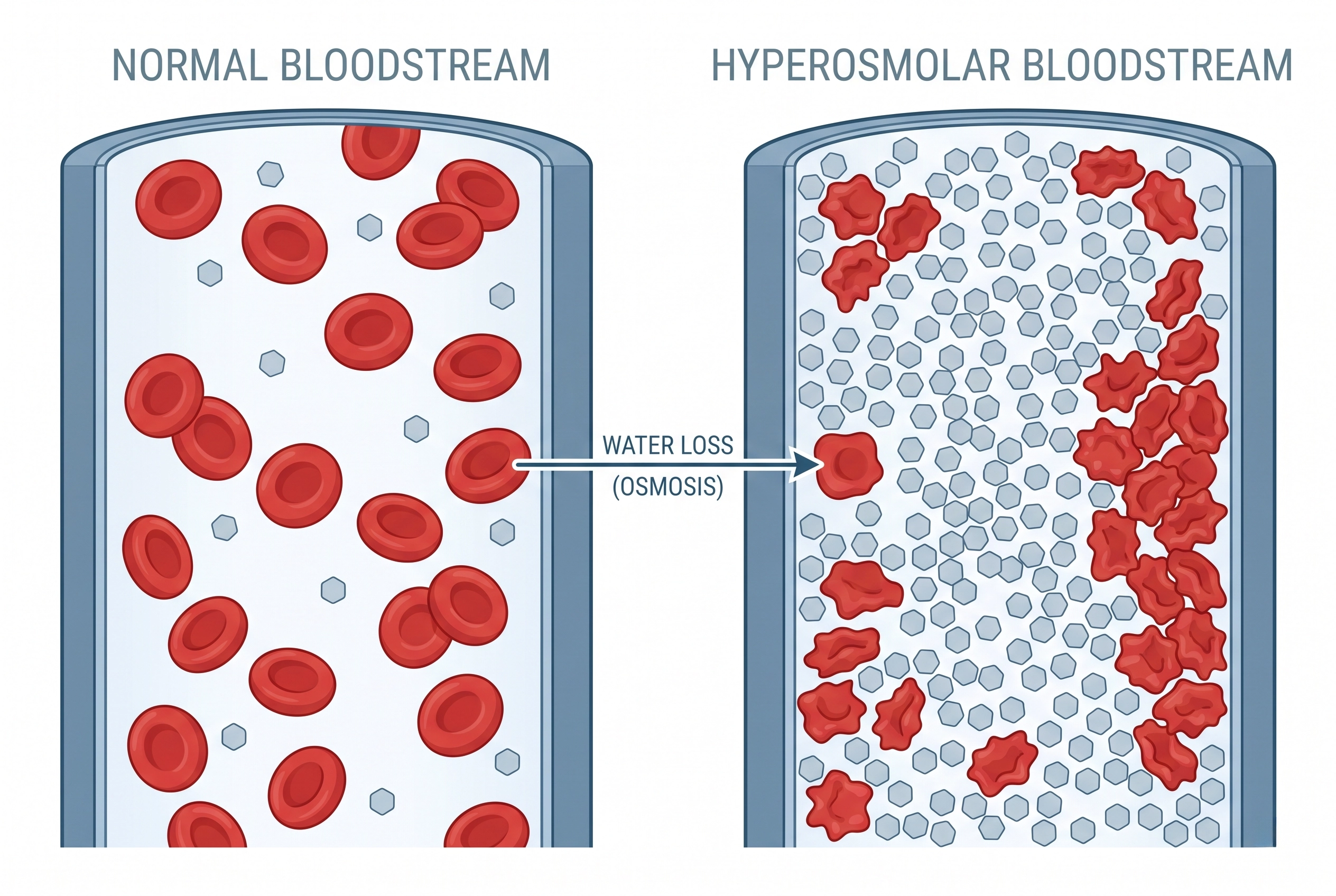
When blood sugar exceeds the 180 mg/dL threshold, the kidneys can no longer filter it properly. They start dumping glucose into the urine. But sugar molecules are heavy and osmotic—they drag massive amounts of water out of the body along with them. This is why the person is peeing constantly and drinking everything in sight. The cells are being starved of water, leading to severe, life-threatening systemic dehydration.
The Hidden Threat of HHS
For older adults (especially those over 60) who might have undiagnosed Type 2 diabetes, extremely high blood sugar often triggers a condition called Hyperosmolar Hyperglycemic State (HHS).
Unlike Diabetic Ketoacidosis (DKA), which is more common in Type 1 diabetes and produces ketones, HHS happens when there is just enough insulin to prevent ketones, but not enough to control blood sugar. Emergency doctors measure the severity of this using effective serum osmolality, governed by formulas such as: 2 × [Na+] + [Glucose]18.
When the [Glucose] variable hits 500 or 600, according to [clinical guidelines for hyperglycemic crises], the blood becomes physically hyperosmolar (thick). The heart has to pump sludge. The brain is drained of fluid. Left untreated, HHS carries a high risk of severe confusion, seizures, and a diabetic coma.
The Financial Paralyzation: Surviving the ER Without Insurance
Let us address the elephant in the room. The fear of an uninsured emergency room visit is visceral and valid. The thought of a bill that could ruin your credit or drain your savings is enough to make anyone hesitate. But you must separate the financial fear from the medical reality.
EMTALA and the Right to Be Stabilized
In the United States, a federal law called EMTALA (Emergency Medical Treatment and Labor Act) requires that any hospital with an emergency department must provide a medical screening and stabilization, regardless of the patient's ability to pay or insurance status.
If blood sugar is over 500 mg/dL, they are in a medically unstable state. The hospital will treat them. They will likely administer intravenous (IV) fluids to correct the profound dehydration and carefully managed IV insulin to bring the numbers down safely.
Medical Debt vs. Medical Tragedy
Here is the hardest, most necessary truth: You can negotiate a hospital bill; you cannot reverse a coma.
Once the immediate crisis is over, hospitals have financial assistance departments. Many operate as non-profits and are legally required to offer "charity care" for uninsured or low-income patients, which can drastically reduce or entirely eliminate the bill. You can set up $10/month payment plans. But none of that matters if you wait too long to seek care.
| Scenario | Immediate Action | Potential Consequence |
| Blood Sugar 115 mg/dL | Adjust diet, exercise gently | Minor fatigue, mild thirst |
| Blood Sugar 523 mg/dL | Go to the ER immediately | Seizures, HHS, Coma, Death |
What NOT to Do When Blood Sugar is Spiking
When panic sets in, it is tempting to try "home remedies." In extreme cases, these can be fatal.
Do not force them to exercise: Walking can help a mild spike. But at 500+, if there is no insulin in the body, exercise signals the liver to dump more glucose into the blood for energy, driving the number even higher.
Do not rely on water alone: While they need hydration, water cannot fix the lack of insulin.
Do not use supplements: Cinnamon, apple cider vinegar, or over-the-counter blood sugar supplements are completely useless and dangerously deceptive during an acute hyperosmolar crisis.
Life After Discharge: Building a Safety Net
The ER will stabilize the immediate threat, but they will not manage the long-term condition. The good news is that managing diabetes without insurance is entirely possible once the acute crisis is over.

Federally Qualified Health Centers (FQHCs) offer sliding-scale primary care based on your income. Pharmacies like Walmart offer older, generic human insulins (like Regular and NPH) for around $25 a vial, and generic pills like Metformin for pennies a day.
Right now, your only job is getting them through the front doors of the emergency room. Grab your keys. Bring the glucometer. Deal with the paperwork tomorrow.
Medical Disclaimer: The content on this page is created for informational purposes only and does not substitute professional medical diagnosis, treatment, or advice. We are not medical professionals. A blood glucose reading over 400 or 500 mg/dL is a critical medical emergency. Always seek the immediate advice of your physician or qualified health provider, or go directly to the nearest emergency room. Do not ignore professional medical advice or delay seeking it because of something you have read on this website.
You should also read:

Can Diabetics Eat Dill Pickles? A Practical Guide to This Salty Snack
When you are trying to manage blood sugar, snack choices can feel confusing. Chips are crunchy but high in refined carbs. Cookies are easy to overeat. Crackers may seem harmless, but they can add up quickly. Then you see a jar of dill pickles in…
Continue reading...
When Managing Blood Sugar Starts to Feel Like a Full-Time Job
There is a particular kind of tiredness that comes from having to think about food all the time. Not just deciding what sounds good for dinner, but wondering what a meal might do to your energy, your cravings, or the numbers you may see later.
Continue reading...
Can Banana Be Eaten in Diabetes? A Practical Guide to Portion, Ripeness, and Blood Sugar
Bananas are one of those everyday foods that can feel confusing if you are watching your blood sugar. On one hand, a banana is a whole fruit. It is simple, affordable, portable, and naturally sweet. On the other hand, you may have heard that bananas…
Continue reading...